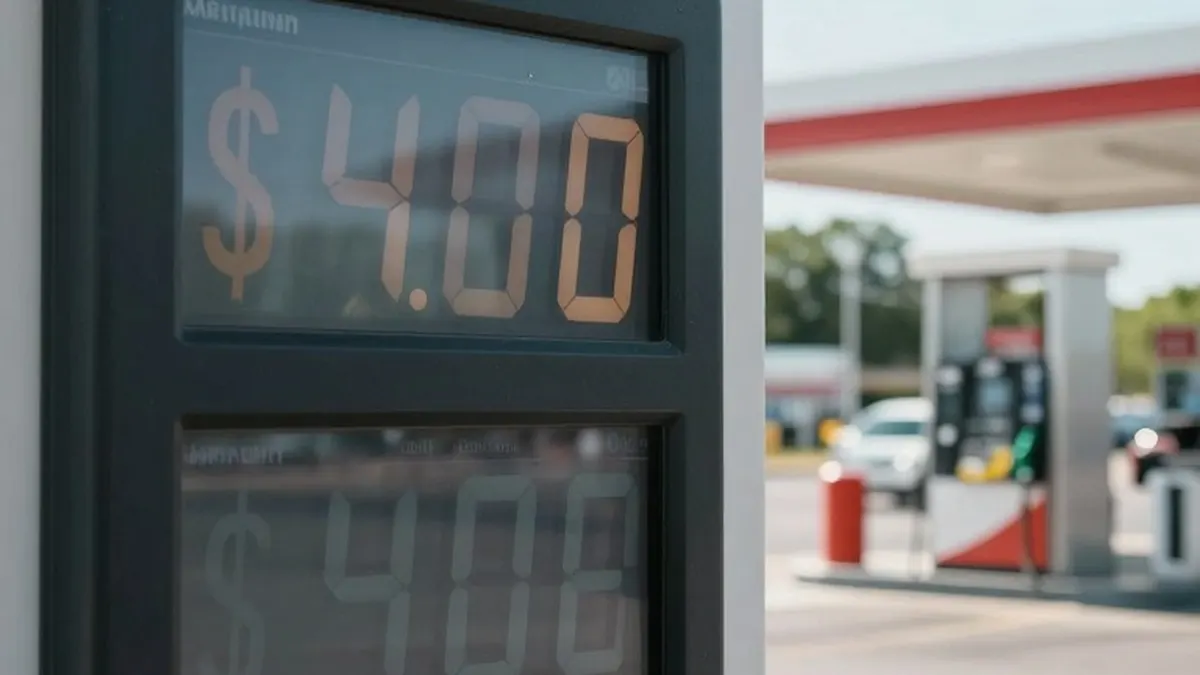
U.S. drivers may soon see the national average price for gasoline drop below the $4 per gallon mark for the first time since July. Patrick De Haan, a petroleum expert at the price tracking firm GasBuddy, told CBS News that he anticipates the national average, which stood at $4.06 per gallon on Thursday, to dip under the $4 threshold by next week. De Haan also forecasted that diesel prices could fall below $6 per gallon by the Thanksgiving holiday.
Both gas and diesel prices have experienced a decline over the past several weeks. According to De Haan, this drop is largely attributed to market expectations that the United States would highlight public dissatisfaction with the war in Iran. This sentiment has increased pressure on the Trump administration to negotiate a deal that would end the conflict, thereby stabilizing energy markets.
De Haan noted that oil prices have been trending downward as the election approached. He explained that this movement stems from a sense of optimism that political issues would be addressed following the midterm elections. This political context has played a significant role in shaping current market behavior and price trajectories.
Beyond political factors, other elements are contributing to the downward pressure on fuel costs. De Haan pointed out that oil tanker traffic through the Strait of Hormuz has increased. This rise in traffic has helped ease constraints on the global oil supply, making more crude oil available to the market and helping to lower prices.
Benchmark crude oil prices have also reflected these trends. Brent crude, which serves as the international benchmark, fell below $100 per barrel on Thursday for the first time since September. By midday, it was trading at $97.44. Meanwhile, West Texas Intermediate, the primary U.S. benchmark, was trading at $90.42 per barrel during the same period.
Seasonal shifts are also playing a role in the recent price reductions. De Haan observed that gas prices typically dip in the fall as Americans reduce their road trips and summer travel. Additionally, filling stations are beginning to switch to winter blend gas. This type of fuel is generally less expensive to produce than the summer blend, which contributes to lower pump prices.
Tom Kloza, the chief energy adviser for Gulf Oil, shares the outlook for lower prices. He predicts that the average U.S. gas price will sink below $4 within the next 10 days. Kloza also highlighted that the profit margin gas stations earn on each gallon sold is currently higher than usual, sitting at approximately 75 cents per gallon.
Kloza stated in an email that the current markup is historically too outsized. He noted that a more normal markup would be around 40 cents per gallon. Consequently, he argued that even if futures prices and physical markets remain at their current levels, pump prices should continue to decrease for the foreseeable future due to these margin adjustments.
The Trump administration has also employed various strategies to help ease gas prices for consumers. These measures include expanding access to fuel sources, opening doors to new supply options, and waiving a federal statute known as the Jones Act. This law requires that goods shipped between U.S. ports be transported on ships that are U.S. built, U.S. flagged, and U.S. crewed.