A new public awareness campaign is urging people to recognize drug-facilitated sexual abuse, also known as chemical submission, and its central message is blunt: not remembering an assault does not mean it did not happen. The effort is led by Caroline Darian and features her mother, Gisèle Pelicot.
Pelicot became a global symbol of resistance when she gave up her right to anonymity during the trial of her husband, Dominique Pelicot. He was convicted in 2024 of repeatedly drugging and raping her over a decade at their home in France, and of inviting other men to do the same.
Darian described this form of violence as a silent one. "It really robs a person of consciousness, freedom and even memory," she told As It Happens host Nil Kӧksal. She said the campaign aims to bring the invisible to light and give a voice to the unspeakable.
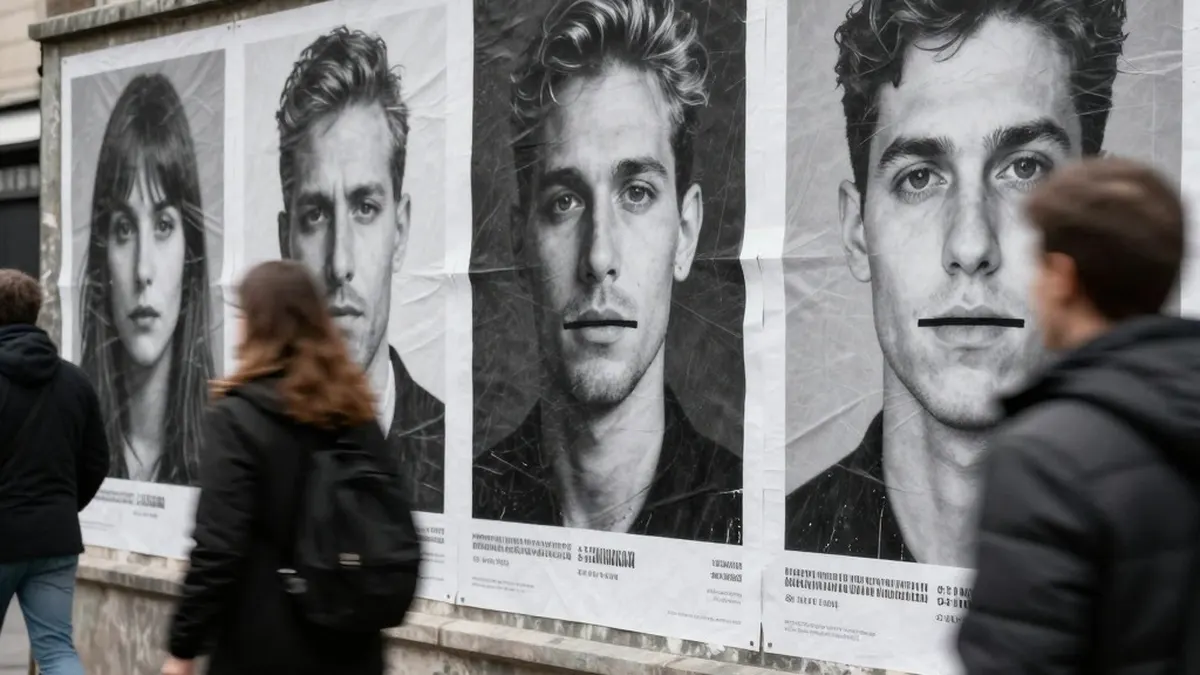
The campaign launched in France last month. It was driven by MendorsPas, which means Don't Put Me To Sleep, an organization Darian founded after the trial to raise awareness about chemical submission and connect victims with support services. It features close-up portraits of victims, including one of Pelicot.
Each portrait carries a deliberately unfinished sentence, such as "For years, I was ____ by my husband," or "On my anniversary, I was ____ by my father-in-law." The blank sits over the subject's mouth. Havas Paris, the publicity firm behind the ads, said in a press release that the word is there but cannot be spoken, and that such assaults can be committed by someone close to the victim.
That point is backed by figures from MendorsPas and the Rape, Abuse & Incest National Network, which say about 75 per cent of victims know their perpetrators. "It's not necessarily only happening at parties," Darian said. "Most of the time, it happens at home with someone that you know."
The subject is deeply personal for Darian. Two photos showing her in underwear in her bedroom, appearing asleep or unconscious, were recovered from her father's computer. In her 2025 memoir, I'll Never Call Him Dad Again, she wrote that she believes he sexually abused her too. He was convicted of sharing intimate images of her without permission but denies all other allegations.
While promoting the book, Darian told the Telegraph that her mother did not believe or support her, and that she could never forgive that. The two were estranged for a time. Now, she says, "We are now, more than ever, together." Pelicot told CBC's The Current earlier this year that each family member was trying to heal in their own way, noting that for the children, the man at the center of the case was their dad.
On Wednesday, the pair appeared at a New York City gala for the human rights organization Equality Now, where they were jointly given the 2026 Trailblazer Award for their advocacy. Darian called it a huge step and said they were grateful.
Darian hopes the campaign will reduce stigma, encourage people to seek help and, when possible, get toxicology tests to confirm suspicions. She noted that other cases have surfaced since the Pelicot verdict, including convictions in Germany and a guilty plea in the U.K. Speaking to an anonymous Cornell University student known as Jane Doe, who alleges a gang rape by fraternity members, she said: "You don't have to bear the shame on your shoulder." She added that the issue concerns everyone, not only women.