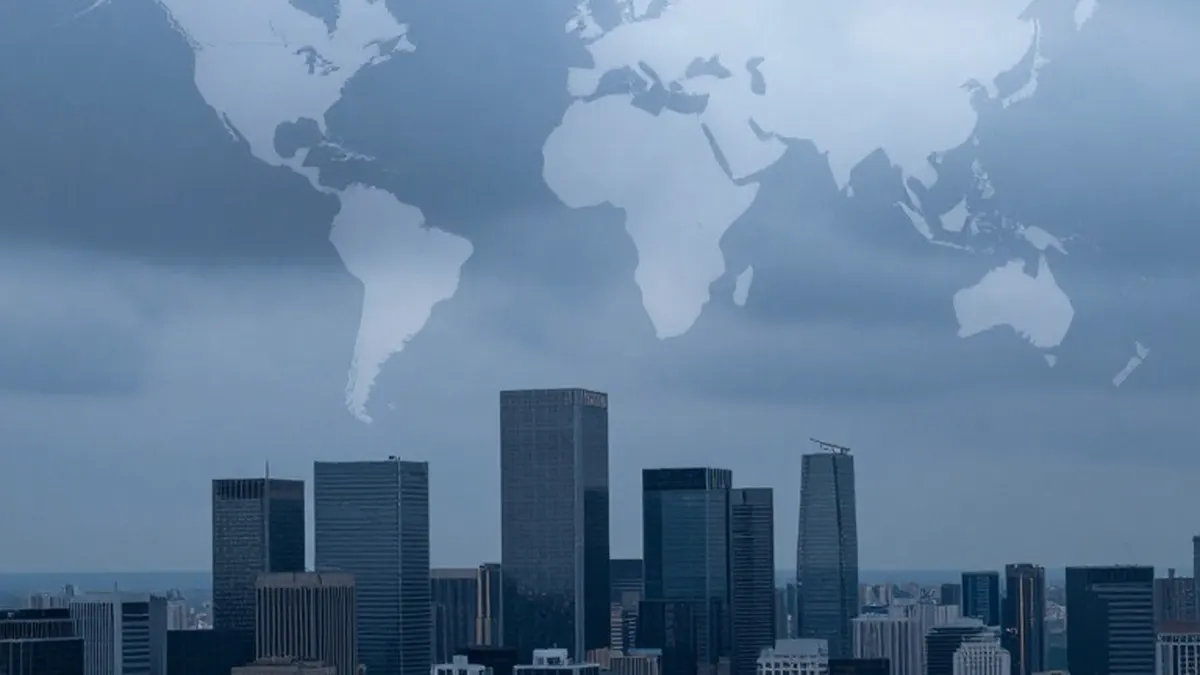
The international landscape is currently defined by a state of controlled chaos, a condition maintained primarily by the nuclear powers' desire to avoid direct confrontation. However, this stability is weakening as traditional security rules fade and red lines become blurred. The era of a single dominant global power has ended, replaced by a phase of intense multipolar rivalry where new norms have yet to be established.
Russia's ongoing war against Ukraine remains the central fault line in global security, further destabilizing the existing system. Simultaneously, the Middle East remains chronically unstable, and the Taiwan Strait stands as a major potential flashpoint for conflict between the United States and China. Three broad geopolitical camps are emerging: the West and its partners, revisionist states, and the Global South, which largely refuses to align with either side.
The traditional model of liberal globalization, supported by U.S. security guarantees and World Trade Organization rules, is gradually disappearing. In its place, large regional ecosystems are forming, seeking self-sufficiency in critical areas such as lithium extraction, microchip production, and financial services. These economic and technological blocs have not yet settled into a stable configuration, leading to clashes through local conflicts and trade wars. For now, the rule of force often prevails over the rule of law.
The United States is undergoing a significant transformation under the influence of the Make America Great Again movement. This shift represents a move from a traditional global leader to an aggressive pragmatist driven by national self-interest. Through trade wars, reshoring, and economic nationalism, Washington is building a more self-sufficient but less predictable nation. While this approach fuels a short-term domestic economic boom, it creates a security vacuum that China, Russia, and Iran are exploiting in regions where U.S. presence is receding.
China is actively working to fill the gap left by U.S. retrenchment, utilizing technological advances, military modernization, and diplomatic influence to expand its reach. However, Beijing's geopolitical ambitions are challenged by significant domestic issues, including an economic slowdown, a property crisis, youth unemployment, and a shrinking, aging population. China is pursuing a model of rights without obligations, seeking superpower privileges without the responsibilities of global policing, a strategy that inevitably breeds resistance from other nations.
The European Union faces the challenge of becoming stronger militarily and technologically while contending with economic and demographic pressures. The Maastricht model created an incomplete union with a single market but no fully fledged common government or fiscal policy. As the EU struggles to balance the need for collective action with competing national interests, it is likely moving toward a scenario of shared mechanisms among sovereign states. A complete breakup is less likely than a political disintegration where the Union survives on paper but loses the capacity to act collectively.
Russia continues to attempt to restore its imperial sphere of influence through force, yet this strategy deepens its economic and military constraints while increasing dependence on Beijing. The war has exposed the vulnerability of global supply chains and accelerated militarization, transforming warfare through the use of drones, cyberattacks, and strikes on energy infrastructure. Victory in this conflict depends less on the number of tanks and more on adaptability and endurance.
No single global power center can build a new world order alone. The United States remains the strongest but may no longer be able to organize the system around itself, while China is powerful but lacks appeal. The EU has scale but lacks decisive capacity, and Russia is rapidly losing strategic autonomy. The new international rules will likely emerge from the bottom up through ad hoc coalitions, regional security arrangements, and bilateral agreements, rather than from a single master plan.
For Ukraine, the war has become a powerful catalyst for fundamental global change. The outcome will help determine future international rules, as a Russian victory would set a precedent for changing borders by force, while a defeat would deter similar ambitions. Ukraine's priority is to strengthen its capacity to act under various future scenarios by building defense, technological, and economic capabilities. Strategy in this uncertain environment involves building the capacity to shape the future rather than merely guessing what it will be.