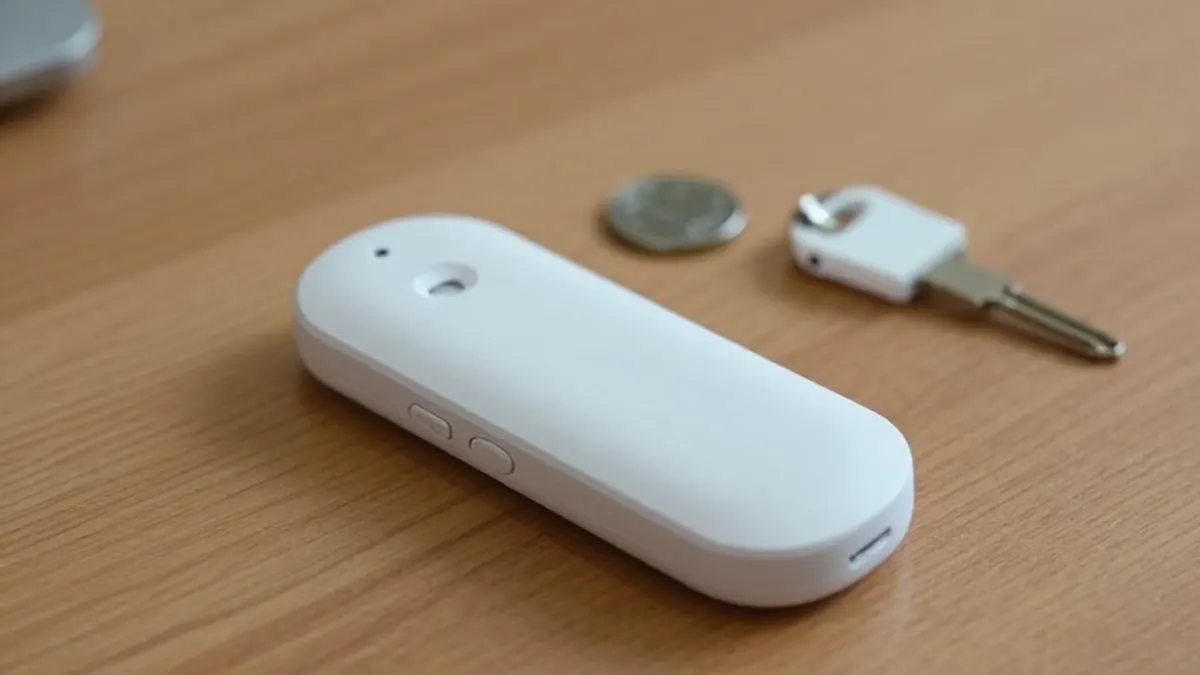
Google has officially launched its Pixel Tag, a Bluetooth and Ultra Wideband tracker that brings the tech giant directly into the competitive market for small item finders. The device, which was first teased in August, is now available for purchase, marking a significant step for Google after years of relying on third-party Android trackers from brands such as Samsung, Motorola, and Pebblebee.
Priced to compete directly with Apple’s AirTag 2, the Pixel Tag costs $29.99 for a single unit. Customers looking to track multiple items can opt for a four-pack, which is discounted to $99.99. This pricing structure positions the new tracker as a direct rival to the popular Apple accessory, offering similar functionality at a comparable cost point.
In terms of physical design, the Pixel Tag weighs just 0.4 ounces, making it slightly lighter than its Apple counterpart. While its oblong shape is longer than the AirTag 2, it is also a bit thinner. The device does not come with a built-in hole for attaching to keys or luggage, but Google notes that it can be paired with various accessories to facilitate tethering to everyday objects.
One distinct feature of the Pixel Tag is the inclusion of a physical button. Unlike the AirTag, which relies on proximity to find a lost phone, the Pixel Tag’s button can be pressed to trigger a sound from a misplaced Android phone. This reverse-tracker capability adds a layer of utility for users who frequently lose their mobile devices in their own homes or offices.
Power efficiency and durability are central to the device’s specifications. Google states that the Pixel Tag will operate for over a year on a single CR2032 coin battery. The tracker is also rated IP67, which means it is dustproof and capable of surviving shallow dunking in water, making it suitable for outdoor use and travel.
Technologically, the device supports Ultra Wideband, or UWB, along with Channel Sounding via Bluetooth 6.0. These advanced connectivity features allow for precise location tracking. When a user is in close proximity to the tag, Android phones equipped with a UWB chip can display the exact distance and direction to the device within the Find Hub app.
For devices that do not have UWB hardware, the tracker utilizes Bluetooth Channel Sounding to provide distance information. This ensures that even older or lower-end Android phones can benefit from improved locating features, although the precision will be limited to distance rather than directional guidance.
The Pixel Tag is compatible with smartphones running Android 9 or later. However, to fully leverage the precise locating features of the Find Hub app, users need a device that specifically includes a UWB chip or supports Bluetooth 6.0. The app, which was renamed from its previous iteration last year, serves as the central hub for managing and locating the tracker.
With the release of the Pixel Tag, Google is signaling its intent to maintain a first-party presence in the smart accessory space. By integrating the tracker deeply into its existing ecosystem and offering competitive pricing, the company aims to capture a larger share of the Android user base who previously relied on external solutions for item tracking.