Blue Origin announced on Thursday that it will use its New Glenn rocket to launch data center satellites for Google in 2029. This mission is a key component of Google’s Project Suncatcher, a program designed to build scalable data centers in orbit. The collaboration marks a significant step in the company’s efforts to move computing infrastructure beyond Earth.
Google first revealed its work on scalable orbiting data centers approximately one year ago, describing the initiative as one of its research moonshots. The planned mission on the New Glenn rocket aims to deploy satellites into Sun-synchronous orbit. In this orbital position, the satellites will be able to receive nearly continuous solar energy, which is critical for their operation.
Each satellite in this initial deployment is designed with computing capacity roughly equivalent to a single data center rack. By leveraging the abundant solar power available in space, Google hopes to expand the boundaries of what is possible for future compute capabilities. The project represents a long-term vision for scaling AI infrastructure in an orbital environment.
Travis Beals, senior director of Project Suncatcher at Google, stated that the dedicated launch with Blue Origin is a crucial milestone on the company’s roadmap. He noted that Project Suncatcher is a long-term moonshot intended to tap into the abundant solar power in orbit to scale AI infrastructure. The partnership underscores the strategic importance of the mission for the future of the project.
The timing of this announcement reflects the current state of the commercial space industry. US commercial heavy lift rockets, including the New Glenn, are filling up their launch capacity through the year 2030. Securing a spot on the launch manifest now is essential for companies aiming to deploy large-scale orbital assets in the near future.
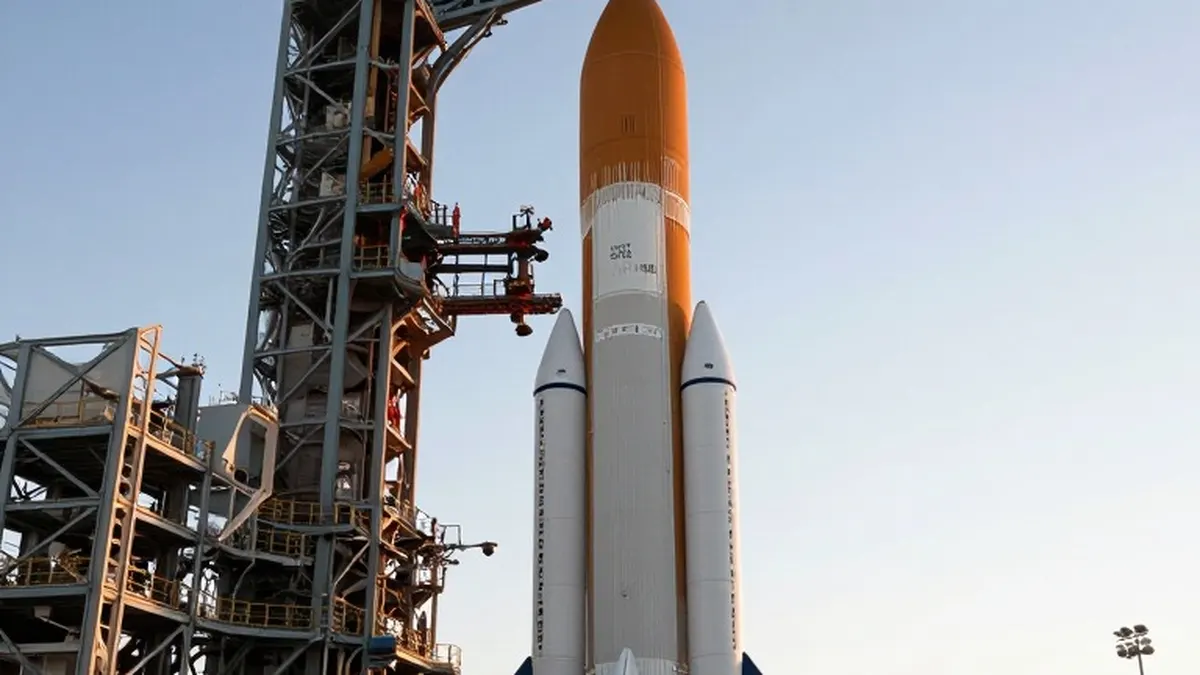
The Google mission will utilize the 7x2 variant of the New Glenn rocket. This is the smaller version of the vehicle, which has launched three times to date. The specific configuration is suitable for the payload requirements of the initial satellite deployment. The choice of vehicle aligns with the current availability and capabilities of heavy lift options in the US market.
The primary purpose of the 2029 launch is likely to serve as a technology demonstration. It will test the ability to network solar-powered satellites that are equipped with AI chips. The mission will also demonstrate machine-learning compute in space, providing valuable data on the feasibility of such operations. Google has not yet disclosed which contractor is building the satellites, though they may weigh several tons each.
While the technical challenges are significant, a larger strategic question remains for Google. The company is pursuing ambitions for a large constellation of orbital data centers in the 2030s without owning its own launch vehicle. This dependence on third-party providers like Blue Origin could present logistical and economic hurdles as the project scales.
There are still many questions regarding the economic viability of orbital data centers. However, there is a broad consensus in the industry regarding a key requirement for success. Without ultra low-cost, heavy lift capability, data centers in space are unlikely to be economically competitive with their terrestrial counterparts. This dynamic places immense pressure on launch providers to reduce costs significantly.
The partnership between Google and Blue Origin highlights the growing intersection of major tech companies and the space industry. As the demand for compute power increases, the idea of using space as a resource for AI infrastructure moves from concept to active development. The next few years will be critical in determining whether these orbital data centers can become a viable part of the global computing landscape.