Democratic leaders in the House of Representatives are set to hold a private session on Wednesday to elect their party leadership for the upcoming Congress. The primary objective of this meeting is to formally nominate New York Democrat Hakeem Jeffries as the party's candidate for Speaker of the House. If successful in the broader legislative body later this year, Jeffries would become the first Black individual to serve in that capacity.
Although Jeffries is running without a formal opponent, the process is not expected to be entirely smooth. The Democratic caucus is described as restive following the recent elections, in which voters removed Republicans from power in a clear rebuke of President Donald Trump. Many newly elected members and their constituents are demanding a significant shift in approach, leading to a high volume of communications directed at party offices.
Jeffries has stated that he takes nothing for granted as he prepares for the vote. He has been engaging with various caucuses within the House Democrats and speaking with nearly all members of the incoming majority. He is seeking a recorded vote to allow members to clearly express their support. He noted that he embraces these conversations and is prepared for the scrutiny that comes with the role.
Jeffries is part of a leadership slate that includes Rep. Katherine Clark of Massachusetts and Rep. Pete Aguilar of California. Both are also running unopposed and would achieve historic milestones if elected. Clark would become the first woman to serve as majority leader, while Aguilar would be the first Latino to hold the position of majority whip. This group represents a new generation of leaders emerging after the departure of long-time figures like Nancy Pelosi.
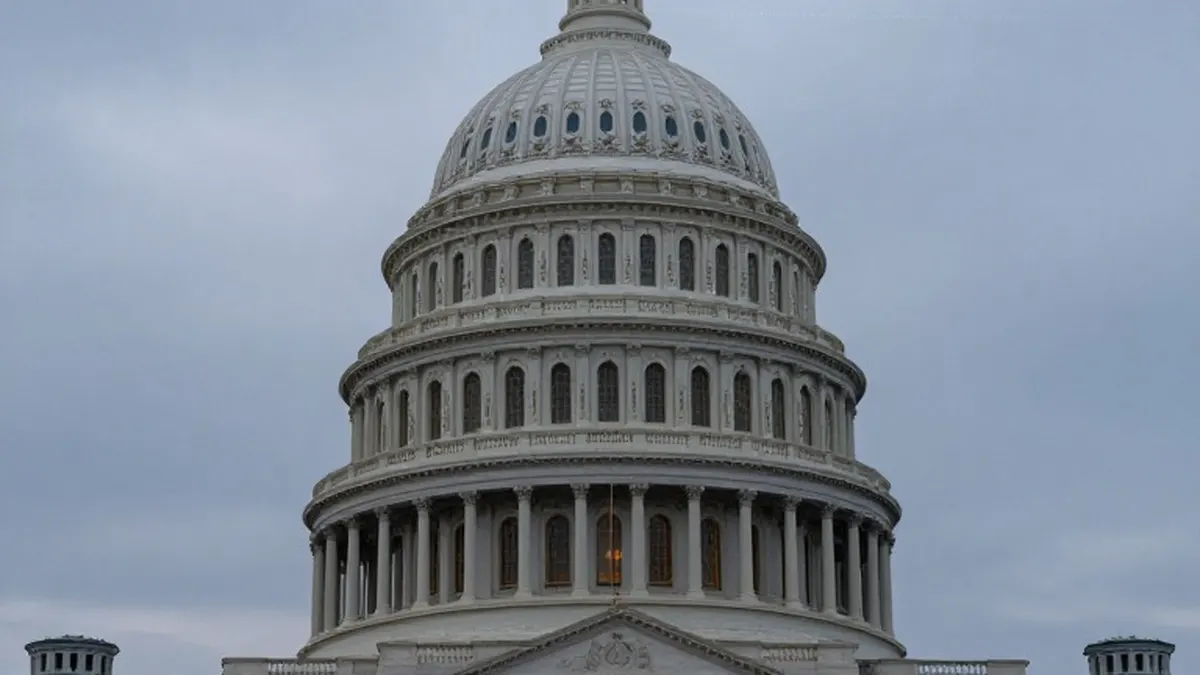
The Wednesday vote will serve as the first official vote for dozens of members who have not yet been sworn into office. The upcoming session will also mark the first time this leadership trio operates as the majority party. Jeffries will face a separate roll call by the full House when the new Congress convenes on January 3, 2027, to officially elect the Speaker.
Several incoming members have already voiced their support for Jeffries. Rep.-elect Brad Lander of New York announced his backing at the start of his congressional campaign. Rep.-elect Randy Villegas of California said he supports Jeffries because he believes the candidate will best help him deliver for his district in the Central Valley. Meanwhile, returning Rep. Emily Randall of Washington has been fielding questions from constituents about the leadership transition.
Randall shared that some constituents have asked if Senator Bernie Sanders could be elected Speaker. While she acknowledged it is technically possible for the House to elect anyone, she noted the practical difficulties given Sanders' current role in the Senate. In one conversation, she told a constituent that she is supporting Jeffries and believes the party will accomplish many of the goals that constituents are requesting.
Rep. Alexandria Ocasio-Cortez has also weighed in on the matter, using a livestream to explain the role of the Speaker. She emphasized that there is effectively only one candidate in the race, Hakeem Jeffries, but that the broader concern among the public is what that leadership promises to achieve. She noted that the focus should remain on the substance of the leadership rather than the process of nomination.
Supporters argue that Jeffries has demonstrated a collaborative style during his time in the minority. Rep. Yassamin Ansari of Arizona described him as a leader who listens to ideas from progressive members and aims to reflect the entire party rather than a single faction. She suggested that it is more productive to focus on preparing for the work ahead in the majority, particularly in the first 100 days.
Rep. Shomari Figures of Alabama, who recently won a seat in a district that had been redrawn to favor Republicans, also expressed strong support for Jeffries. Figures stated that Jeffries led the party through what he considered the most tumultuous two-year tenure of any presidency in recent history. He said he is ready to stand by Jeffries at what he described as a precipice of history.