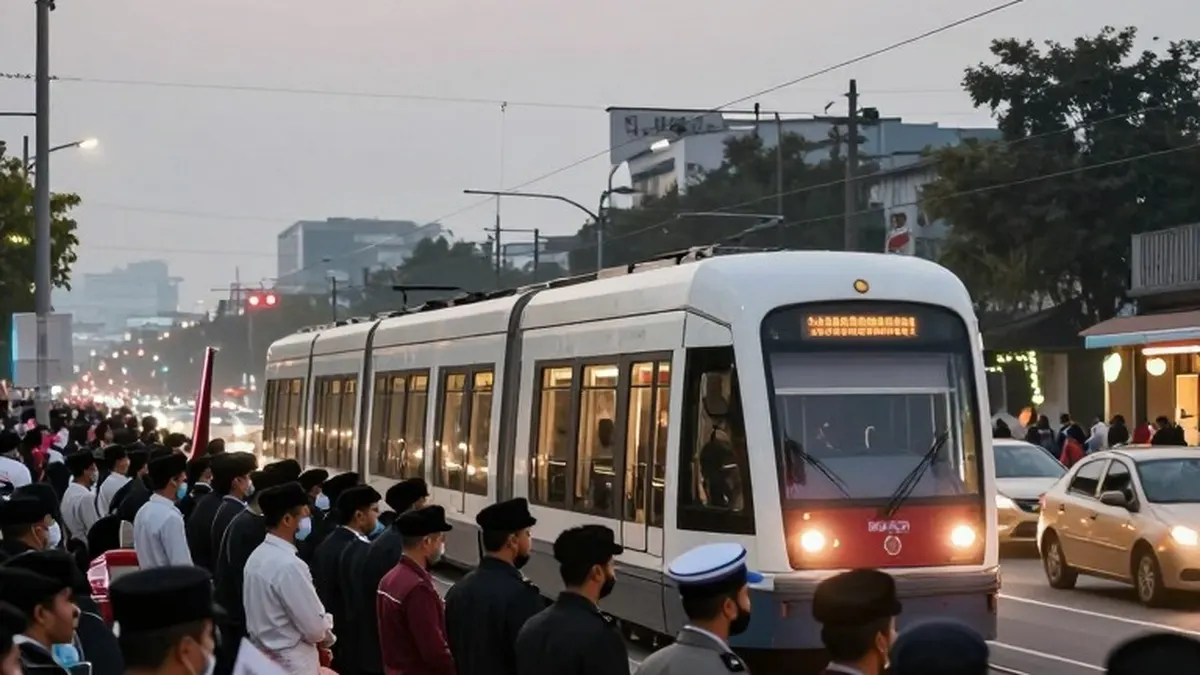
Tensions escalated in Israel on Wednesday evening as dozens of Haredi protesters blocked major transit routes in Jerusalem and the surrounding areas. Footage captured demonstrators halting traffic on Jaffa Street, where the light rail operates, and closing a road outside the city of Beit Shemesh. The actions were reportedly triggered by the recent military detention of yeshiva students who had not fulfilled their mandatory service obligations. Simultaneously, ultra-Orthodox political leaders were engaged in delicate coalition talks aimed at resolving the legal status of these students.
Police authorities declared both protest sites illegal and utilized force to disperse the crowds. According to the Haredi news outlet Kikar HaShabbat, the unrest followed the arrest of three students from an ultra-Orthodox institution in Jerusalem. The men were stopped on Route 90 while returning from the Dead Sea during the overnight period from Monday to Tuesday. After being found to have standing draft orders, the trio was sentenced to 20 days in military prison, though the initial reason for the traffic stop was not specified.
These incidents mark the latest in a series of confrontations regarding the arrest of Haredi draft dodgers. On November 1, clashes occurred near the Mea She’arim neighborhood in Jerusalem following another detention. Prior to that, on October 29, hundreds of Haredi men blocked Route 4 near Bnei Brak. During that event, three protesters were taken into custody and three police officers sustained injuries. The current demonstrations also saw physical confrontations, with a stone thrown at i24 reporter Shany Weitzman, hitting her in the head, and photojournalist Nadav Abbas struck with a metal rod, according to police and the media outlet.
Amidst the street protests, Channel 12 reported that senior Haredi figure Rabbi Moshe Hillel Hirsch gave the green light for representatives to begin negotiations with the political bloc led by Gadi Eisenkot. Hirsch identified the legalization of yeshiva students as his primary objective, placing it above the restoration of funding or the reversal of financial sanctions on Haredi institutions. When discussing the potential agreement, Hirsch stated that the most critical step was ensuring the students were legally protected, though he expressed doubt that a deal with Eisenkot was highly realistic, noting that it remained possible if terms could be met.
Parallel diplomatic efforts are also underway. United Torah Judaism MK Yaakov Asher met with Yisrael Beytenu chairman Avigdor Liberman in the Knesset on Wednesday. Both sides indicated that while they were working toward a draft-law compromise, formal negotiations had not yet commenced. Meanwhile, Kan news reported that Moshe Gafni, a former MK and previous head of the Degel HaTorah faction, is actively working behind the scenes to prevent his party from joining an anti-Netanyahu government led by Eisenkot. Gafni has held numerous conversations in recent days to block an agreement, a stance that contrasts with his successor, Asher, who is pushing for cooperation.
The internal dynamics of United Torah Judaism have shifted significantly following the October election. Gafni, who served in the Knesset for nearly four decades, was replaced by Asher as the leader of the Degel HaTorah faction. Senior rabbinic leader Dov Lando described the change as a need to refresh the party’s slate, while reports suggested that internal disagreements over political direction and the failure to pass broad military exemptions played a role in the leadership change.
Newly elected MK Eliakim Stark has begun voicing positions that differ from the mainstream views within his party. Stark, who lived in Belgium until age 16, supports the study of secular subjects and encourages employment alongside Torah studies. In an interview with Channel 13, he emphasized the need to support young Haredim seeking work, noting that the community’s economic impact can no longer be ignored. He argued that the state should enable Haredim to study core subjects in an adapted format rather than attempting to re-educate them.
Stark, a member of the Belz Hasidic sector, also advocated for providing assistance to the thousands of ultra-Orthodox soldiers currently serving. He suggested that such support should often be handled privately to avoid public backlash. Furthermore, he stated that cooperation with any Knesset member, including those from Arab-led parties, is legitimate if it serves the interests of the Haredi community. These statements highlight a growing diversity of thought within the ultra-Orthodox political establishment as they navigate the current coalition crisis.