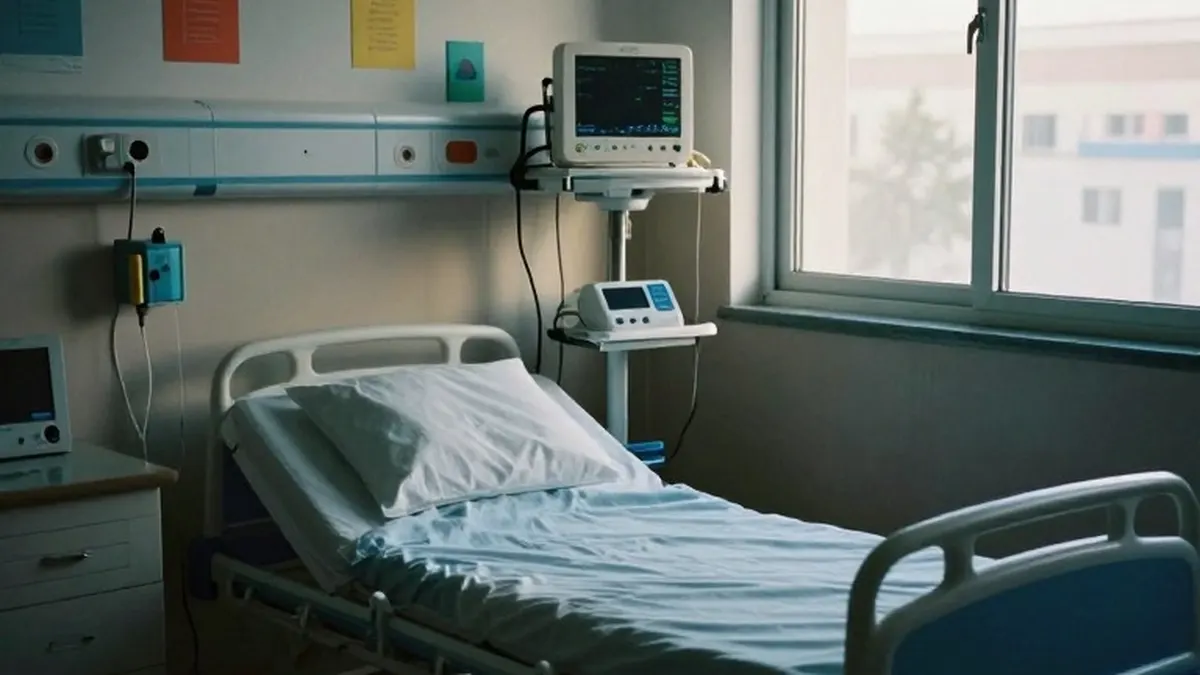
Hospital units that care for the sickest children in the United States are vanishing. Over the past year, intensive care units for critically ill kids have closed in Montana, Oregon and Missouri, while overnight children's wings have shut in Illinois and California.
Pediatric intensive care units are separate from neonatal intensive care units and can serve patients from a few weeks old into their teens or early adulthood. Many hospitals trying to trim costs are converting those beds into services for newborns or adults. The result is that pediatric critical care is concentrating in large medical hubs, and families must travel farther to reach it. "You can't expect that people will be fine if the next-closest children's hospital is a flight away or an eight-hour drive," said Elizabeth Mack, a pediatric critical care doctor and spokesperson for the American Academy of Pediatrics.
Hospitals that scale back children's care usually point to low patient numbers, since it is relatively uncommon for a child to need intensive care. Recruiting is also difficult because the country is short on pediatric subspecialists, who earn less than doctors focused on adults. Hospitals are often paid less for treating children, and equipment designed for kids adds expense. A recent analysis found the number of hospitals with pediatric inpatient units fell by nearly 30% between 2008 and 2022, from 1,749 to 1,226, leaving three-quarters of hospitals without such services.
Researchers and medical groups warn the gaps could grow because of federal Medicaid cuts. The Trump administration has added administrative hurdles and narrowed eligibility, and although those changes focus on adults, about half of American children are covered by Medicaid or the related Children's Health Insurance Program. Public aid researchers say children can lose coverage when caretakers get caught in paperwork, and lower enrollment would hurt hospital finances.
The effects are visible in Missoula, Montana. Darby Waldbillig's nearly 2-year-old daughter, Siobhan, was struggling to wake up in 2022 and was flown 100 miles from Helena to Community Medical Center. She was diagnosed with bacterial meningitis and spent more than a week in the pediatric intensive care unit, which closed this month. "I firmly believe it's because of those doctors that she lived," Waldbillig said.
Hospital CEO Greg Cook said most children will still be treated there, but the sickest, such as those needing a ventilator or continuous seizure monitoring, will be stabilized and sent elsewhere. He said the hospital has been unable to recruit a pediatric critical care doctor to live in Missoula since the last one retired eight years ago, relying instead on visiting specialists. The unit saw about two intensive care patients a month, and the closure is expected to affect roughly 25 patients a year. The next-closest option in Montana is in Kalispell, about 150 miles north.
Finances are not the only factor. The Missoula hospital is owned by for-profit Lifepoint Health, with revenue above $10 billion a year, while St. Vincent Medical Center in Portland, Oregon, which closed its four-bed unit last November, belongs to the nonprofit Providence system. Both cited too few patients as the main reason.
Raj Basu of Lurie Children's Hospital in Chicago said hospitals lacking experience with complex cases could put patients at risk, noting that better medicine means surviving children often have more complicated conditions. He said doctors sense that kids are arriving sicker, though data to prove it is lacking. Kenneth Michelson, lead author of the study on declining units, called the capacity "a national necessity" and suggested more federal funding for low-access areas and higher Medicaid reimbursement. He warned that regional centers could be overwhelmed, recalling that in 2022 small emergency departments had to call 10 to 20 hospitals to place a patient.
Pediatrician Lauren Wilson said Community Medical Center still has a newborn intensive care unit, inpatient pediatrics, emergency care, surgeons and some subspecialists. "This is still the place I would take my child if they were sick and I was worried," she said.