A Houthi siege of Taiz has entered its second month, leaving residents facing dwindling supplies of food and medicine and blocking routes used by families and patients. The blockade affects the city's 1.5 million inhabitants as well as people in surrounding rural districts. The United Nations has repeatedly warned that conditions inside the city could become catastrophic.
The latest siege began when Houthi forces captured al-Turbah in southwestern Taiz governorate, severing the city's principal connection to Aden and the outside world. The Houthis had surrounded Taiz from the north, east and south after reaching its outskirts in 2015, following their expulsion of the government from Sanaa in September 2014. Their recent capture of the western countryside completed the encirclement. About 180,000 displaced people are also trapped by fighting along the main road between Lahj and Taiz.
Salah Ahmed Ghaleb al-Majidi, acting director of the governorate's Siege Affairs Department, told Al Jazeera that the blockade was the most catastrophic imposed on a Yemeni city since the war began in 2014. Food, water, fuel and medical supplies are failing to reach Taiz, while rubbish is accumulating because it cannot be transported to landfill sites outside the city. He said road closures were also separating relatives and threatening family cohesion.
Ahmed al-Mikhlafi, whose name was shortened for security reasons, left Taiz with his wife and three children to perform Umrah in Mecca a week before the latest fighting began. The family postponed their return for more than two weeks, hoping conditions would improve. When they eventually travelled back through Aden, they found the route to their home and Ahmed's workplace blocked.
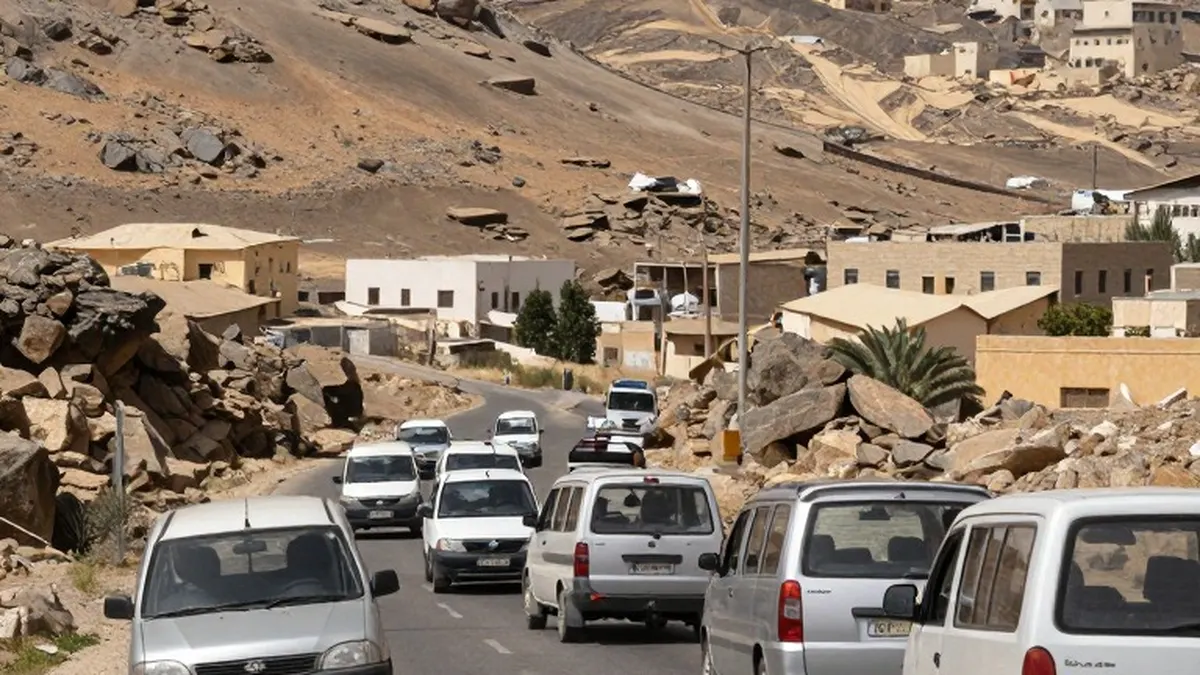
Their shared passenger vehicle took a rough alternative road because the main route through Hayjat al-Abd and al-Turbah was closed. Ahmed said they passed nearly 20 newly established Houthi checkpoints before being stopped roughly 15 kilometres from the city's final entrance. With vehicles queuing ahead, they were told fighting had closed the road and ordered to return the next day.
The family waited another two days in a small rural hotel before continuing their journey. Ahmed's wife, known as Umm Adam, said nine women shared one room with the couple's three children, while men stayed separately. The accommodation cost 100 Saudi riyals, or $26.66, nightly. Ahmed said the passenger fare from Aden had also risen from 35 to 100 Saudi riyals since their outward trip, illustrating price increases that have hit lower-income residents hardest.
Medical access has deteriorated sharply. Taysir al-Samei, information officer at the governorate's health office, told Al Jazeera that access to the city's hospital had declined by 60 to 70 percent by the end of the second week. Hospitals also lack medical supplies and fuel needed to maintain essential services.
For a young journalist identified only as T F, the blockade has obstructed urgent treatment abroad. He has chronic immune-related inflammation affecting his liver enzymes and previously received specialist care in Cairo. As the offensive advanced, tests showed his enzyme levels had risen to 32 times the normal range. His doctor urged urgent treatment overseas, but the journalist told Al Jazeera that his reporting against the Houthis made leaving through territory they control almost impossible.