
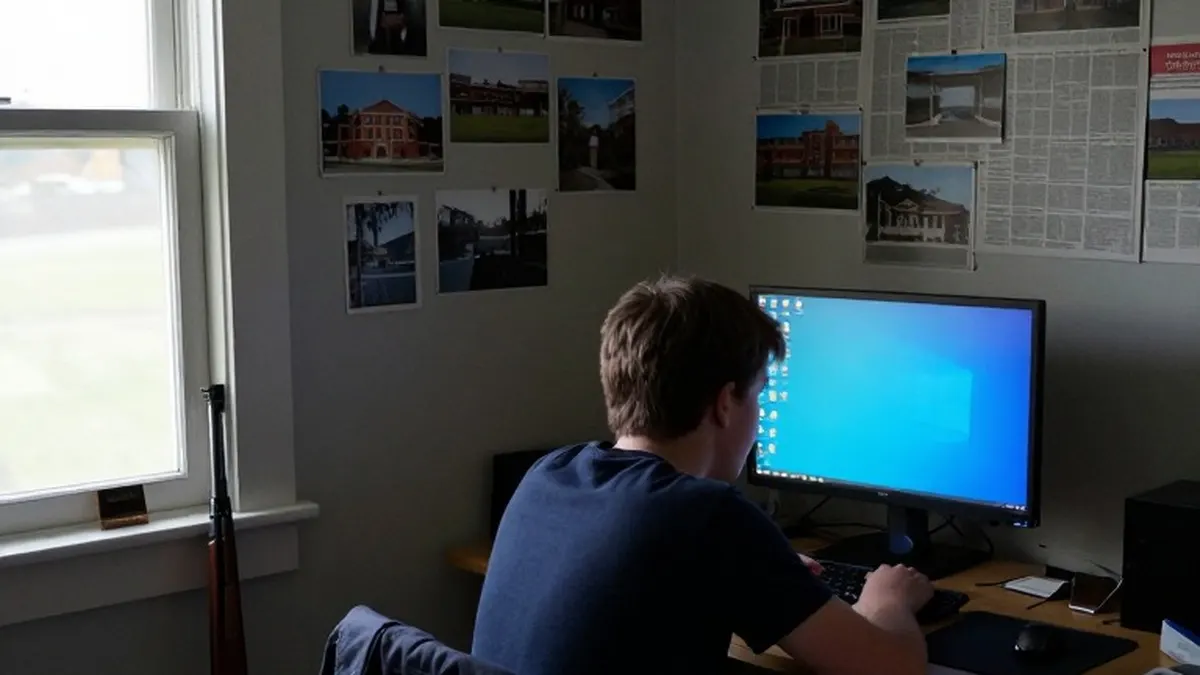
In May 2023, police officers arrived at the home of 13 year old Colt Gray in Jefferson, Georgia, following a tip from the FBI. The officers explained that someone from the family's previous address had used the chat platform Discord to threaten to shoot up a school. Standing in his doorway, the teen denied making the threat, suggesting the officers might have misheard another person. After a brief interview, the officers departed, leaving the family with a contact card should they hear more information.
That same year, Colt's father, Colin Gray, gave his son an AR 15 rifle for Christmas. Nine months later, the teenager brought the weapon to Apalachee High School. He opened fire, killing two classmates, Mason Schermerhorn and Christian Angulo, and two teachers, Richard Aspinwall and Cristina Irimie. Nine other individuals were injured in the attack. In July, the teen was sentenced to life in prison, while his father received a 15 year sentence for purchasing the weapon while ignoring warning signs.
Investigators discovered that the shooter was an active participant in the True Crime Community, often abbreviated as TCC. This online subculture functions as a fan club for mass shooters, where members idolize, romanticize, and sometimes emulate violent figures. The TCC presence was found on popular platforms including TikTok, Reddit, Tumblr, Discord, and the video game Roblox.
Katherine Keneally, director of Threat Prevention at the Institute for Strategic Dialogue, has tracked the TCC for two years. She noted that the community is predominantly composed of minors who are troubled and obsessed with school shooters. Many members share experiences of social isolation or bullying, allowing them to form connections with one another and the shooters they admire. Keneally explained that the information shared online often focuses on the shooters' personal lives and the buildup to their attacks, rather than just the violence itself.
The Apalachee shooter exhibited a chaotic home life, including financial instability, frequent moves, and parental substance abuse. A forensic psychologist testified that the teen showed signs of paranoia, anxiety, and depression. Keneally described how some members develop parasocial relationships with deceased shooters, believing they are in love with them or that they will join them in the afterlife.
The Georgia teen was particularly obsessed with the 2018 Parkland, Florida, shooter. His phone contained notes addressed to that figure, including a message stating, 'I don't know how much longer I will be around for. or if I'll even go through with it. but please know I love you.' Investigators also found a shrine in his bedroom featuring photos and newspaper clippings of the Parkland shooter. In one image, the teen mimicked a famous photo taken by the Parkland shooter in a bathroom mirror.
As the teen planted red flags in his daily life, he began plotting a shooting online with other TCC members. He wrote to one user, 'God, I wish we could commit together… there hasn't been a duo since Columbine.' He also expressed a desire for notoriety, writing that he wanted people to remember the pain he caused and research him for hours. Keneally stated that these members wanted to be the very people they obsess over.
Following the attack, the TCC community celebrated the new member. One user created a heart locket with the teen's picture inside. Even after his arrest, the shooter urged his mother, Marcee, to share his photos with online fans. He begged her to send them to reporters or create a social media account to spread the word. During a phone call, he expressed joy at being compared to famous shooters, telling his mother, 'I'm being compared with the big dogs.'
Experts advise parents to have open conversations with their teens about issues like divorce, school attendance, and social struggles. Keneally emphasized the importance of knowing what children are doing online, including checking for unfamiliar figures in their rooms or on their devices. She urged families to seek help from teachers, counselors, or mental health professionals if concerns arise, noting that there are resources available and that intervention can prevent greater tragedies.





