Director David Leitch has spent his career crafting high-octane action sequences, but his sixth feature film, How to Rob a Bank, marks a shift in his approach. The heist dramedy is designed to inspire audiences to take proactive steps in their own lives, a theme that resonated with Leitch as he prepared for the film's release around the recent midterm elections.
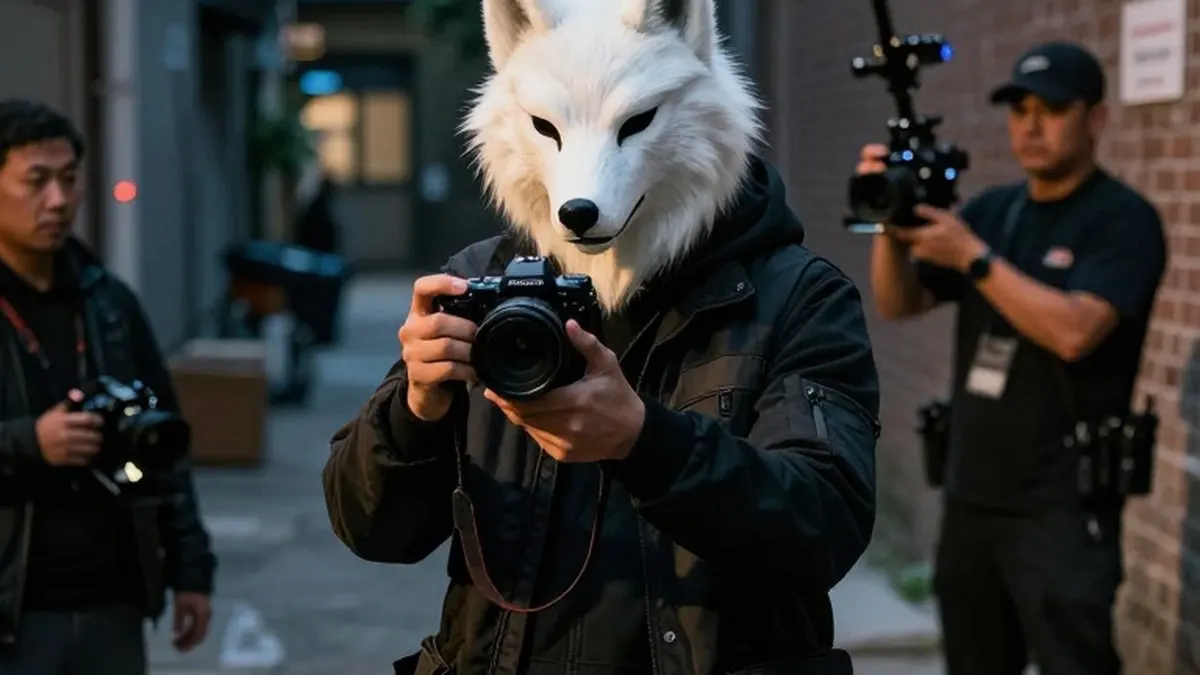
The story follows a crew of altruistic bank robbers who document their crimes on a popular YouTube channel called Who’s Hungry? The group, led by Nicholas Hoult’s character known as The Wolf, believes the American Dream has been hijacked by predatory institutions. They are pursued by an FBI agent played by John C. Reilly and a criminal programmer portrayed by Zoë Kravitz, who assists in unmasking the thieves in exchange for freedom from house arrest.
Leitch noted that the production was significantly smaller than his previous work. While The Fall Guy had an estimated budget between $125 million and $150 million, How to Rob a Bank was a more modest undertaking. The film was shot in just 40 days, less than half the time required for the earlier project. To manage this compressed schedule, the team poured nearly $60 million into the Pittsburgh economy to qualify for tax incentives, making it one of the most prominent films to feature the city since The Dark Knight Rises.
A key strategy to maximize efficiency was the creation of a second unit dubbed the YouTube unit. This team, composed primarily of stunt performers, captured the masked robbery sequences on prosumer digital cameras, including DJI drones and Insta360 devices. This allowed Leitch and the main cast to focus on the dramatic, unmasked portions of the story, which were filmed on 35mm film. Leitch admitted that using celluloid required extensive financial planning given the mid-budget constraints.
The dual-unit structure proved particularly useful due to a major injury sustained by Hoult. The actor tore his ACL while playing basketball shortly before production began. Instead of undergoing surgery and dropping out, he committed to intensive physical therapy three times a week. Leitch and his producing partner, Kelly McCormick, structured the shoot to spare him significant physical pain, relying on the masked stunt work for many of the high-energy scenes.
Leitch, who has a background in the stunt department, is accustomed to working around knee injuries, having directed Keanu Reeves in the John Wick franchise where the actor also dealt with a bad knee. Leitch described Hoult as a tough performer who completed much of his own work, including a major fight scene in a garage. The actor’s limp in certain street scenes was an embellishment of his injury rather than a direct reflection of his physical state at the time.
Although the film carries a strong anti-capitalist message, Leitch said there was no pushback from Amazon MGM, the distributor. He stated that the studio’s filmmaking core encourages artists to speak their minds and make provocative films. The director also revealed that he added the content creator element to the script to give the characters a more contemporary and evangelical tone, transforming the original draft into a modern commentary on economic inequality.
In a lighter note from the production, Leitch revealed that his own voice was used for the guinea pig named Morpheus. The sound designer, running out of mix days, asked Leitch to record a line on the mic, which became a cameo in the final cut. Leitch is currently in post-production on his next film, Jason Statham Stole My Bike, starring the action star.