Pegah Ahangarani, a former child star who grew up on film sets in Iran, has transformed her personal family archives into a feature-length documentary that has garnered significant international attention. Her debut feature, Rehearsals for a Revolution, premiered at the 2026 Cannes Film Festival where it won the L'Œil d'or for best documentary. The film has since been selected as the United Kingdom's official submission for the best international feature film category at the 2027 Oscars.
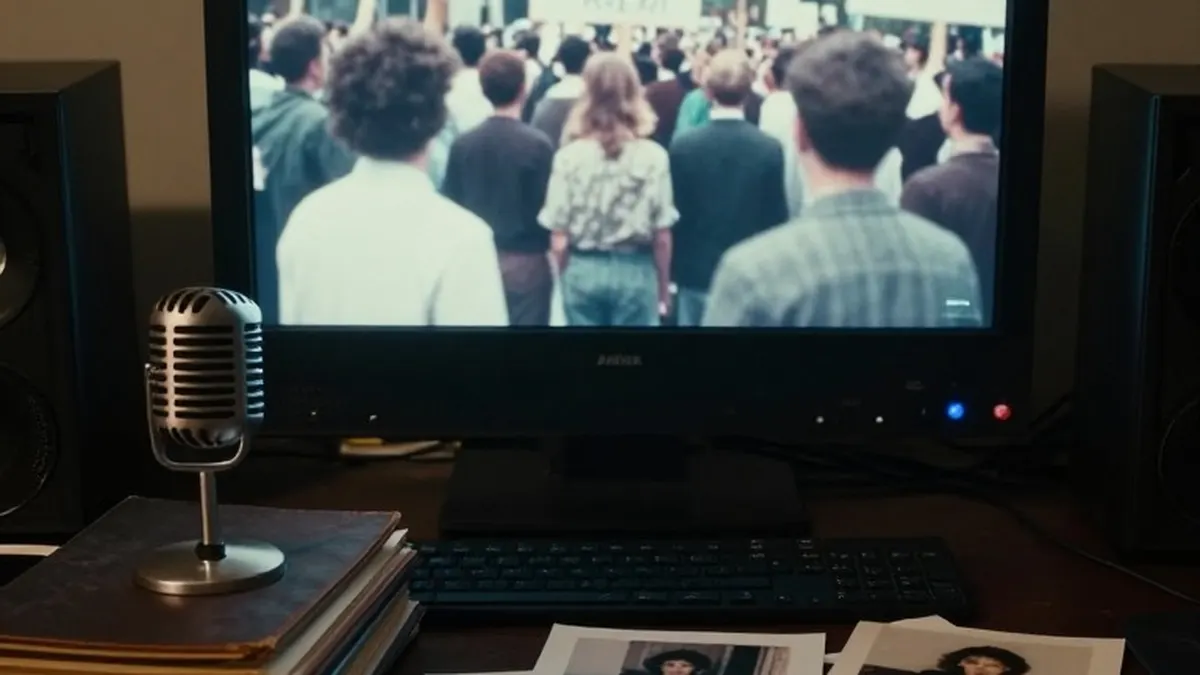
The documentary draws from more than 40 years of Iranian history, spanning from the late 1970s to the recent war with the United States and Israel. Ahangarani combines home videos, street protest footage, newspapers, and recorded voices to narrate her life story. She weaves intimate recollections, such as the scent of a schoolteacher's hair and the search for her uncle during the 1999 student protests, into a broader portrait of a nation shaped by political repression and the constant hope for revolution.
Ahangarani describes the project as a deeply personal effort to share her fragility with the audience. She views her family archives as a powerful tool against the regime. "I realized, 'Okay, these are my materials, these are my tools,'" she said. "Because I think these personal archives can stand against the dictatorship, the official version of history that the dictators want us to believe." This perspective was solidified after she found an old family photo in which her father's executed best friend had his face scratched out by her grandmother.
The filmmaker left Iran in 2022 after a series of events, including the seizure of her apartment and bank accounts following her solidarity with the Woman, Life, Freedom movement. She had previously spent one month in solitary confinement in the Evin Prison. Now residing in London, where she has been settled since 2023, Ahangarani faces the risk of a lengthy jail sentence if she returns to her home country.
The production of the film was a low-budget endeavor, described by Ahangarani as being made with almost no money. She worked primarily with her editor, Arash Ashtiani, and a microphone in an intimate space. Kaveh Farnam, founder of the Czech Republic's Media Nest, served as a producer, having collaborated with her on previous short documentaries. The Spanish company Fasten Films joined the project later, providing support for music copyright and sound design, and leveraging their relationship with French distributors to secure the Cannes premiere.
The documentary addresses the guilt Ahangarani experienced during this year's civilian massacres and crackdowns in Iran. While editing the final episodes, she struggled with the relevance of cinema in the face of such tragedy. "I told my editor, 'Cinema doesn't mean anything anymore after all these dead bodies,'" she recalled. She ultimately decided to share these concerns with the audience, believing it was the only way to convey the ongoing struggle of the Iranian people.
Following the Cannes premiere, Ahangarani noted that audiences responded with a deep empathy for the Iranian people. Many told her they felt as though they loved her people as much as she did. This reaction reinforced her belief in the power of cinema to create intimacy and bridge cultural gaps, allowing viewers to resonate with the specific struggles depicted in the film.
For Ahangarani, the U.K. Oscar selection holds significant personal meaning beyond the artistic achievement. After leaving her home country, she felt stateless and uncertain about her future. "When the U.K. announced that they picked our film, I had a feeling like I wasn't stateless anymore," she said. "There is one place that accepted me." The selection marks a moment of belonging for the filmmaker as she continues to advocate for her country's history through her work.