The extraordinary television following of Anatoly Kashpirovskiy is the subject of a documentary screened at the Ji.hlava documentary festival in the week leading up to Nov. 1. Presented in the festival’s Testimonies section, Polish director Lukasz Konopa’s “Kashpirovskiy. Under the Spell” examines the performer whose hypnosis appearances drew vast audiences as the Soviet world approached collapse.
A trained medical doctor, Kashpirovskiy said his interest in hypnosis began with an effort to address medical students falling asleep during his lectures. His appearances on state television subsequently made him a mass cultural phenomenon. Konopa describes the experiment in television medicine as reaching a Soviet audience of 300 million, with viewers drawn to a figure variously described as a hypnotist, healer, magician and conjurer.
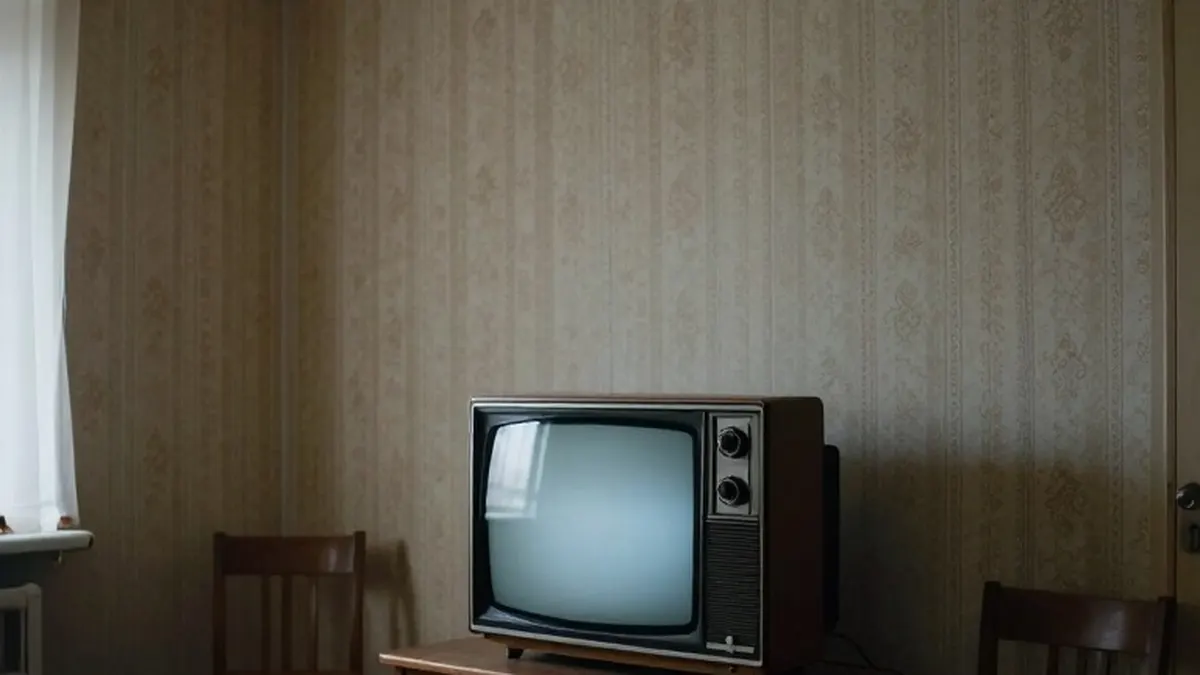
For Konopa, the subject also belongs to his own childhood. He remembers being seven in a small village in communist Poland when he watched a black-haired man speaking an unfamiliar language on television. Lights flickered in the family apartment. Konopa says he later learned that the electricity network was struggling with the demand from the bulky television sets being used simultaneously by viewers watching Kashpirovskiy.
After studying film in the United Kingdom and pursuing cinematography, Konopa largely put that memory aside. It returned during the first lockdown in 2020, prompting him to investigate what had happened to the performer. He saw Kashpirovskiy as an important figure in the transition from communism to capitalism. Revisiting the broadcasts, Konopa was struck by how closely the performer’s reassuring manner and advice resembled those of a contemporary life coach.
The research took Konopa to archives in Ukraine, where Kashpirovskiy began his career. Among the discoveries was footage shot on 35mm dating to 1971, more than 15 years before his fame. It showed him in medical clothing, riding a bicycle and performing hypnosis for an audience at a Soviet cooperative farm. Researchers in Ukraine, Poland, Georgia and the Czech Republic helped locate hundreds of hours of material, despite uncertainty about what survived, where it was held and who owned it.
HBO joined the production in 2025, supplying funding that Konopa says allowed filming and archival collection to continue without interruption. With Kashpirovskiy already elderly, the director felt pressure to work quickly while access to him remained possible. The material offered a way to examine both the performer’s methods and the public image amplified by television.
Konopa’s assessment is that Kashpirovskiy mastered stage hypnosis and psychological suggestion through more than 25 years of performances in factories, villages and cooperative farms. He points to carefully coordinated music, scripts, appearance and delivery, and believes those techniques could induce trance or suppress the sensation of pain. But establishing whether deception was involved was less central to his film than understanding the persona and its appeal. Konopa wanted viewers to experience something of the fascination that held the original audiences.