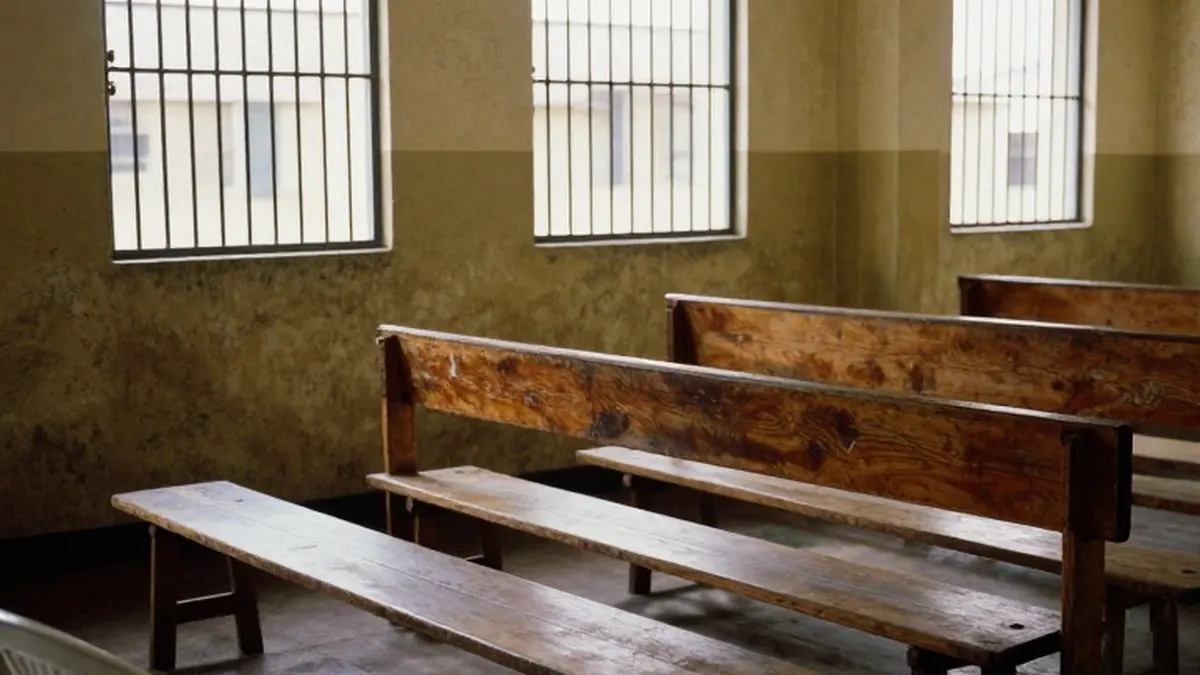
Praise Aloikin Opoloje has been in detention since September 26, 2026, held at Luzira Women's Prison on a charge of unlawfully using a SIM card registered in her mother's name. She appeared before the Buganda Road Chief Magistrate's Court on September 28, accused of using another person's SIM card to carry out illegal activity, and denied the charge under Regulation 29 of Uganda's 2024 Regulation of Interception of Communications Regulations. Her case has highlighted the risks faced by Ugandans who use social media to criticise powerful political and military figures.
Opoloje says her detention followed a video in which she declared she was not afraid of General Muhoozi Kainerugaba, Uganda's military chief and son of President Yoweri Museveni. She says she was lured to a Kampala police station by a false accusation that she had stolen a carpet, and alleges that six men then forced her into a Toyota HiAce van, known locally as a drone. She says the men beat her, threatened to rape her and drove towards Entebbe before a phone call prompted them to turn back to Kampala Central Police Station. One of the men allegedly told her: We are going to show you what we do to people who insult our president. Her account could not be independently verified.
Asked whether she would stop speaking out, Opoloje said: "Me? Never. In fact, when I get out, if I do, I will start from where I stopped. I cannot keep quiet seeing what is going on in the country." She said she feared being taken to a basement where she believes people are tortured and raped, adding: "Being in here in prison is better than being in the basement that they were taking me to." She was granted bail on October 14, with court permission required before travelling internationally, but the criminal charge against her remains.
Opoloje also alleges that men have threatened her mother, telling her they knew where she lived. She says her detention has affected her family, including her three-year-old daughter. "I don't think my mother or my three-year-old daughter should pay the price for my actions," she says.
Emmanuel Baliza, 59, faces a different uncertainty: he says he does not know where his 17-year-old son, William, is being held. He says armed men took William from their home after the teenager expressed an intention to protest against police brutality and Uganda's education system. Emmanuel says a stranger first lured him away using a pretext involving land, and that about six men in military uniforms and face coverings were waiting in a Toyota HiAce van and searched his phone. He alleges the men took William, saying they were arresting him for planning to protest after the elections, and told him they were taking the boy to the Special Investigations Unit without providing a reference number.
Emmanuel says he later heard William might be held at a military detention facility in Kasenyi near Entebbe, but officials denied holding his son. According to Emmanuel, his daughter told him William had posted a message on TikTok reading: "Uganda is bleeding." "I do not know where my son is," he says.
Journalist and human rights activist Andrew Tabandama Natumanya says his reporting on a security operation involving properties linked to former Parliament Speaker Anita Among brought scrutiny from security personnel. In May, officers searched properties linked to Among amid investigations into allegations including corruption and money laundering, and media reports said luxury vehicles, including a 2025 Rolls-Royce Cullinan, were seized. Andrew says he posted real-time updates about the operation on X and believes the attention he attracted stemmed partly from questions about how he obtained information from within security agencies. Among was placed under house arrest but was later ordered released by President Museveni, and the state decided not to pursue charges.
Andrew alleges that on June 17, 2026, a stranger lured him to a washing bay, where armed personnel forced him into a van. He says he was assaulted and humiliated, that officers placed his head beneath one officer's feet before stripping him naked and photographing him, and that they warned him against continuing to publish online. He says he was detained for five days before being released on bail. His account has not been independently verified. Despite what he describes as intimidation, he says he will continue reporting: "I will not delete my (posts). I will change tactics, but continue stating facts." "We want to see a free Uganda," he adds.
Steven Atukwatse, a lawyer with the Agora Research Center, a human rights organisation, says he has handled 12 cases since November 2025 involving social media users charged under Uganda's Computer Misuse Act, many of them TikTok and X users. "Most are arrested for either criticising Museveni or his son, Muhoozi," he says. He describes families struggling to locate detained relatives. "They disappear, then a few months later they are dumped at police stations," he says, adding that the state sometimes leaves charges hanging without a formal withdrawal: "Later on, the state loses interest, but there's no formal withdrawal of charges, which means you may be out but not completely free." He says the imbalance of evidence makes mistreatment claims hard to pursue, because the state can produce a social media post while defence lawyers cannot easily prove an abduction or torture.
Army spokesperson Colonel Chris Magezi says allegations of unlawful conduct should be supported by evidence and that the military operates within the law alongside police and intelligence agencies. "We do everything in accordance with the law," he says. He rejects the suggestion that people are being disappeared unlawfully, saying suspects accused of violent crimes are brought before courts: "The rest is political and not necessarily people being disappeared. If they disappear, they appear in court." He also pointed to defamation laws, saying: "If you are going to say things about someone and you cannot substantiate it, you could be arrested."