Buying an iPhone 18 Pro at $1,199 and an iPad at $449 comes to a total close to the $1,999 price of Apple's first folding smartphone, the iPhone Duo. That raises an obvious question: can the Duo's 7.6-inch inner screen serve as both a phone and a portable workstation? A Wired reviewer set out to answer it by working a full day on the device.
The reviewer wrote their entire Duo review on the handset, using the note-taking app Bear, which has been optimized for the larger display. Most apps have not been, and the reviewer noted it could take weeks or months before everything looks right. Even so, the experience was better than expected.
iOS presents some hurdles of its own. It does not recognize a Bluetooth mouse or trackpad by default, so users must enable AssistiveTouch in the accessibility settings. That brings up an iPad-style cursor for navigating the interface and selecting text without repeatedly touching the screen. Smaller jobs, such as pasting hyperlinks or quickly searching for research, remained slower and clumsier, so the reviewer saved them for the end, when the piece was moved into WIRED's content management system. Final touches still required a desktop computer.
Multitasking rules also drew criticism. In split-screen mode, two apps can only share the display in an equal 50-50 arrangement, with no option to drag the divider. In portrait orientation, two apps cannot be stacked freely; only video apps can be pinned to the top with another app beneath. One feature that did win praise is app pairs, which let users pin two apps together, such as email and calendar, and find them in Recents. Tapping the bar in the middle locks and saves the pair.
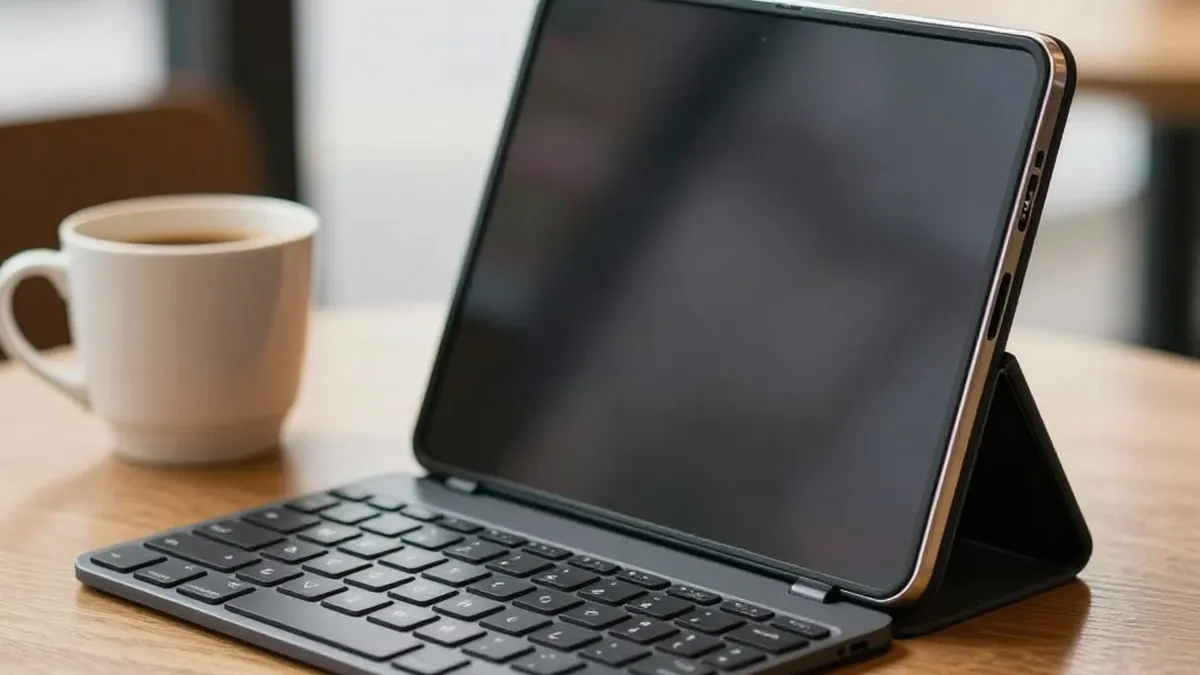
For hardware, the reviewer used an older Seenda folding Bluetooth keyboard, which they admitted is not very good, and expects compact options from makers such as Nillkin and ProtoArc to serve people who need to work anywhere. Apple's iPhone Duo Folio with Kickstand kept the phone upright, though various MagSafe kickstands, tripods and cases are also compatible.
App support varied through the day. Slack had updated the day before the test to fully support the larger screen and vertical navigation, making it easy to move between conversations in a two-pane view. The reviewer still wants Apple to add something like the iPad's Slide Over, which would tuck a messaging app to the side without disrupting split screen. Zoom was not optimized, and the video got stuck in an awkward portrait orientation. The reviewer solved this by laying the phone on the table and aiming the 5.4-inch outer screen at their face, creating a more laptop-like setup. Their editor described video quality from both selfie cameras as "really good."
Gmail was the biggest frustration. Google updated its Google Search app for the Duo earlier in the week, but the rest of its workspace apps look poor on the device. The reviewer expects full support soon, possibly by Friday, when the Duo officially launches, and called the two-pane view a game changer for clearing email on the go.
Battery life held up well. By 6 pm it stood at around 45 percent after roughly six hours of screen-on time, which the reviewer called very impressive.
The verdict: the Duo is unlikely to replace a laptop, and people used to the iPad's bigger screen may find it cramped. With a kickstand and a portable keyboard, though, focused, light work is entirely doable, and Apple Pencil support due later this year could make the device more compelling. The reviewer closed with a note of caution that a single do-it-all device may not be as appealing as it sounds, and mentioned reports that Apple is making a touchscreen MacBook.