Iran has initiated a new wave of military strikes against its Gulf neighbors, specifically targeting locations in Kuwait and Bahrain. The attacks occurred as regional tensions remained high, marking a significant escalation in the ongoing conflict.
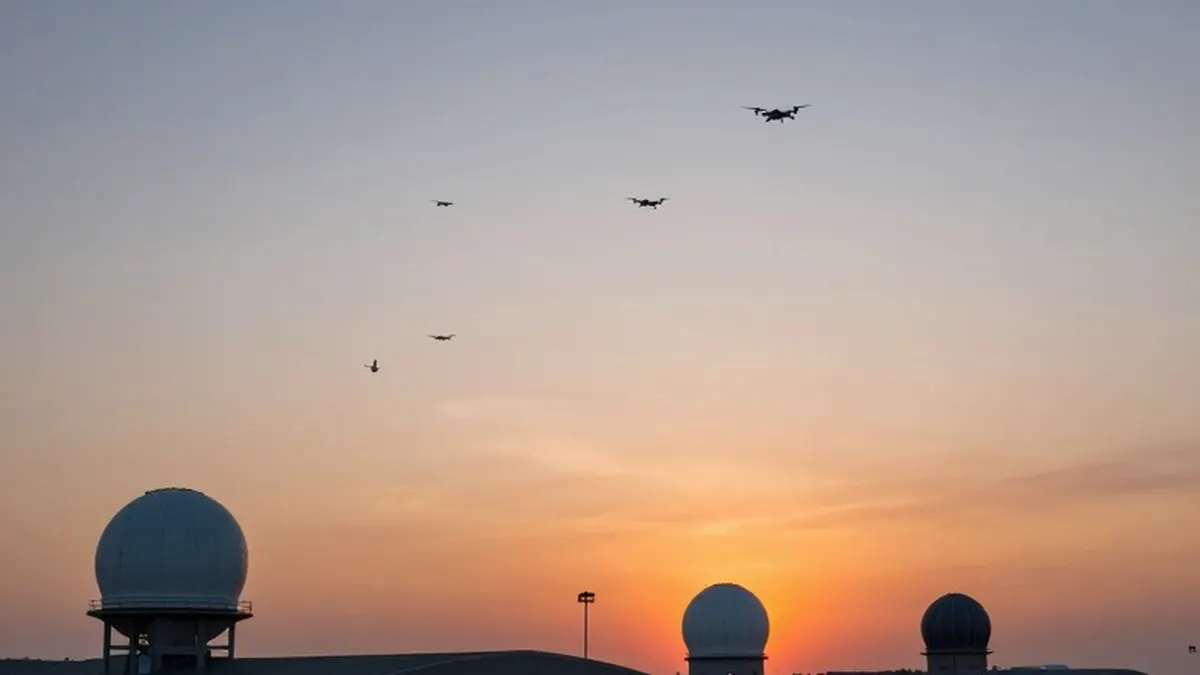
In a statement released on state media early Wednesday, the Iranian army confirmed that it deployed destructive combat drones to attack the Ali al-Salem Airbase in Kuwait. The military specified that the drones were aimed at Patriot defense systems as well as drone and missile launchers belonging to the United States forces stationed at the base.
The Iranian army expressed a firm stance in its announcement, stating that it would not bow to any power in defense of the Islamic Republic. The statement further declared that Iran's response to any threat or aggression would be decisive and crushing, noting that such responses would not be limited by geography.
The Kuwaiti military responded quickly, announcing that its air defense systems were actively countering the incoming attack. The Kuwaiti Foreign Ministry subsequently described the strikes as repeated and criminal acts. Officials characterized the attacks as a direct threat to the nation's security and stability.
In a post on social media platform X, the Kuwaiti ministry warned that the continuation of these strikes represented a dangerous escalation. The statement argued that the attacks undermined diplomatic efforts aimed at de-escalation and reducing tensions in the region. Kuwait reaffirmed its inherent right to self-defense, asserting its ability to take all necessary measures to safeguard its sovereignty and defend its vital facilities against any aggression.
Separately, Bahrain’s Ministry of Interior reported that civil defense teams had evacuated a multi-storey building in the country's northwest region. The precautionary evacuation took place in the Souq Waqif area due to a fire that broke out in the structure. The ministry confirmed that no injuries were reported and that the fire was successfully extinguished.
Investigations are currently underway in Bahrain to determine the specific cause of the fire. While the ministry did not explicitly link the incident to the Iranian drone strikes in its initial statement, the timing and location of the event have drawn attention amid the broader regional conflict.
The current hostilities follow an initial hot conflict that began in February of this year. Since then, the war in Iran has seen a reduction in tempo. Analysts widely attribute this lull to the dwindling supply of US anti-aircraft missiles and the significant economic impact of Iran's blockade of the Strait of Hormuz on the global market.
Despite the recent calm, a return to full-scale hostilities appears probable. The United States continues to build up its naval assets in the region, signaling a readiness for further engagement. Meanwhile, Israel maintains that overthrowing the Iranian government remains a key strategic priority.
Israel, which lobbied the US to initiate the war initially, continues to demand the resumption of active combat. The recent attacks on Kuwait and Bahrain underscore the complex dynamics at play as various actors seek to influence the outcome of the conflict.