As fears grow of a renewed war with the United States, Iran's Front of Islamic Revolution Stability, a hardline faction also known as the Paydari Front, has asked parliament and the Supreme National Security Council to begin withdrawing from the Nuclear Non-Proliferation Treaty. The group said military efforts should proceed "as quickly as possible", a statement widely read as a call for Iran to build nuclear weapons.
The message is the latest defiant signal from Iranian hardliners toward Washington. The United States and Israel launched a war on Iran on February 28, saying Tehran was trying to develop nuclear weapons. Since then, the Strait of Hormuz has been largely closed to shipping, missile and air strikes have badly damaged Iranian and Arab infrastructure, and global energy supplies have been severely disrupted.
Over the past eight months, a struggle for influence has played out between moderates and centrists, including President Masoud Pezeshkian, who generally support talks with the US, and the Paydari Front, which opposes them. Moderates want a quick end to the fighting to protect Iran's struggling economy. Hardliners argue that Washington understands only force and that the war should go on until the US yields to Iran's demands.
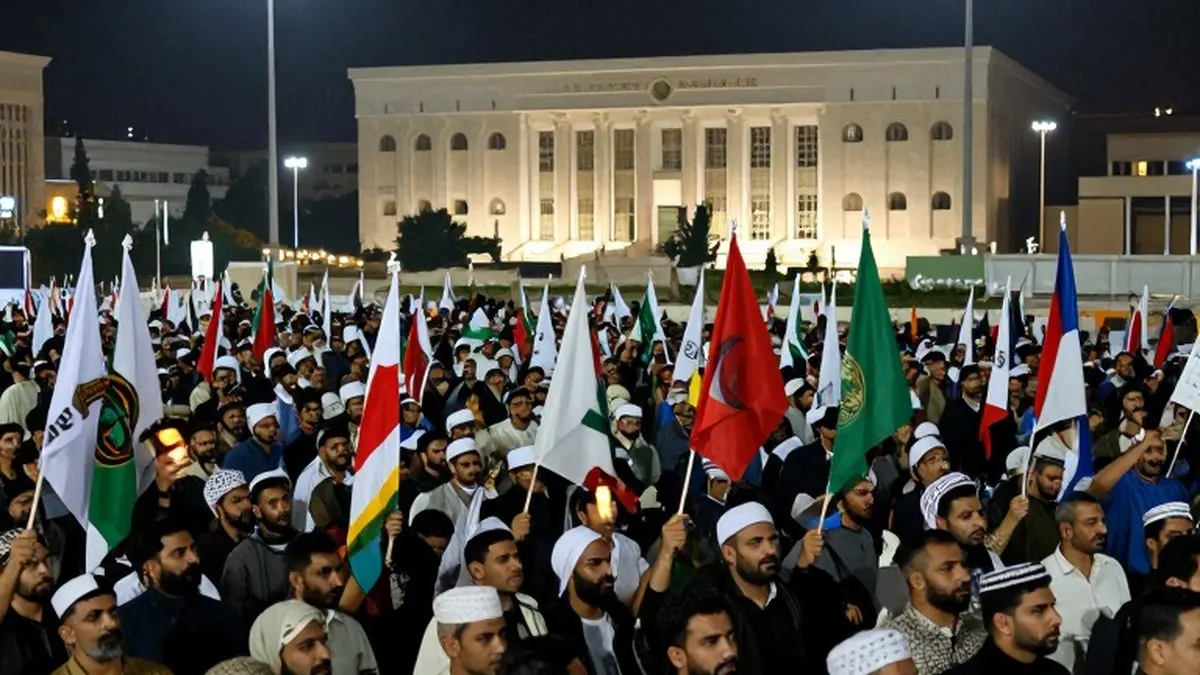
The rivalry is visible in the public squares of major Iranian cities, where hardline supporters have gathered at night for 200 days. The rallies began as shows of support for the government and protests against the US war, but have become organised political events. Slogans include "No compromise, no surrender" and "Negotiating with the enemy is a betrayal of the homeland." Activists also demonstrated when Pezeshkian returned to Tehran from the UN General Assembly in September, where he condemned the war but praised diplomacy.
The bloc's reach extends well beyond the streets. Hardliners hold a strong position in Tehran's municipal government, parliament, religious preaching circles, academia and the media. Amirhossein Sabeti, a Paydari-aligned lawmaker, said talks will not begin unless Washington ends its siege of Iran's southern ports or lifts sanctions. "The only language the world understands is the language of power," he said.
The faction has also filed a motion to impeach Foreign Minister Abbas Araghchi over his trip to New York for the UN General Assembly. Parliament is separately weighing a law that would criminalise interviews with foreign media, which would be another gain for hardliners.
Supporters of the government continue to press for diplomacy. Davood Heshmati, a journalist considered close to Pezeshkian, told Al Jazeera there are signs US forces have dropped the aim of overthrowing the Iranian government in favor of more modest goals, making a diplomatic outcome more likely. He said alternatives to military action should always be tested first, and that any end to the war requires an understanding with the US that respects Iran's territorial integrity.
Political analyst Negar Mortazavi said the hardliners are a deeply entrenched and well-organised force able to mobilise supporters, shape debate and raise the political cost of diplomacy. But she stressed that decisions on war and negotiations are made at the highest levels, including Supreme Leader Mujtaba Khamenei and the Supreme National Security Council. "They are powerful enough to complicate diplomacy, but not necessarily powerful enough to stop it," she said, noting that hardliners failed to block the JCPOA under Barack Obama or the recent memorandum of understanding with Trump.
Street rallies and television programmes opposing a peaceful settlement are expected to continue. Still, the delay in scheduling Araghchi's impeachment hearing, along with ongoing contact with mediators aimed at ending the war, suggests the moderates remain a force to be reckoned with.