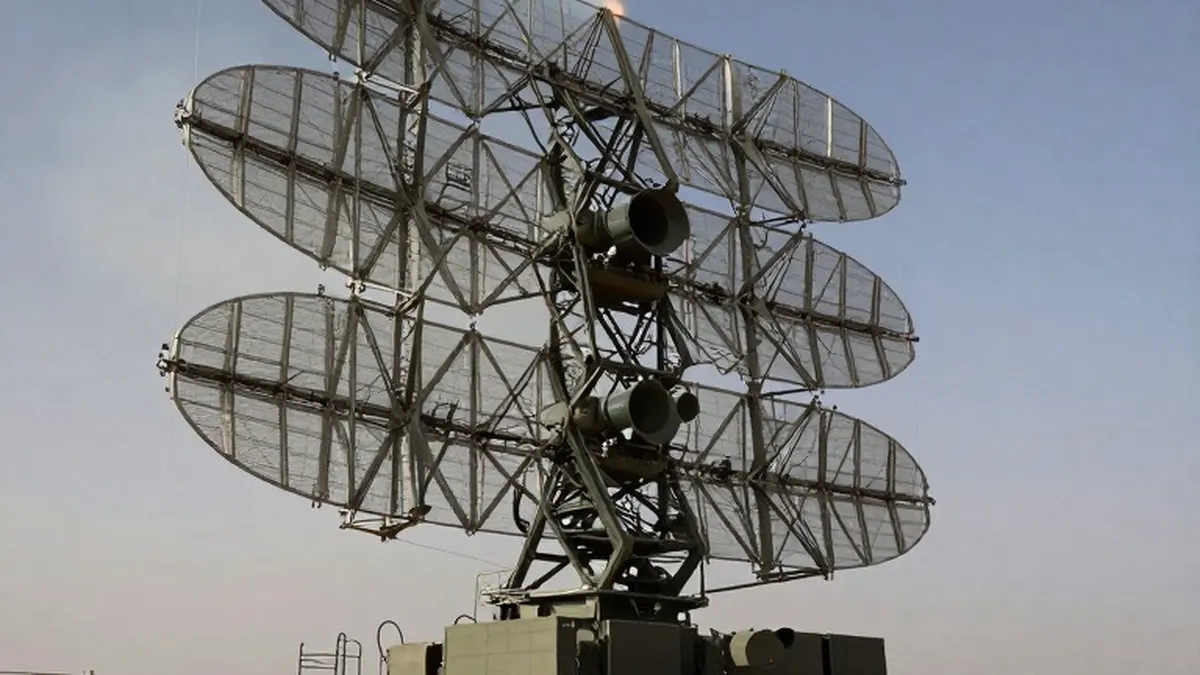
The Islamic Revolutionary Guard Corps announced on Friday that it had successfully targeted and destroyed a US early-warning radar system in Bahrain. This engagement represents the first direct Iranian attack on a US military installation in several months. The strike was a retaliatory measure following a US airstrike on a communications tower located in Sirik, which overlooks the strategic strait of Hormuz.
The IRGC framed the operation as a significant warning to the United States. In a statement, the group accused the US of engaging in aerial mischief and oil smuggling within the strait. The command indicated that its aerospace force remains on full alert and is prepared to confront the enemy without constraint if violations continue.
President Donald Trump has addressed the escalating tensions in multiple media interviews over the last day. He stated that he is prepared to attack Iran only if it becomes necessary. Trump claimed that Gulf nations, including Saudi Arabia, have urged him to restrain his forces from launching planned large-scale military strikes at this time.
In a notable shift in diplomatic strategy, Trump revealed he has asked Vice President JD Vance to step back from negotiating a new deal with Iran. Vance is now instructed to focus on corruption and fraud in US states and cities controlled by Democrats. Previously, Iranian officials viewed Vance as the most trustworthy figure close to the President. However, they had recently rejected his request for a personal meeting to discuss the terms of a potential peace agreement.
The conflict has become a central issue in US politics. Vance has been at the forefront of Republican arguments that the war contributed to significant losses for the party in the midterm elections. Trump expressed disappointment with the American public, arguing that higher diesel prices were a minor cost compared to the benefit of preventing Iran from acquiring a nuclear weapon.
In the United Kingdom, public opinion appears to lean heavily against further involvement. A YouGov poll commissioned by the Council for Arab-British Understanding found that 65% of the British public oppose the US resuming the war in Iran, while only 14% support it. Additionally, 54% of respondents opposed the use of UK bases for US attacks, and 45% supported additional sanctions against Iran. The survey was conducted earlier this week, just before two Iranians were found guilty of spying and planning attacks on journalists in the UK.
Chris Doyle, the director of the Council for Arab-British Understanding, noted that the British public is skeptical about the potential outcomes of a war. He highlighted that 79% of Labour voters who supported the party in 2024 oppose any further conflict, a figure he suggested the government should take seriously. The Iranian embassy has separately rejected the recent court judgment against the two spies as an attempt to advance a political agenda.
Within Iran, the Assembly of Experts has called for a review of the country's defense doctrine. This body of elected Islamic jurists is responsible for selecting the supreme leader. Their statement describes reviewing Iran's membership in the nuclear non-proliferation treaty as an unavoidable necessity and a public demand. This move carries significant religious weight as the assembly comprises senior clerics qualified for independent legal reasoning.
Iran has long maintained a prohibition on nuclear weapons based on a fatwa issued by the late supreme leader Ali Khamenei. However, the relevance of this ruling has been widely questioned since the recent US attacks. While it remains contested whether Iran possesses sufficient uranium stockpiles or technology to build a weapon, the UN nuclear inspectorate has expressed growing alarm. The agency stated it is imperative to carry out verification activities without further delay, noting a continued lack of information regarding the Isfahan facility.
The inspectorate specifically noted that it does not know the exact location of the Isfahan uranium enrichment facility or whether it currently contains nuclear materials. This uncertainty has heightened international concern as diplomatic and military tensions continue to rise in the region.