Republicans were not the only ones reacting to a sweeping Democratic victory in the midterm elections. Iranian leaders took a victory lap on Wednesday, portraying the results, in which Democrats made inroads even in traditional Republican strongholds, as a repudiation of President Donald Trump's war and a verdict on the economic pain it inflicted on American voters in the months leading up to the election.
"The process of the US's collapse has accelerated," Iran's current Supreme Leader, Ayatollah Mojtaba Khamenei, wrote on an official English language account on X.
Iranian Parliament Speaker Mohammad Bagher Ghalibaf, who has also served as Tehran's chief negotiator in talks with Washington, framed the vote in similar terms. "Conscience or the cost of living, Americans said NO TO WAR, and we endorse this message," he posted on X. He added a warning: "If the US govt betrays their public will to serve international paymasters and blackmailers, it will learn our NO comes with a Nightmare."
Khamenei also appeared to signal that Iran would harden its position rather than negotiate with the United States. "The Great Satan [the US] wants the surrender of the Iranian nation. The slightest inclination toward submission would cause the immense capital acquired through the blessings brought by the blood of our martyrs and the sacrifices of the entire Iranian nation to be lost," he wrote in another post, adding that it "would embolden the enemy to launch more wars, and carry out its next acts of aggression."
The statements followed Democrats seizing control of Congress on Tuesday night in a political bloodbath for Republicans, a major rebuke to Trump after a campaign dominated by affordability concerns and the months-long war with Iran that the president had repeatedly promised was nearing its end. When the attacks began earlier this year, Trump said the conflict would last weeks, perhaps a bit over a month. It has now been raging for more than eight months.
Iran was hardly the only issue motivating voters, but the conflict became increasingly tied to economic worries as the war pushed energy prices higher and drove up the cost of gasoline and most goods. Polling ahead of Election Day showed deep public dissatisfaction with the Iran conflict. Trump acknowledged after the results came in that Iran "partly" played a role in Republican losses, even as he defended his decision to go to war.
Vice President JD Vance was far more blunt. "The reason we lost is the war," he wrote in a lengthy X post. "If you'd like to argue it was worth it, that losing the Senate for the next 6 years was worth it, then do so. Argue it was a worthwhile cost to pay. Agree or disagree, that's at least honest."
Other figures in Tehran also claimed vindication. Iranian Deputy Parliament Speaker Ali Nikzad called the Republican losses the "aftershocks" of what he described as Trump's defeat at the hands of Iran, while a senior official in Iranian President Masoud Pezeshkian's office said the war and US support for Israel had delivered Republicans an historic electoral defeat.
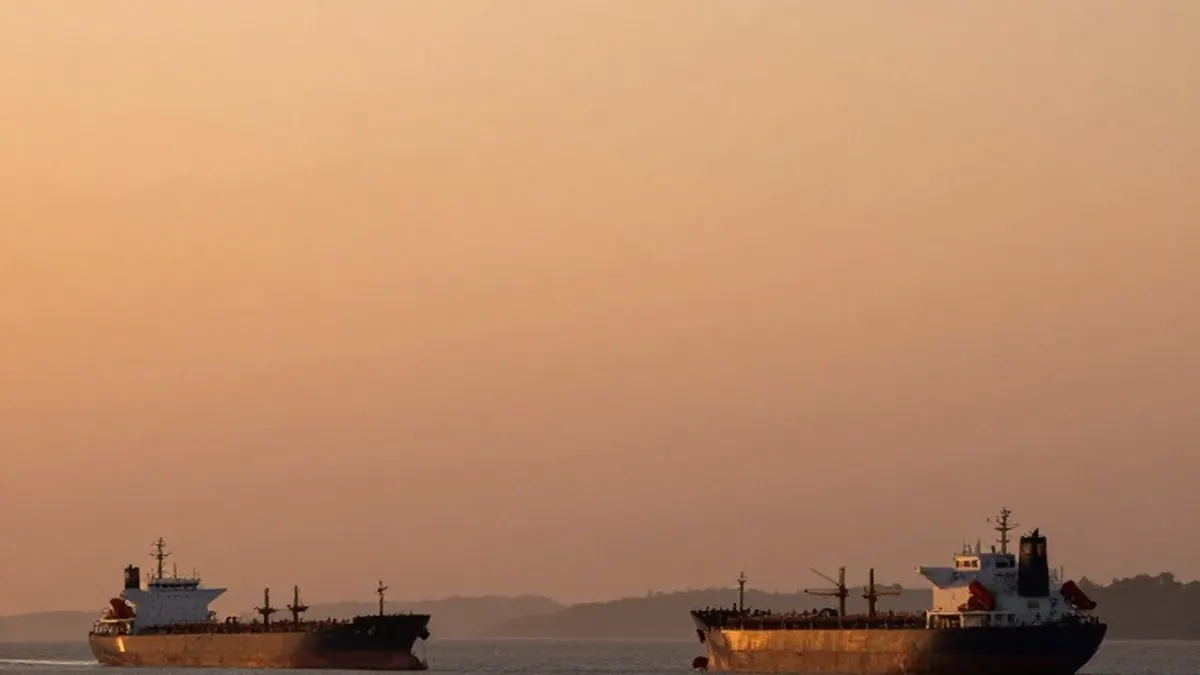
Trump entered the conflict predicting a short war. In the opening days of Operation Epic Fury, he repeatedly said the campaign would take roughly four to six weeks and soon declared US forces were running "substantially ahead" of schedule, as American and Israeli strikes eliminated senior Iranian military leaders and battered Tehran's military infrastructure. But the war proved far easier to start than to end. Iran retaliated by choking commercial traffic through the Strait of Hormuz, the narrow waterway that before the war carried roughly a fifth of the world's oil supply, and by attacking energy infrastructure across the Persian Gulf. Shipping through the strait nearly ground to a halt in the early weeks, removing millions of barrels of oil from global markets. Iranian attacks damaged oil and energy facilities in Saudi Arabia, Kuwait and elsewhere in the Gulf, and by the end of May more than 1.1 billion barrels of crude that would ordinarily have reached global markets had been disrupted, according to the International Monetary Fund.
The economic consequences followed Americans home. Oil prices surged after the war began, feeding through to gasoline and other consumer costs just as Republicans headed into a midterm election already dominated by affordability concerns. Even after US-led operations restored much of the traffic through Hormuz by the fall, oil flows remained below prewar levels and Iran continued attacking commercial vessels. The prolonged conflict also complicated Trump's effort to argue the war had accomplished its central objectives. By October, the president was disputing that he had ever promised the entire conflict would end within four to six weeks, saying that timeline referred only to eliminating Iran's nuclear threat.