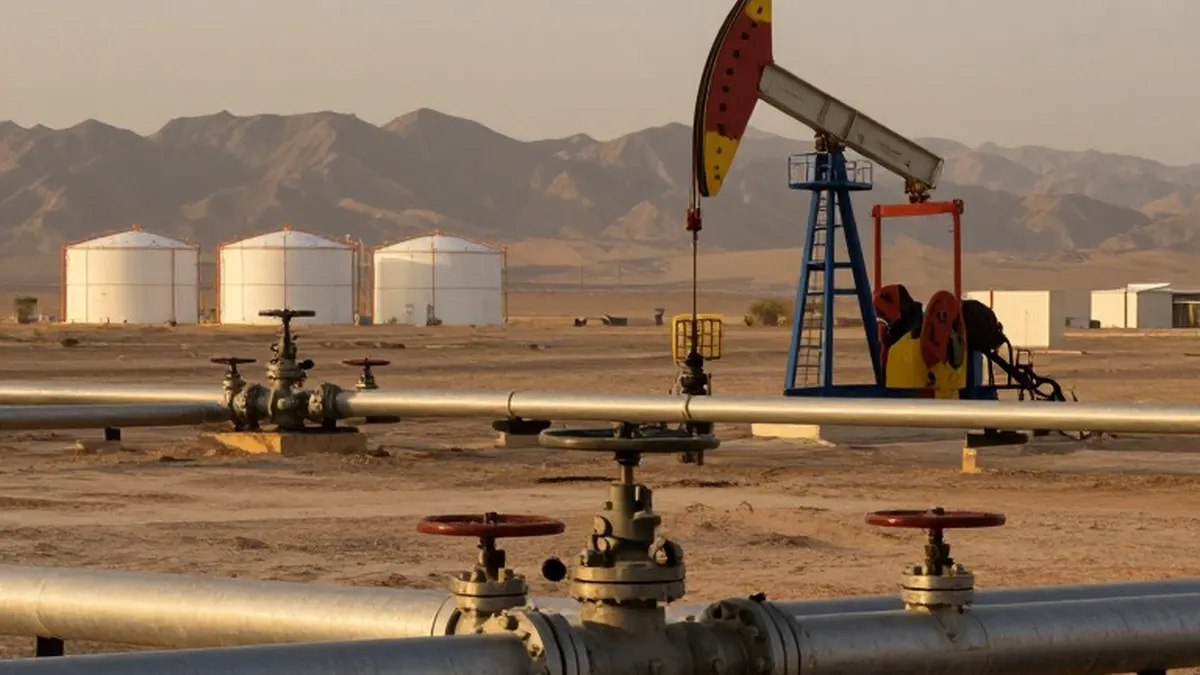
Iraq has resumed pumping crude oil for export to Turkey through the Kirkuk-Ceyhan Pipeline, as Baghdad looks for ways to bypass the Strait of Hormuz.
Iraqi Oil Minister Bassem Khudair said the country plans to pump up to 120,000 barrels per day (bpd) through the 960km-long pipeline, which runs from the northern Iraqi city of Kirkuk to Turkey's Mediterranean port of Ceyhan. His comments came in a statement reported by the state-owned Iraqi News Agency on Tuesday.
Khudair said the flow could climb to 500,000 bpd following the "successful completion of maintenance, rehabilitation, technical and operational tests" on the pipeline, which has been shut down for more than a decade.
Iraq is one of the countries hardest hit by the competing blockades imposed by the United States and Iran in the Strait of Hormuz. Before the US-Israeli war on Iran, nearly all of Iraq's oil exports left through the waterway, and revenue from those sales contributed 90 percent of Iraq's budget.
Restarting oil flows from Kirkuk to Ceyhan is the first step in Iraq's efforts to cut its dependence on Hormuz. Baghdad wants to connect Basra, its energy hub in the south, to the Mediterranean via the Syrian port of Baniyas and Turkey's port of Ceyhan.
Middle East Eye was the first to report US efforts to revive a pipeline connection between Kirkuk and Baniyas. The US ambassador to Iraq, Tom Barrack, welcomed the reopening of the Kirkuk-Ceyhan line on Tuesday in a post on social media, writing: "Go Iraq, Go."
Iraq began reexporting oil to Turkey in September 2025 from the semiautonomous Kurdistan region after a two-year dispute. That agreement saw the Kurdistan Regional Government and foreign oil producers operating in the region agree to allow 180,000 to 190,000 bpd of crude to flow to Ceyhan. Tuesday's announcement will allow oil from Iraq's federal government to flow directly to the Turkish port.
Turkey has been pushing for a direct connection between Basra and Ceyhan. The Kirkuk pipeline has a capacity of more than 1.5 million bpd.
Energy industry experts told Middle East Eye that tens of billions of dollars will be spent on new infrastructure in the coming years to get around Hormuz, with the United Arab Emirates leading the way in building pipelines around the chokepoint. But recent attacks on Saudi Arabia's East-West Pipeline, attributed to the Houthis and militias in Iraq, underscore how those workarounds remain vulnerable.