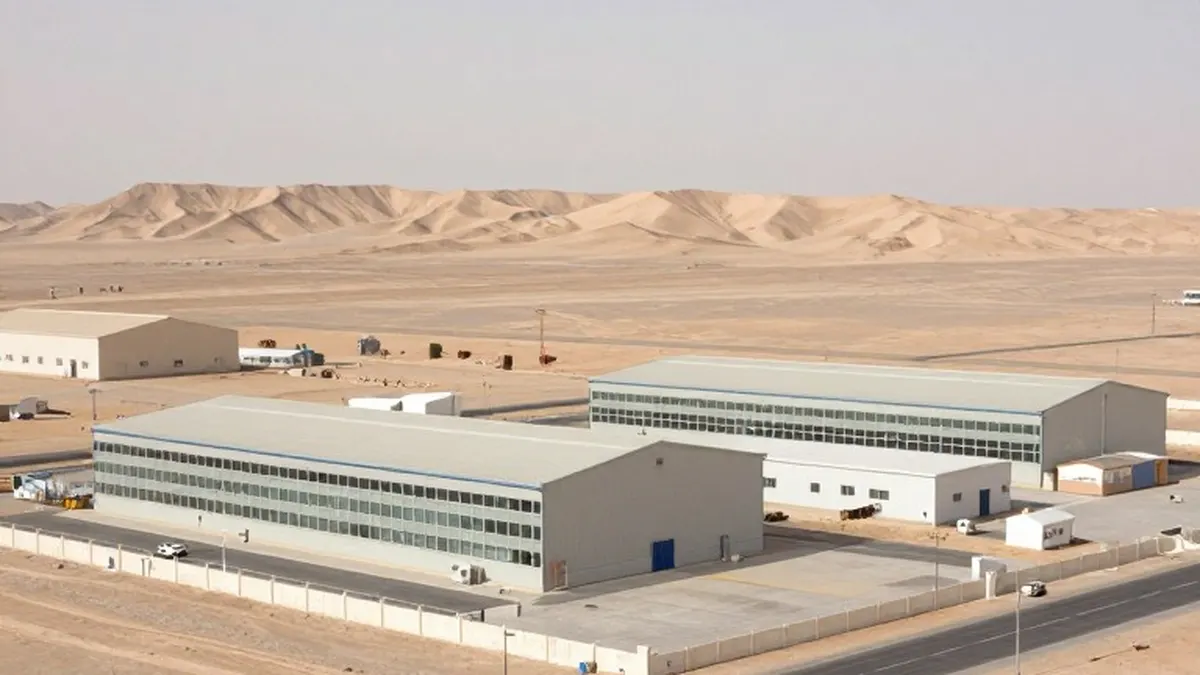
Saudi Arabia appears to be enlarging a ballistic missile factory as renewed fighting with Yemen's Houthi forces brings increased attacks on the kingdom. Satellite images examined by American researchers suggest construction at the al-Duwadimi facility in Riyadh Province is intended to support larger solid-fuel missiles with longer ranges and heavier payloads.
The fighting has intensified since July, breaking a UN-brokered truce that had largely endured since 2022. The Iran-aligned Houthis have increased missile and drone attacks against Saudi cities, airports and energy facilities, describing them as retaliation for a Saudi blockade of ports and airports in areas they control in Yemen.
Saudi missile cooperation with China stretches back to the 1980s, when Beijing supplied conventionally armed DF-3 missiles capable of travelling more than 2,000 miles but with poor accuracy. Riyadh reportedly acquired more precise DF-21 missiles in 2007 and began domestic ballistic missile production with Chinese help in 2021. Footage showing missile debris in Yemen in September suggested Saudi forces had used a DF-15A, potentially their first combat launch of a Chinese-designed ballistic missile.
Ameneh Mehvar, Middle East senior analyst at the Armed Conflict Location & Event Data project, told Middle East Eye that the expansion fits Saudi efforts to diversify its military capabilities. Chinese-designed missiles offer a way to strike distant targets without exposing aircraft to hostile air defences, she said, while local manufacturing could give Riyadh greater control over supplies. Saudi Arabia nevertheless continues to invest heavily in American aircraft and defence systems.
Sim Tack, vice-president of technology and intelligence solutions at AllSource Analysis, said the imagery indicates continued development of domestic missile design and manufacturing. He linked that effort to Saudi ambitions to balance the capabilities of Iran and its allies, including the Houthis. Western reluctance to spread surface-to-surface missiles and associated technology has limited Riyadh's purchasing options, helping make China an alternative supplier. Domestic production could reduce exposure to political changes that interrupt access to weapons.
Military aviation journalist Sebastien Roblin told Middle East Eye that the force has both deterrent and operational purposes. He said ballistic missiles could provide a delivery system if Saudi Arabia eventually developed or acquired nuclear warheads. Solid-fuel weapons also require less preparation than liquid-fuelled missiles and can remain ready for launch, reducing the risk that an opponent could destroy them before they are fired.
Accuracy remains a constraint on conventional operations. The DF-15A and DF-21 reportedly can land within 30 to 45 metres of their targets, a substantial improvement over older DF-3As, but hardened installations require greater precision. Roblin said attacks on underground facilities and mobile launchers also demand sophisticated intelligence, sustained surveillance and rapid targeting. Tack similarly cautioned that effective battlefield use would depend on intelligence capabilities Saudi Arabia has struggled to provide without extensive outside assistance.
If confirmed, September's reported launch could mark a shift towards more active combat use, Mehvar said. Roblin suggested it may have combined an operational test with a warning to the Houthis and Iran that Riyadh could escalate. A larger, effective arsenal could reduce Saudi dependence on American strike capabilities, but he does not expect missiles to displace the air force as the kingdom's main strike arm unless relations with Washington suffer a prolonged breakdown.