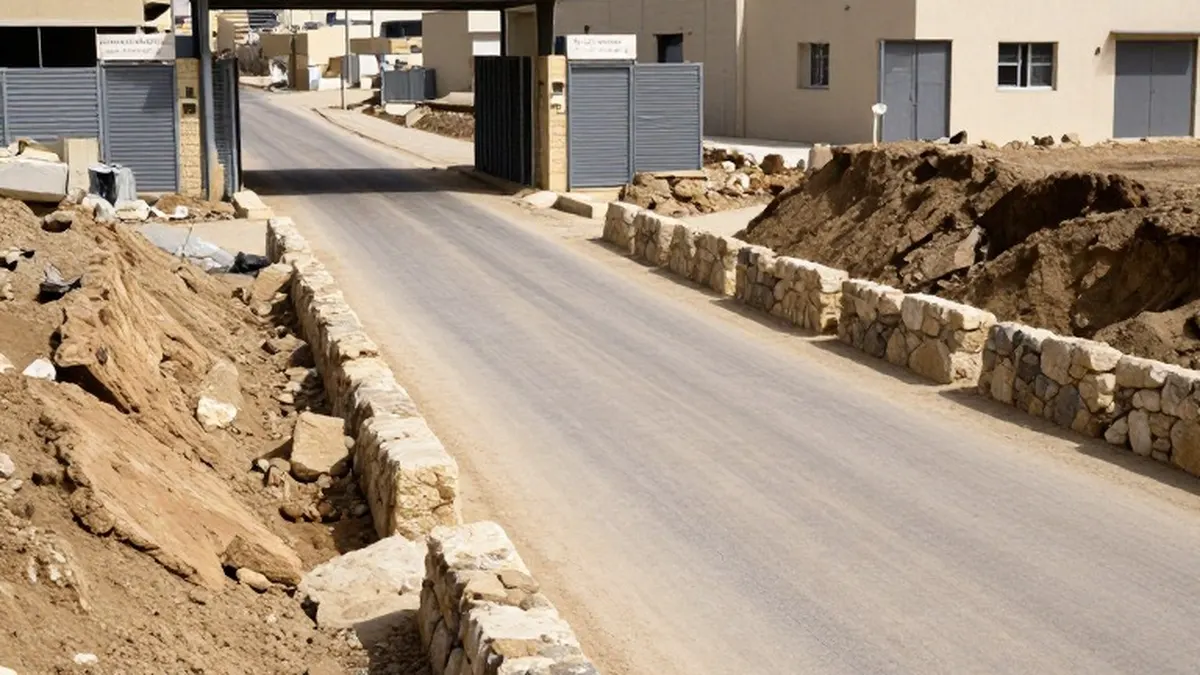
Palestinian businesses in Beit Ula, northwest of Hebron in the occupied West Bank, face possible shutdowns after Israeli forces blocked access to the town’s industrial zone on November 4. Earthen berms and stone barriers have separated roughly 60 businesses from suppliers and customers, threatening the livelihoods of the 2,500 people employed there.
At TB.LOC, which manufactures security and fire-resistant doors, production has slowed and sales have plunged. Owner Fayez al-Amleh, 63, said the restrictions prevent raw materials from entering and finished products from leaving. Daily sales have fallen from 70,000 shekels ($21,988) to between 2,000 and 3,000 shekels ($628 to $942). The factory’s 70 employees have seen their hours reduced or been shifted to part-time work, cutting their earnings.
The closure followed a 10-day Israeli siege of Hebron after suspected Palestinian gunmen killed two Israeli soldiers at a checkpoint near the city on October 23. Thousands of Palestinians were forced from their homes and returned only after Israeli troops withdrew on November 2. Hebron Mayor Yousef al-Jabari said the siege caused daily losses exceeding 12 million shekels ($3.8m) in the city, an economic hub for the West Bank.
Beit Ula’s factories produce goods including electrical cabinets, sponge, cardboard and construction materials, as well as shaping metal and making doors. Their operations support traders, suppliers and service businesses that depend on goods moving through the area. The restrictions have also affected agricultural activity on surrounding land, extending the economic disruption beyond the industrial zone.
Israeli forces have also demolished four industrial facilities and established a nearby settlement outpost. Palestinians in the area see these actions as part of a wider effort to gain control of land around the zone. Israel has cited the movement of workers into Israel without permits as its reason for restricting the area. Al-Amleh rejected the allegation that Beit Ula was responsible and described the restrictions as collective punishment of Palestinian workers and businesses.
Al-Amleh warned that a prolonged closure could force more factories out of business, damaging Beit Ula and nearby towns that depend on the zone for employment and related commerce. Ayman al-Adam, who has worked there for about three years, said the blockade threatens the income he and hundreds of others use to support their families.
The disruption comes amid broader pressure on Palestinian businesses across the West Bank from the Israeli military and settlers in recent months. During this year’s olive harvest, settlers have repeatedly attacked Palestinian farmers, while crops, olive trees and livestock have been stolen. Additional Israeli checkpoints have further constrained the movement of people and goods.
Palestinian Minister of National Economy Mohammad al-Amour described the measures against economic facilities as a war on the Palestinian economy, saying about 60 facilities and their workers had been isolated from it. Mahmoud Allan, head of the North Hebron Chamber of Commerce and Industry, appealed to authorities to halt the measures and warned that major businesses could close unless access was restored quickly. “Workers have lost their income, and business owners are struggling to keep their businesses alive,” he said.