Israeli forces have ended an 11-day military assault on Hebron in the occupied West Bank, leaving behind vandalised and looted Palestinian homes, demolished businesses and a city bracing for a long recovery.
The operation, which began on 23 October and ended on Monday, displaced hundreds of Palestinian families. Major roads were closed, the city's entrances were sealed and a total blockade was imposed, while commercial shops were raided and industrial facilities were vandalised or demolished.
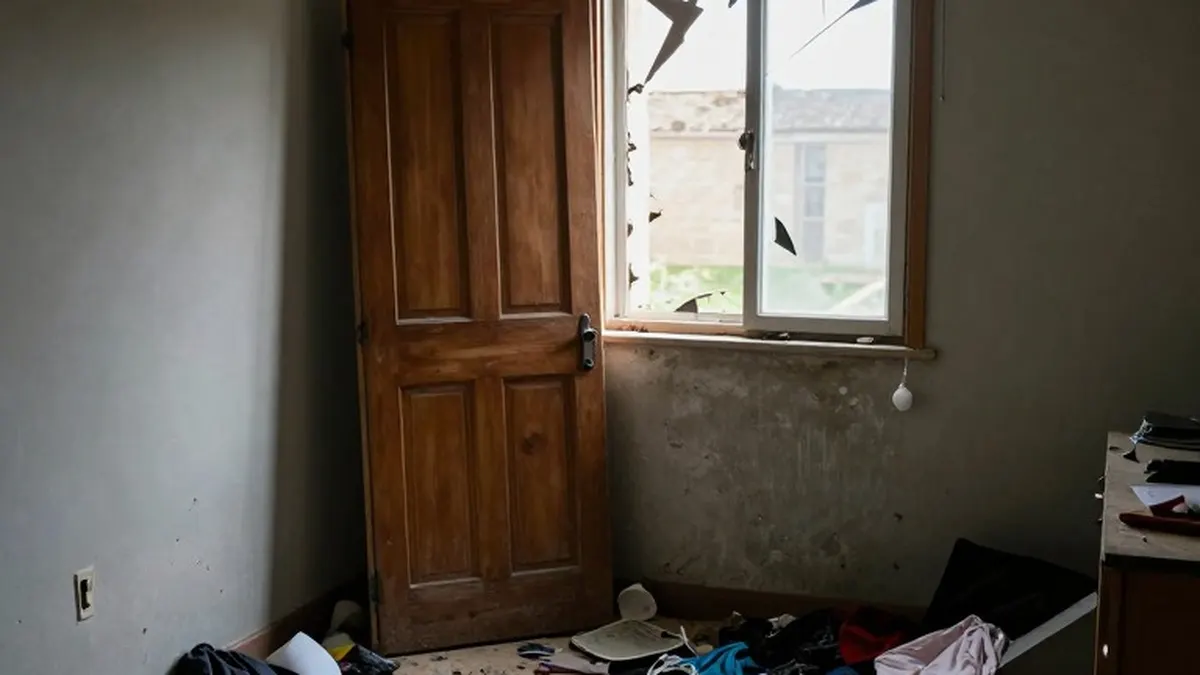
Abbas Mujahid, who was forced out of his house in the al-Jalda neighbourhood along with his family of seven, returned to find it severely damaged. "We found all the wooden doors, as well as the main iron door, torn off their hinges," he told Middle East Eye. "The gypsum decorative elements were completely smashed, the light fixtures broken, and our clothes and belongings scattered all over the house." He said soldiers had also left human excrement throughout the house and ripped out window frames.
Mujahid said he had begun hiring workers to repair the walls and doors at a cost he estimated in the tens of thousands of shekels. "Yet, the very fact that we have returned outweighs any sense of the damage caused," he said.
The economic toll has been equally severe. Iyad al-Qawasmi owned a used vehicle parts business in Farsh al-Hawa, an area where several factories and shops were demolished on the first day of the assault. He said soldiers gave him one hour to evacuate his three-dunum facility, which housed 600 used vehicles, and told him an Israeli court had issued the decision when he asked for a written demolition order.
Qawasmi said bulldozers belonging to the army and settlers then entered the site and seized at least 400 vehicles along with other equipment, before Israeli bulldozers returned days later and reduced the facility to rubble. He put his losses at more than 2.5 million shekels, about $790,000, and said he remains barred from the land. The business employed at least ten people, cutting off income for at least 70 Palestinians. "My only 'guilt', the only reason my facility was demolished, is that I am Palestinian," he said.
According to estimates by the Hebron Chamber of Commerce and Industry, direct losses exceeded 12 million shekels a day, around $3.8m. A total of 327 commercial and economic establishments were shut down, 15 facilities were destroyed and around 1,350 people lost their livelihoods. On 30 October, Unicef reported, citing Hebron Municipality figures, that 483 families had been displaced, comprising 4,304 people, including 1,845 children.
The incursion followed a shooting by two Palestinians that killed two Israeli soldiers in Hebron. The two Palestinians were also killed in the fire exchange. Israel's response, which included mass displacement and demolitions, has been accused of amounting to collective punishment. At least 15 homes and facilities were demolished, including three residential properties, two of them belonging to the Palestinians who carried out the shooting attack.
Hebron Mayor Yousef al-Jabari said the full extent of the damage to private property is still being assessed, with residents reporting the theft of gold jewellery, cash and personal belongings. "A government committee has been formed to assess these damages," he said, adding that engineers are visiting affected homes to document losses. Damage to municipal facilities and utility networks, including streets, pavements and water and electricity lines, is estimated at around six million shekels, about $1.9m. "Restoring the city to its normal state and repairing the damage it sustained will require at least a month," he said.