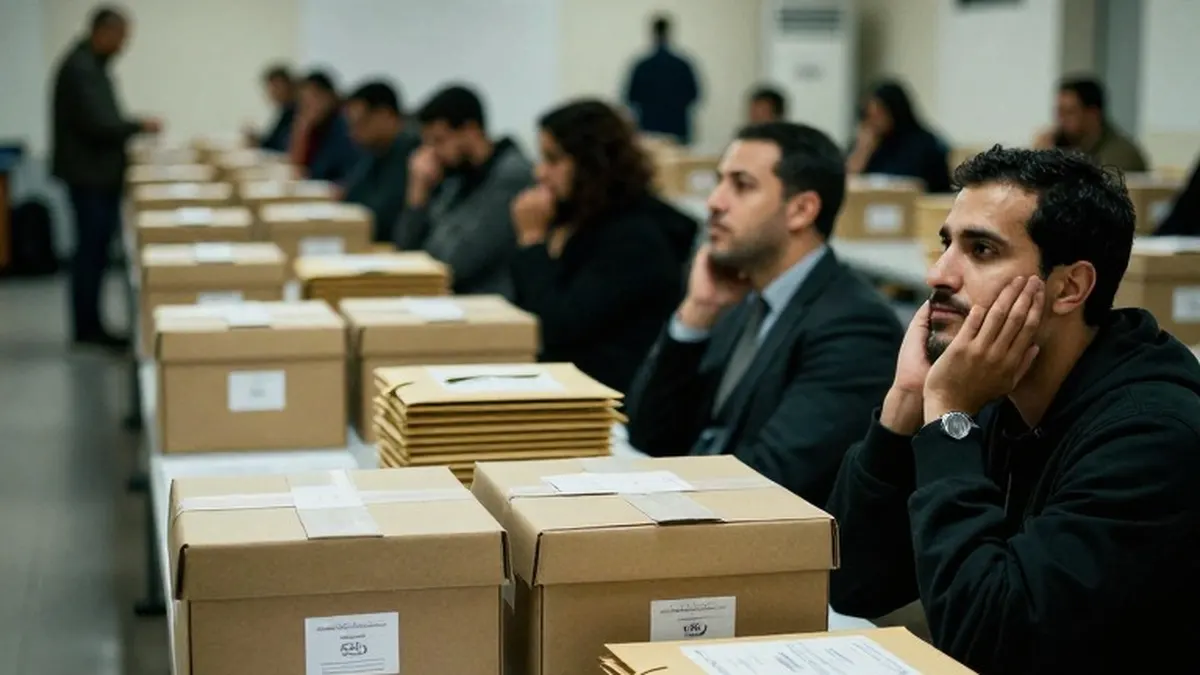
Israelis spent Thursday waiting for final election results that seem set to confirm what many already see emerging: neither Prime Minister Benjamin Netanyahu and his allies nor the broad group of parties trying to unseat him has a majority in parliament. Netanyahu remains in charge while the outcome is sorted out.
Final tallies could arrive as early as Thursday evening, once about 500,000 absentee ballots are counted. These come from military personnel, diplomats, people in prisons and hospitals, and others. They are not expected to change the picture dramatically.
Local media projected 53 seats for Netanyahu's bloc, 48 for opposition parties and 19 for Arab-led parties, which also want Netanyahu removed. A governing majority requires 61 of the 120 seats in the Knesset.
The weeks ahead hold hard decisions. Some Jewish and Arab parties could form a historic alliance, or some parties that campaigned on ousting Netanyahu could set that goal aside and join forces with the deeply divisive prime minister.
Netanyahu's chief rival, former military chief Gadi Eisenkot, made his first public statement since an address to supporters early Wednesday. He spoke of a government that serves everyone and reflects the will of the people. He did not mention working with Arab-led parties, which performed strongly as some Arab citizens broke long-standing vows never to vote in a country where they have long faced discrimination. He has said, however, that he is open to working with them to reach 61 seats. The Joint List, one of those parties, pointed to an "unprecedented show of strength" and to Jewish voters "willing to swim against the tide of racism," and said it was open to political co-operation.
Small rallies were held overnight in Tel Aviv and in the far more conservative Jerusalem in support of a coalition including Arab-led parties. No Arab party had joined a coalition government before 2021, and that arrangement was brief.
Netanyahu's Likud party received the most votes but has accused Arab-led parties of stealing the election and asked the election committee to investigate. It offered no specific evidence, and the committee has said reported irregularities in the relatively calm vote were few.
Next week, President Isaac Herzog will task someone with forming a government. That has traditionally been the leader of the party with the most votes, though it is not required. If repeated attempts fail, Israel would hold another election early next year. Herzog signalled on Wednesday that he wanted to avoid that, as has Eisenkot. A new vote would raise questions about whether Arab citizens would again turn out in large numbers and whether tens of thousands of Israelis who flew home to vote, many saying they wanted to save the country from Netanyahu, would do so again.
The country entered the election divided along many lines, including Jews and Arabs, and secular and religious Israelis. Among the issues at stake is whether the fast-growing ultra-Orthodox population should stay exempt from compulsory military service after three years of inconclusive wars. Netanyahu, the country's longest-serving prime minister, faces corruption allegations and accusations that he delayed deals over the Gaza war, including to free hostages, for political gain. Israel's international standing is also in question amid criticism of the treatment of Palestinians in Gaza and rising violence by Jewish settlers in the West Bank.
Arab citizens, who make up 20 per cent of the population, voiced cautious hope. "God willing, we will have something for us in the government, something that will bring us our rights," said Brosli Elias of Nazareth. Uncertainty also hangs over possible new strikes on Iran, which the Trump administration has said could follow the U.S. midterm elections on Nov. 3. Experts say Netanyahu could use renewed all-out war to push for a unity government under his leadership, which could delay the public inquiry into the Oct. 7, 2023 attack that he has long resisted.