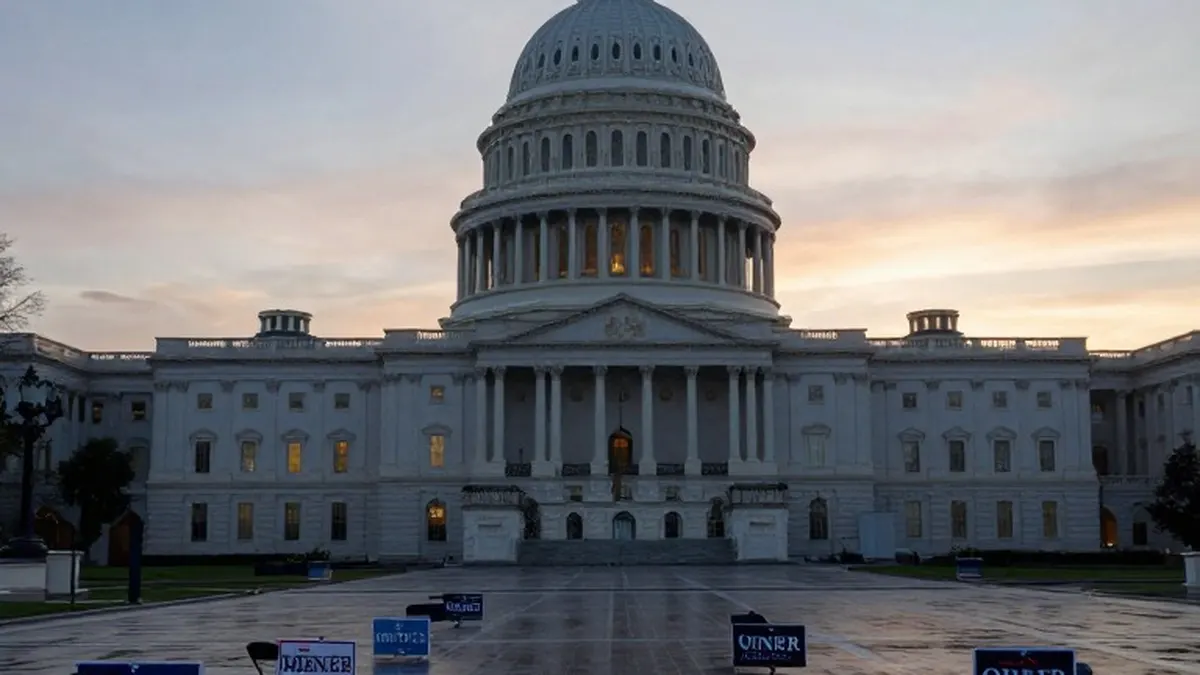
Democrats swept both chambers of Congress on Tuesday as Republicans suffered generational-level losses across the country, effectively cementing President Donald Trump's lame-duck era. As of publication time, Democrats had won at least 54 Senate seats and flipped about 20 House seats, with many competitive races still uncalled.
Before the election, most senior House Democrats dared not imagine more than a 10-seat majority. Now a total of 250 seats or more is not out of the question, all but assuring that Hakeem Jeffries will cruise to the speakership.
In the Senate, Democrats won Kansas for the first time in nearly a century, sent a Texan to the chamber after a more than 30-year absence, broke a nearly 30-year losing streak in South Carolina and elected the first Iowan in more than a decade. They could even be on the cusp of a Mississippi Senate seat for the first time in roughly four decades, where Scott Colom held a lead of fewer than 50 votes over Sen. Cindy Hyde-Smith. The Alaska contest between incumbent Sen. Dan Sullivan and Mary Peltola also remained in tossup territory.
The losses reached deep into the Republican ranks. Longtime GOP incumbents such as Maine Sen. Susan Collins and Missouri Rep. Ann Wagner are out of jobs. NRCC Chair Richard Hudson and House Rules Chair Virginia Foxx were hanging by a thread, both caught in a ticketwide Republican collapse in North Carolina. The corps of GOP moderates on Capitol Hill was also decimated, including Reps. Brian Fitzpatrick of Pennsylvania and Jen Kiggans of Virginia.
The massive gains, unthinkable even a few months ago, will have an instant impact. Republicans' hopes of checking off a list of priority legislation in the lame-duck session are in jeopardy, and the party will quickly have to confront questions about its leadership. Trump's once ironclad grip over Washington is also in doubt, with some in his party beginning to contemplate their future after he leaves the White House. "Voters all across America have spoken, and this is a wake-up call for all conservatives," said South Carolina Rep. Ralph Norman, arguing the GOP needed to "start governing on the core principles they campaigned on."
Speaker Mike Johnson's political future is now up in the air after the House majority was lost under his watch. Several Republicans doubted before the election that he would jump into the race to become minority leader. House Majority Leader Steve Scalise and Judiciary Chair Jim Jordan could enter the running to become the top House Republican as soon as Wednesday, ahead of a Friday deadline to declare their candidacies, with the GOP conference set to vote next week. Pressed on whether he backs Johnson to return as minority leader, Trump did not answer directly. "I think he's done a very good job," Trump told Politico on Tuesday night, adding that Republicans would have to make that decision.
Democrats, meanwhile, are preparing an unrelenting oversight platform for next year. The party plans to use its new subpoena power and agenda-setting authority to target possible corruption among members of Trump's family, Elon Musk's leadership of the Department of Government Efficiency and the Department of Homeland Security's aggressive immigration enforcement tactics, according to interviews with more than a dozen lawmakers, aides and attorneys. "LAWYER UP," California Rep. Robert Garcia, the top Democrat on House Oversight, posted on social media Tuesday as the party's House majority was coming into focus.