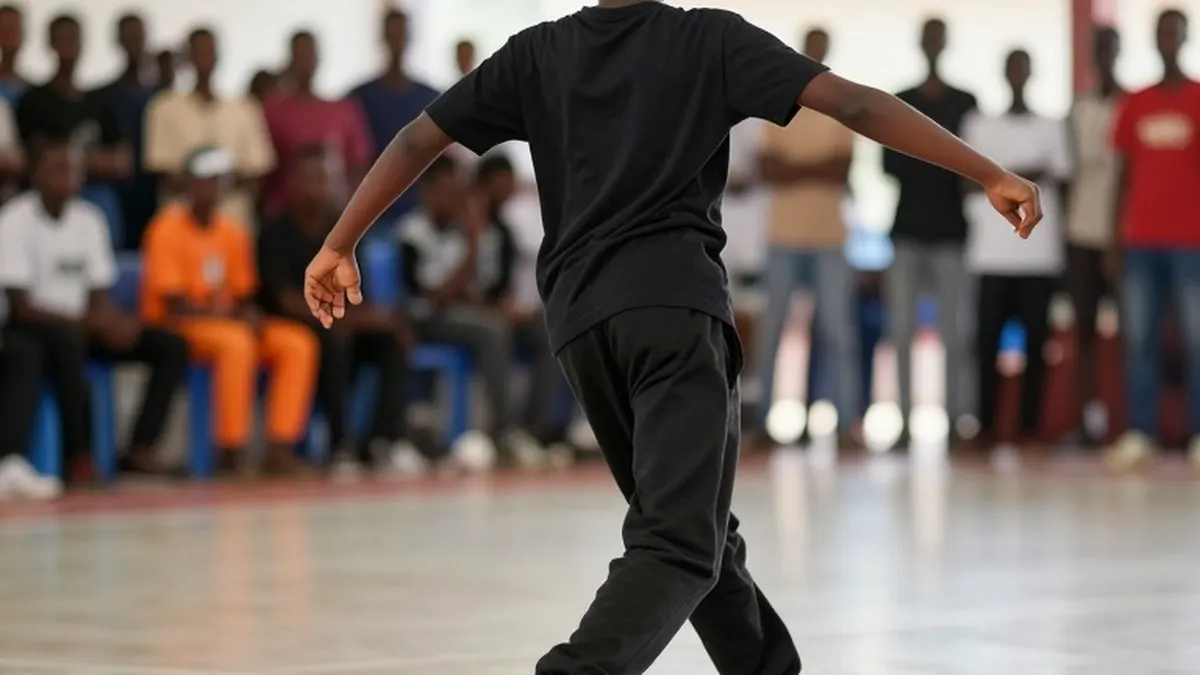
Breakdancing brought the Dakar Youth Olympics to a close on Friday, ending two weeks of competition in Senegal with displays of balance, invention and daring. Teenage competitors performed intricate footwork, spins and freezes before embracing their rivals, concluding the first Olympic event hosted by an African country.
China finished at the top of the medal standings with 18 golds, followed by Japan with 11 and Russia with eight. Host Senegal placed sixth with five gold medals, finishing ahead of France. Before the games, 80 Senegalese athletes had travelled to China for training, an initiative that formed part of China's sporting diplomacy.
The final breaking contests included a meeting between China's Holy Rain and Saturn of Chinese Taipei, bringing competitors from mainland China and Taiwan together on the dance floor. Japan's Hiyo defeated Ukraine's 14-year-old Nikastar to win gold, while Spain's Mini Ali secured bronze against Morocco's Nawel. Beyond their performances, athletes used Instagram and TikTok to share their own accounts of the games with audiences outside traditional television coverage.
Political questions accompanied the competition. Russia's flag and national anthem returned to an Olympic event for the first time since the country's suspension following its full-scale invasion of Ukraine in 2022. Russian swimmer Serafima Fokina, 17, sang the anthem after winning gold. Some spectators stood during the ceremony, while others stayed seated.
Israel also participated amid its war in Gaza. Senegalese authorities arrested a man over a video opposing Israel's participation, describing the video as threatening. The International Olympic Committee defended its commitment to political neutrality, saying: “Youth athletes should not be held accountable for the actions of their governments.” Palestinian swimmer Alma Shaat, meanwhile, encouraged girls in Palestine, particularly Gaza, to pursue their dreams for themselves and their communities.
Preparations for the event also highlighted Senegal's international relationships. France's development agency lent the already heavily indebted country 80 million euros ($88m) for sporting facilities, while young people across the region increasingly questioned the former colonial power's continuing influence. French police helped secure the event at Dakar's railway station, where a statue commemorates African and French soldiers.
Practical difficulties affected athletes and spectators. Competitors stayed in university dormitories without air-conditioning despite the heat. Sold-out events and costly transport prevented some people from attending, although neighbourhood sports provided other opportunities to take part in the celebrations in a city with street football and beach wrestling.
At her final news conference, IOC President Kirsty Coventry fought back tears as she reflected on the games. The Zimbabwean, the first African and first woman to lead the organisation, had helped bring the event to Dakar. “I am so proud. I’m so grateful,” she said.