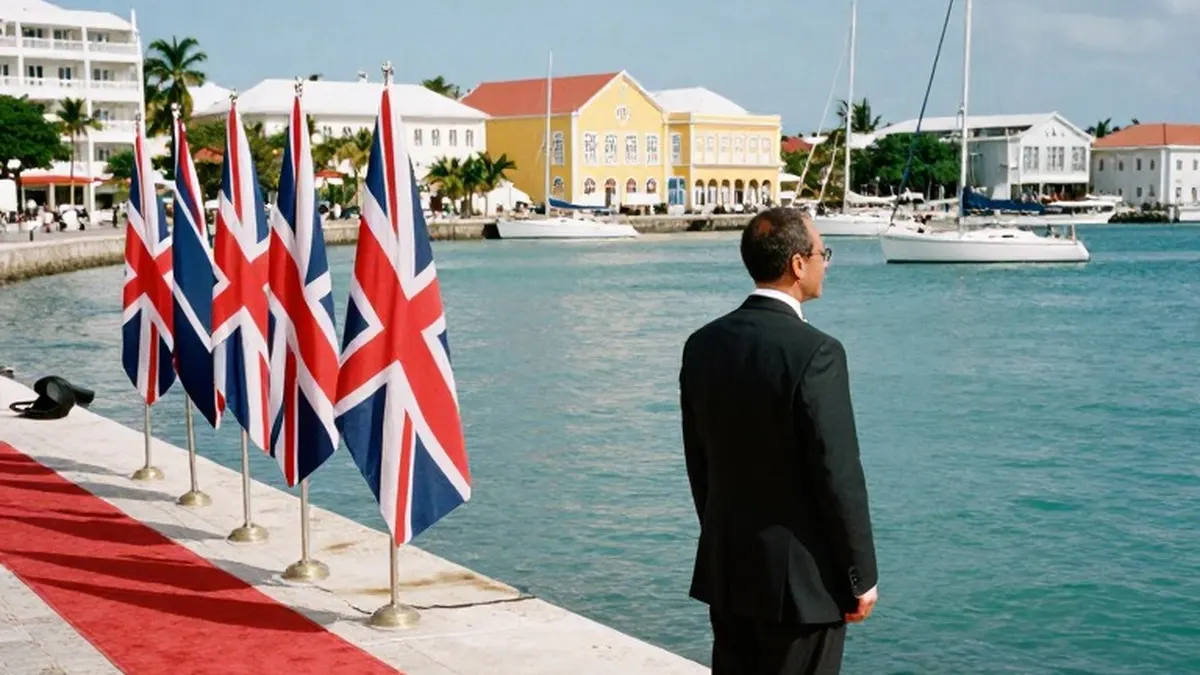
King Charles III travels to the Bahamas on Tuesday to begin a nine-day tour of the Caribbean. The trip comes as demands for reparations over Britain's role in the slave trade grow louder and as the monarchy faces questions about its future in the region.
The itinerary takes the king to three countries. He will spend three days in the Bahamas before moving on to Guyana, a former British colony that held more than 100,000 enslaved people when the trade was abolished in 1807. After two days there, where he is expected to meet the president and elected leaders of Amerindian villages, he will head to Antigua and Barbuda.
In Antigua and Barbuda, the king will attend the Commonwealth Heads of Government Meeting, known as CHOGM, from November 1 to 4. Leaders and representatives of 56 Commonwealth countries are due to attend. Talks are expected to cover the environment, climate resilience, trade and development, though the question of reparations for slavery is also likely to feature.
The Bahamas and Antigua and Barbuda both have Charles as their ultimate head of state, and officials in each have signalled they want to become republics. Guyana gained independence from the UK in 1966 and has a president as head of state. A 2023 Lord Ashcroft Poll found 51 percent of surveyed Bahamians wanted a republic, while 27 percent preferred to keep the British monarchy as head of state.
Guyanese President Mohamed Irfaan Ali told ITV News that Charles "rightfully" described slavery as the "darkest days in human history" during a 2021 visit to Barbados, when he was still the prince of Wales, but said an apology should come next. "You exploited the region. You destroyed lives. You created underdevelopment," Ali said. Niambi Hall Campbell-Dean, chair of the Bahamas National Reparations Committee, also criticised the visit. "Why do we still have a king? What does this person really represent to us? Why is he coming and how will that benefit us?" she asked.
Jamaica, which is not on the itinerary, made its position clear in September by filing a $10bn slavery reparations petition in London, addressed to the king. It was the first time a Commonwealth state had taken legal action in pursuit of what the Jamaican delegation called "the cause of reparatory justice". The petition is due to be heard by a UK privy council in March next year. The UK has so far refused to formally apologise or pay reparations. In March this year, a United Nations resolution declared the transatlantic slave trade the "gravest crime against humanity".
Many Commonwealth leaders want an apology from the king, but Buckingham Palace has announced that one will not be offered. A palace spokesperson said the tour "will..not shy away from 'the darkest days of our past'" but, in keeping with the wishes of the host nations, will principally be "oriented to the vibrant present and promising future of each country". The palace added that it is "important" to recognise the "creative" ways Charles has tried to address "enduring inequalities".
Bell Ribeiro-Addy, a Labour MP who chairs the UK's All-Party Parliamentary Group for Afrikan Reparations, said the royal family and the government had failed to recognise the demands of campaigners. "I think it would be wrong to think that we can continue with platitudes," she said, citing the words "atrocity", "deep regret", "sorrow" and now "darkest days". She added that the Commonwealth clearly means something to the monarchy, and that she doubted the king would want to be the monarch under whom it crumbles.