
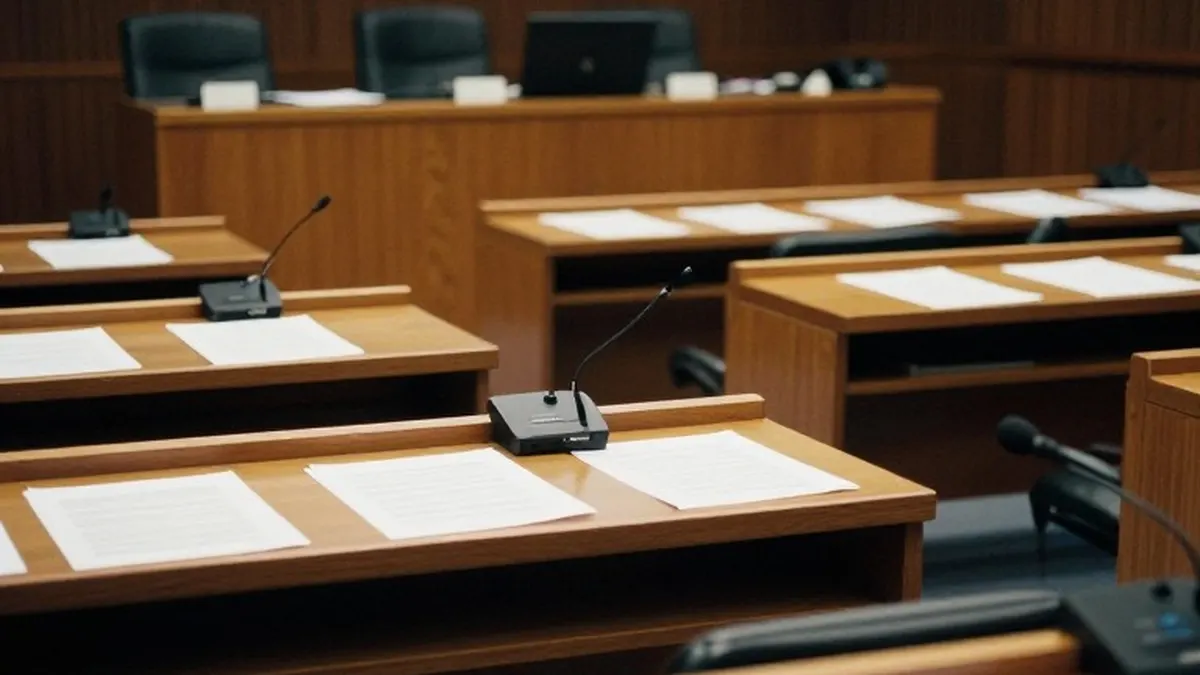
The Knesset Arrangements Committee approved a procedural exemption on Tuesday, allowing a bill to establish a state commission of inquiry into the October 7 massacre to move forward in the legislative process. This decision brings the debate on the bill ahead of its preliminary reading, bypassing the standard tabling requirement that would have delayed the discussion.
The committee vote resulted in thirteen members of Knesset supporting the measure while nine opposed it. The session was described by the Knesset as a long and stormy debate, presided over by committee chair Roy Folkman of the Yashar party. The bill is sponsored by Orit Farkash-Hacohen, also of the Yashar party.
Farkash-Hacohen sought to clarify the specific scope of the proposed investigation during the proceedings. She emphasized that the language of the bill is precise and that the primary goal is to examine the events of October 7 and the factors that led to them. She explicitly stated that there is no intention to delve into matters of international law as part of this specific inquiry.
Opposition to the bill came from various political factions. Talik Gvili, a member of the Likud party, argued that the bill creates a false impression that his side is against having a commission. He expressed personal frustration with the legislation, stating that it humiliates him. Gvili also challenged the explanatory notes attached to the bill, which suggest the commission will look at challenges in civilian and military conduct in areas with high civilian populations. He questioned the necessity of examining military conduct during wartime.
Itamar Eitam, representing the Religious Zionist Party, described the proposed investigation into the conduct of Israel Defense Forces soldiers as an extremely grave matter. He suggested that if the goal is to conduct a thorough investigation, the commission should begin with earlier historical decisions, such as the Disengagement plan or even the Oslo Accords, rather than starting with Operation Protective Edge.
Zvika Mor, also from the Religious Zionist Party, raised concerns about the representativeness of a state commission of inquiry. He argued that such a body might not reflect the views of the entire nation. As an alternative, he proposed that members of Knesset from both sides of the political spectrum should be involved in appointing the commission's members to ensure broader representation.
Elisaf Peretz of the Yashar party supported the initiative, stating that Israel needs a real inquiry into how the terrible massacre occurred. While he acknowledged disagreements with some of the explanatory notes, he expressed confidence that the process would be handled responsibly and that refinements could be made later if necessary.
In addition to the commission bill, the committee approved the early advancement of six other legislative proposals. These include an amendment to Basic Law: The Government, which would set restrictions on who is eligible to serve as prime minister. The package also contains two temporary provisions regarding the suspension of arrest proceedings related to military service, with one specific provision applying to yeshiva students.





