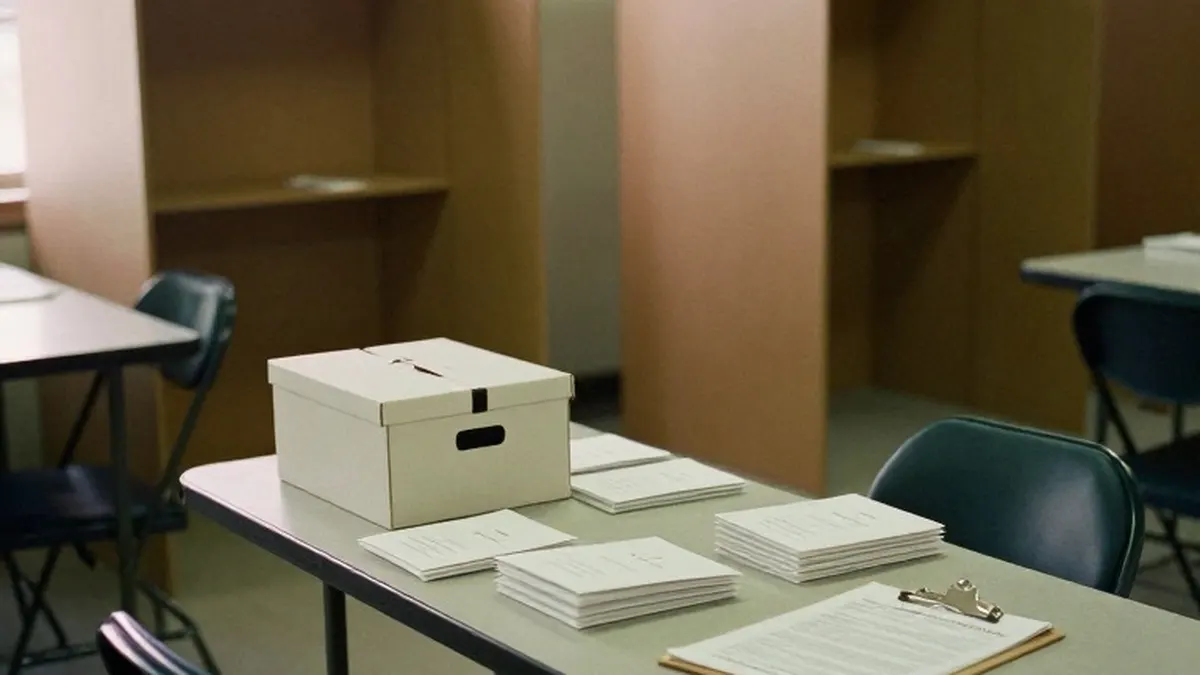
Likud's election integrity headquarters said on Tuesday that it had received 620 reports of unusual incidents and suspected irregularities at polling stations in the Arab sector. The reports were gathered through a network of more than 1,500 representatives deployed across the country.
According to the headquarters, roughly one-third of the reports relate to the recording of voters' personal details and the passing of information out of polling stations. Another 66 reports involve problems with ballot papers and envelopes. A further 26 concern difficulties in verifying the identity of voters and in the exercise of authority by members of polling station committees, while 17 deal with violence and threats.
The remaining reports cover shortages of staff, election campaigning and problems with documentation, the headquarters said.
The group also pointed to specific cases involving envelopes. In one, it said, 10 sealed envelopes were reported missing from a polling station in Fassuta. In another, officials found an 11-envelope discrepancy between the number of envelopes and the recorded number of voters in Jadeidi-Makr.
Likud's election integrity headquarters also took aim at an instruction from the director-general of the Central Elections Committee intended to prevent overcrowding at polling stations. The headquarters argued that the directive could weaken adherence to voter identification requirements and to proper voting procedures.
Sagi Kaisler, who heads the headquarters' operation for the Arab sector, said: "The Elections Committee is cutting corners precisely where stricter oversight is needed. We are receiving hundreds of reports of suspected irregularities, including missing envelopes and the unauthorized transmission of information."
Kaisler added that pressure was being applied to avoid crowding at polling stations rather than to strengthen oversight. He called for an immediate investigation into the suspicions, the deployment of independent observers, and guarantees of a proper and transparent voting process.
The figures and claims in the announcement come from Likud's own headquarters, and the source material does not include a response from the Central Elections Committee.