Senator Tom Cotton of Arkansas has sent a formal letter to Commerce Secretary Howard Lutnick, urging the Trump administration to take stricter action against ChangXin Memory Technologies. The senator, a Republican, described the Chinese company as a significant threat to both the nation's economic health and military capabilities. Cotton argued that the United States must act quickly to stop CXMT from establishing a more dominant position in the global semiconductor market.
ChangXin Memory Technologies is currently the fourth-largest producer of dynamic random access memory in the world. This type of memory is essential for the basic operations of smartphones and computers. In his correspondence, Cotton requested that the Commerce Department's Bureau of Industry and Security add CXMT to its Entity List. Placement on this list would significantly limit the ability of American firms to engage in business with the Chinese manufacturer.
Kyle Chan, a fellow at the Brookings Institution who specializes in China's technology sector, explained the implications of such a designation. He noted that being on the Entity List effectively prevents U.S. companies from trading with the listed entity and blocks that entity from accessing American technology. This move would serve as a powerful tool to restrict the flow of resources to CXMT.
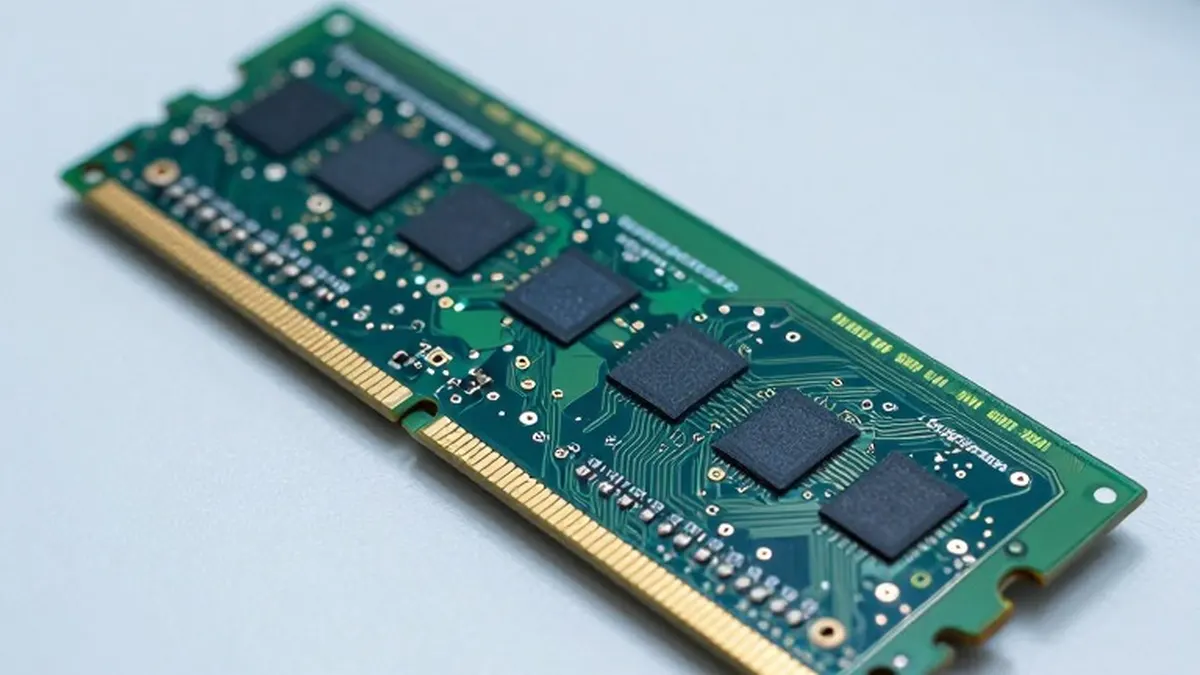
The memory chips produced by CXMT are considered a commodity, according to MS Hwang, a research director at Counterpoint. This means they are manufactured to global standards and are generally interchangeable between different producers. However, with the appropriate production technology, these standard chips can be developed into high-bandwidth memory. This advanced form of memory is in extremely high demand because it powers artificial intelligence chips from major technology companies such as Nvidia, Google, and Amazon Web Services.
Currently, only three companies dominate the high-bandwidth memory market: Samsung, SK Hynix, and Micron. These same firms also control the majority of the standard DRAM market. Despite this dominance, CXMT has made significant inroads. Counterpoint data indicates that the company's share of the DRAM market by revenue increased from 4 percent to 10 percent over the course of one year, specifically from the second quarter of 2025 to the second quarter of 2026.
The company's financial momentum was further highlighted in July when it went public. Following its listing, the stock price surged, making CXMT the most valuable company listed in China at that time. While the company's capabilities in high-bandwidth memory are still in the early stages, reports from Reuters indicated that CXMT was preparing to begin production of these advanced chips, despite having low yields between 20 and 30 percent. This low yield rate means that a majority of the produced chips are faulty.
CXMT is already included on the Pentagon's 1260H list, which identifies Chinese companies with military ties. However, experts note that this specific list does not carry the same weight of restrictions as the Commerce Department's Entity List. Chan pointed out that the 1260H list lacks strong enforcement mechanisms for U.S. businesses dealing with the listed firms.
Recent reports from The Wall Street Journal suggested that Apple was considering using CXMT's memory in its iPhone and Mac products due to a global shortage driven by the rapid expansion of artificial intelligence infrastructure. Placing CXMT on the Entity List could alter these plans. Chan explained that the U.S. government is concerned that even simple purchases from CXMT would help the company increase its production capacity and advance its development of high-bandwidth memory.
In his letter, Cotton referenced CXMT's push into the high-bandwidth memory sector. He stated that the company's decision to proceed under less than ideal conditions highlights China's urgent need for chips and its struggle to manufacture them without advanced equipment. Cotton concluded by calling for further measures to cut CXMT off from the financial and technological resources that support its supply chain and challenge American growth.