A 30 year old man accused of starting the catastrophic Palisades wildfire in Los Angeles has been found guilty of two federal arson charges. The verdict was delivered on Friday, marking the conclusion of a second trial that took place months after the first attempt ended with a deadlocked jury.
Jonathan Rinderknecht, a former rideshare driver, faced a fresh panel of jurors who spent two weeks hearing the prosecution's case. The government argued that Rinderknecht was responsible for the January 2025 blaze, a disaster that claimed 12 lives and caused widespread destruction in the Pacific Palisades, a wealthy coastal community in California.
According to the prosecution's narrative, Rinderknecht used a lighter to ignite a brush fire in a hillside location. The state portrayed him as a disgruntled young man seeking retribution for personal grievances, such as failed romantic relationships, as well as perceived societal issues like wealth inequality.
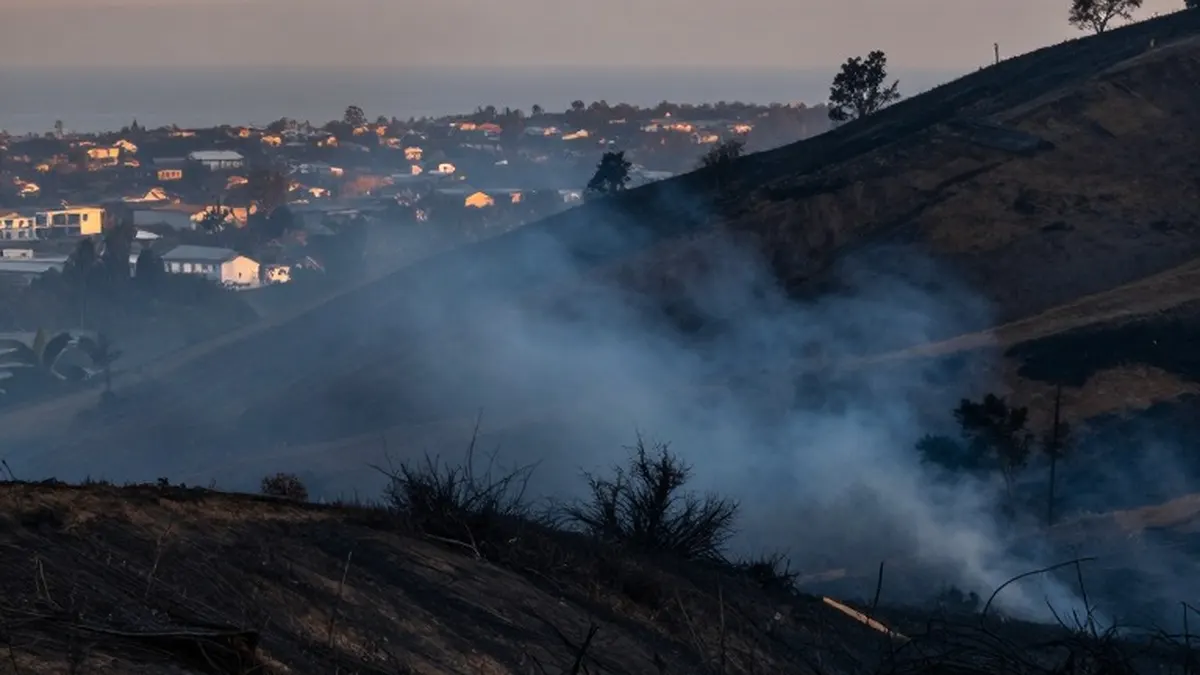
Firefighters initially suppressed the Lachman brush fire last January. However, embers remained active underground until strong winds swept through the area, causing the fire to erupt above ground and spread into the massive Palisades inferno. This secondary surge destroyed thousands of homes and businesses.
Rinderknecht maintained his innocence throughout the proceedings. He pleaded not guilty to the revised charges, which included destruction of property by means of fire and arson affecting property used in interstate commerce.
During the retrial, jurors received explicit instructions to focus on the defendant's actions and not to consider the adequacy of the fire department's response to the initial Lachman fire and the subsequent Palisades blaze. The fire department has faced criticism for not fully extinguishing the Lachman fire, which later reignited.
This specific instruction came after some jurors from the first trial expressed concern about assigning blame solely to Rinderknecht without accounting for the fire department's prior actions. In that earlier trial, the jury deadlocked with two members voting for a guilty verdict while the other ten remained unconvinced.
The defense team presented an alternative theory during the retrial, suggesting that the initial brush fire may have been started by fireworks. Prosecutors challenged this claim in a court filing, describing the theory as baseless. They raised concerns about the reliability of a defense witness introduced late in the proceedings, whose testimony referenced stains at a private residence that allegedly indicated fireworks had been used.
Rinderknecht is scheduled to be sentenced on March 17.