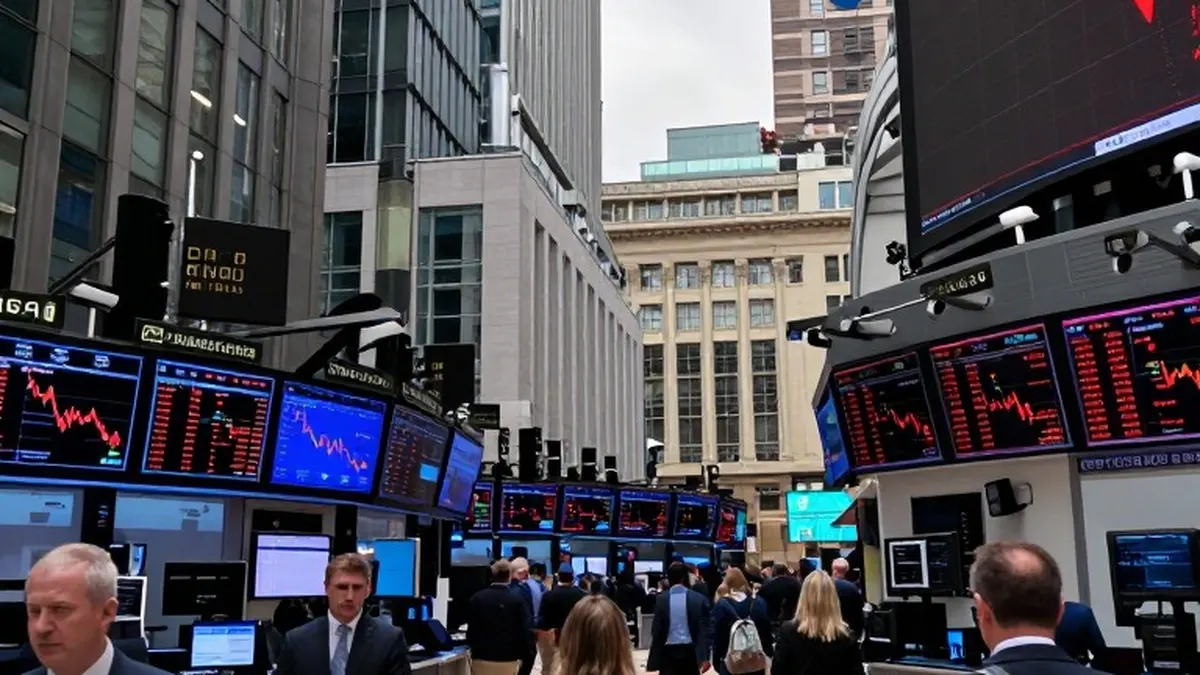
U.S. stock markets suffered a sharp decline on Thursday, November 5, 2026, effectively erasing the previous day's gains. This downturn occurred just one day after investors had rallied in response to the Democrats' decisive victories in the midterm elections. The sudden shift in sentiment marked a volatile end to the week for traders and investors across the country.
The Dow Jones Industrial Average led the losses, tumbling by more than 2,100 points from the opening bell. By the close of trading, the index was down by 1,833 points compared to Wednesday's closing price. This significant drop highlighted the fragility of the market's earlier optimism, as traders quickly adjusted their positions in response to new economic concerns.
Other major benchmarks also faced substantial pressure. The Nasdaq composite index fell by approximately 1,422 points, while the S&P 500 dropped by around 335 points from their respective Wednesday closing levels. The tech-heavy Nasdaq 100 was particularly hard hit, dipping by 6.36 percent. This decline translated to a loss of about 1,807 points over the 24-hour period, underscoring the sector's vulnerability to current market conditions.
Analysts attribute the sell-off to growing investor anxiety regarding accumulating debt in the artificial intelligence sector. The market's reaction suggests that while political outcomes provided short-term relief, structural economic fears remain prominent. Investors appear to be reassessing the long-term sustainability of heavy capital expenditures in AI infrastructure.
Liz Ann Sonders, head of U.S. investment strategy at Charles Schwab, noted the severity of the drop in a post on the social platform X on Thursday afternoon. She observed that the Nasdaq had slid into correction territory, with the index currently down more than 11 percent from its peak just one month ago. Her comments reflect the broader sentiment among financial professionals that the recent rally was not sustainable without addressing underlying risks.
The market turbulence follows a day of significant political activity where Democrats secured control of both the Senate and the House of Representatives. Despite the electoral success, party lawmakers and candidates had campaigned on a platform that included curbing the influence of the AI industry. This political stance appears to have influenced investor perceptions, linking policy changes directly to market performance.
Voters also played a role in shaping the AI landscape by rejecting proposals for new data centers on dozens of local ballot measures. This grassroots resistance indicates a growing public scrutiny of tech infrastructure expansion. The combination of legislative pressure and local voter decisions has created a complex environment for technology companies seeking to build out their capabilities.
Progressive Senator Bernie Sanders of Vermont renewed his call for a national moratorium on data center construction on Wednesday. He argued that Americans do not want large technology companies damaging the environment, eliminating jobs, and threatening the future of humanity. Sanders emphasized his position by writing on X that a national data center moratorium is needed now.
Historical data offers a potential perspective on future market trends. According to a recent analysis by CNBC, the S&P 500 has typically risen by an average of 1 percent in the week following midterm elections held between 1982 and 2022. This historical pattern suggests that the current volatility may be a temporary blip before a broader upward trend resumes.
Furthermore, the same CNBC analysis indicates that one month after midterm elections, the S&P 500 has historically been up by an average of 1.5 percent. While past performance does not guarantee future results, these statistics provide a framework for investors as they navigate the post-election period and the ongoing challenges posed by AI-related debt.