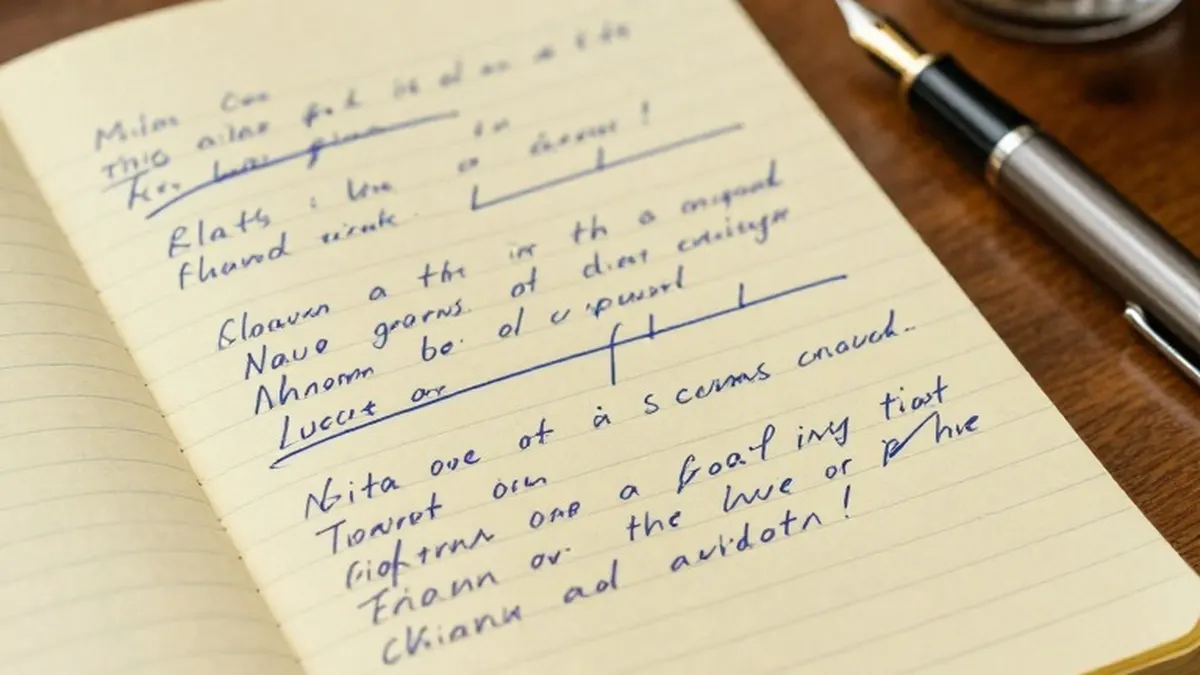
A significant piece of American history has emerged after a handwritten final draft of Martin Luther King Jr.'s 'I Have a Dream' speech was discovered in a desk drawer. The seven-page document, written on yellow notepaper, was created by King in a hotel room the night before his historic address on August 28, 1963. This is the only known copy of the leader's final revisions before he sent the text to be typed for the March on Washington for Jobs and Freedom.
The discovery was made by Xernona Clayton, a broadcaster and civil rights activist, in the 1990s. She found the pages in the belongings of her late husband, Edward T. Clayton, who served as King’s longtime aide and speechwriter. For decades, Clayton kept the manuscript in a drawer, reluctant to sell any of her husband's memorabilia out of respect for the man she described as someone she loved deeply.
Clayton, who is now 96 years old, has decided to bring the draft to the public. She stated that with age comes wisdom, and she believes a document of this magnitude should be shared. The manuscript is being auctioned on behalf of the Still Marching Irrevocable Charitable Unitrust, a charity she founded. Proceeds from the sale will be distributed to various organizations, including the King Center in Atlanta, which King established with his wife, Coretta Scott King.
The document will be exhibited in Atlanta, Chicago, and New York City before going to auction at Christie's in New York on January 22, 2027. Experts estimate the manuscript could sell for upwards of 10 million US dollars. Peter Klarnet, a manuscripts specialist at the auction house, described seeing the pages as a moment of utter disbelief. He noted that while he has handled significant items like letters from Albert Einstein and a printed draft of the U.S. Constitution, this draft holds a unique place in world history.
Lerone Martin, director of the Martin Luther King Jr. Research and Education Institute at Stanford University, reviewed the discovery. He explained that the pages show King working late into the night, with words and sentences crossed out in blue pen and rewritten. One page even features a small brown smudge, possibly a coffee stain. Martin said viewing the document provides a rare glimpse into King's creative process, a practice he did not often engage in, as he was primarily an orator who rarely wrote down his words.
Interestingly, the phrase 'I have a dream' does not appear in the handwritten draft. Martin noted this is consistent with the typed version that followed. King had used variations of this theme in previous rallies in North Carolina, Detroit, and New York. His colleagues had initially advised him to drop the refrain, considering it overdone. However, during the actual speech, King responded to the enthusiastic audience. He was reportedly prompted by gospel singer Mahalia Jackson to tell the crowd about the dream, leading to the iconic improvisation.
The speech itself focused on what King called the evil triplets: poverty, racism, and war. Martin highlighted that these themes remain relevant today as the United States continues to debate the meaning of the American dream. He expressed hope that the manuscript will not end up in a private collection but will instead be placed in a public space where people can see and reflect on it.
Clayton did not respond to recent requests for comment from CBC News. The discovery marks the first time in six decades that this specific final draft has been made public, offering historians and the public a direct look at the final moments of preparation for one of the most famous speeches in history.