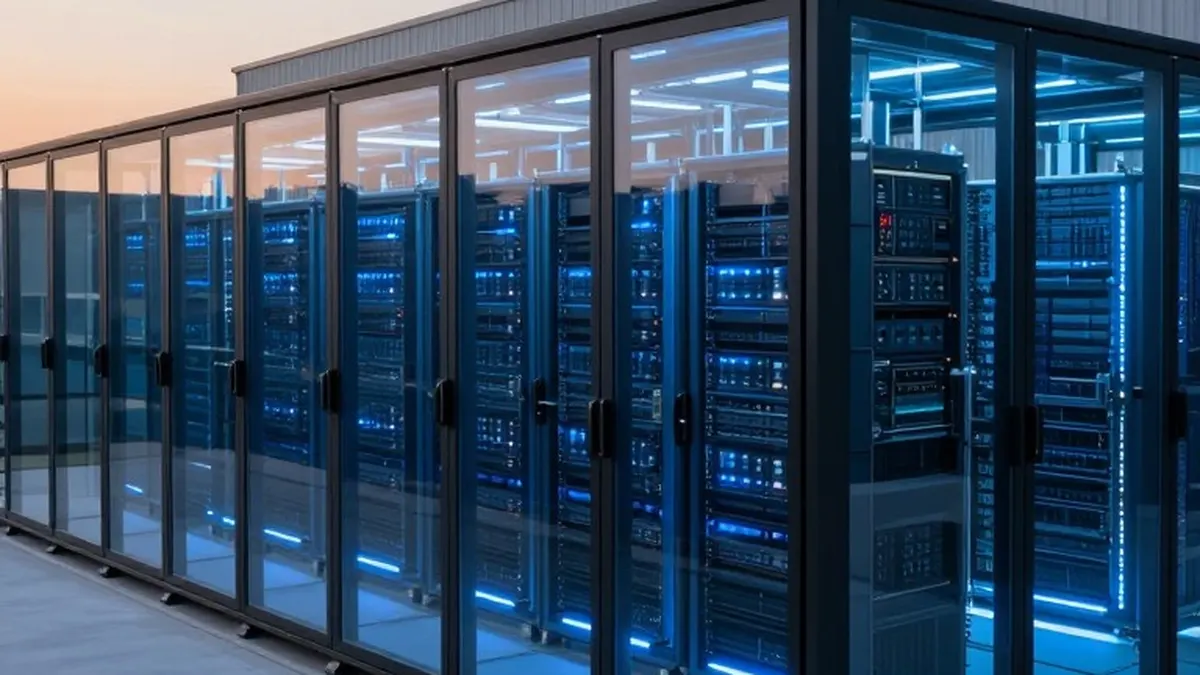
Meta, the technology giant behind Facebook and Instagram, has announced that it is reconsidering the timeline for achieving its net-zero emissions goal by 2030. The decision, detailed in the company’s annual sustainability report released on November 19, 2026, cites the rapid growth of artificial intelligence as a primary factor in the shift. This move marks the latest instance of major corporations reassessing their environmental commitments in the face of changing technological and economic landscapes.
In the report, Rachel Peterson, Meta’s vice president of data centres, and Blair Swedeen, the global head of net zero and sustainability, explained that the company is re-evaluating its timelines, sequencing, and interim milestones. They noted that when the original goal was established, the company anticipated steady growth and a rapid decline in clean energy costs. However, they described the current reality as significantly more complex, stating that fulfilling Meta’s vision now requires substantial investment in the infrastructure needed to power AI systems.
The company disclosed that its net carbon-equivalent emissions increased by 45 percent in 2025, reaching a total of 11.8 million tonnes. Climate advocates have expressed skepticism regarding the accounting methods used to calculate these figures, noting that the reported numbers rely on specific frameworks that may not fully capture the environmental impact of the company’s operations.
Meta’s original pledge, set in 2020, aimed for net-zero emissions across its entire value chain by 2030. This target aligned with the Paris Agreement, which seeks to limit long-term global warming to 1.5 degrees Celsius above pre-industrial levels. Achieving net zero involves eliminating emissions where possible and purchasing credits from carbon removal projects to offset the remainder. The scope of the pledge covers a wide range of sources, including purchased goods, services, and capital assets like equipment, buildings, and vehicles.
The growing environmental footprint of data centres has become a focal point of this debate. A study published this week in the journal Nature Sustainability found that the 403 most powerful data centres in the United States account for approximately 2 percent of the country’s electricity consumption. The carbon footprint associated with these facilities is comparable to that of Denmark, according to reports by the AFP news agency.
On a global scale, the International Energy Agency reports that data centres consumed about 415 terawatt hours of electricity in 2024, representing roughly 1.5 percent of total supply. The agency predicts that this figure could nearly double by 2030. Currently, approximately 1,200 hyperscale data centres are operational worldwide, with hundreds more in the planning stages.
Meta’s revision is part of a broader trend among major American businesses during the second term of US President Donald Trump. Several large corporations have recently stepped back from or adjusted their environmental commitments. General Motors, for instance, which had aimed to sell only zero-emission vehicles by 2035, supported the administration’s recent weakening of a fuel economy rule.
Other tech giants have also faced challenges in meeting their original targets. Walmart acknowledged in 2024 that it would miss its first emissions reduction goal. Similarly, Google, which pledged to run on carbon-free energy by 2030, reported this year that its emissions were still rising. In the consumer goods sector, both Coca-Cola and Pepsi have adjusted the baseline years for their emissions targets, effectively softening the ambition of their original plans.