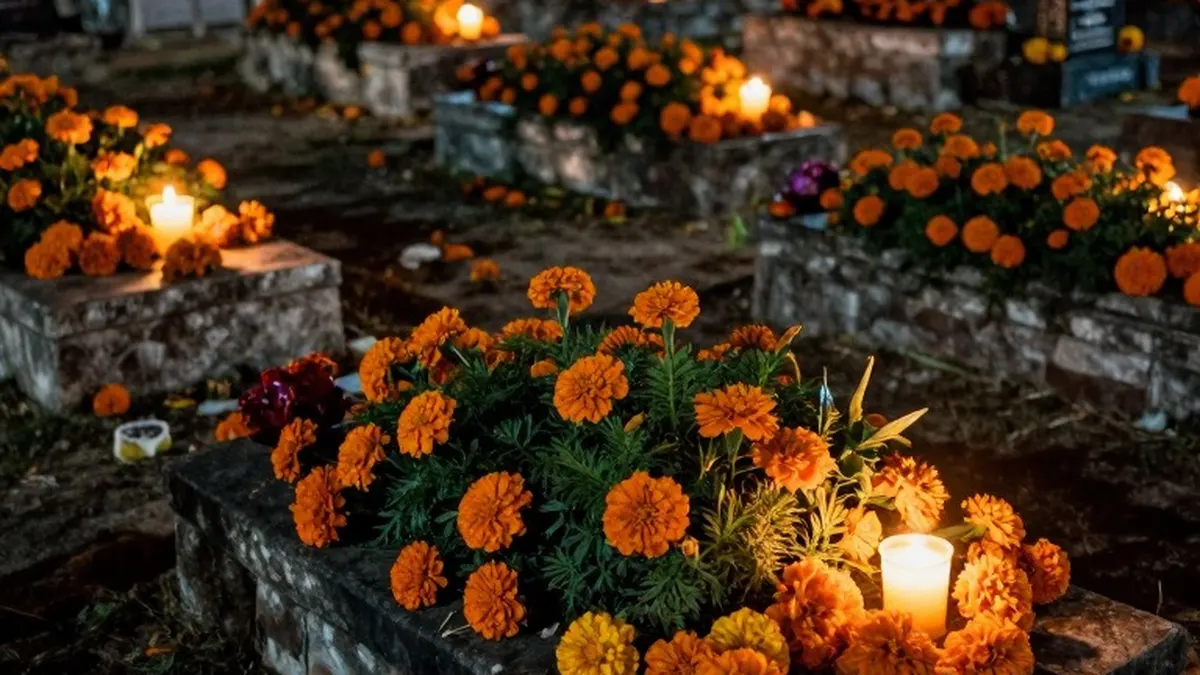
Families across Mexico gather in cemeteries on the night of Nov. 1 to remember and reconnect with deceased loved ones, continuing a practice observed by their ancestors for centuries. The gatherings are part of Day of the Dead celebrations, which bring orange marigolds, candlelight and faces painted as elegant skeletons called catrinas to the country's streets.
The festivities start in October and culminate on Nov. 1 and 2. According to the beliefs surrounding the celebration, these are the days when the souls of the dead briefly return to earth to spend time with their families. Although the first observance cannot be dated, the tradition has roots in agricultural beliefs from Mexico's pre-Hispanic era. Catholic elements became part of it following the Spanish conquest in 1521.
Flowers are central to the preparations. Streets, shops and markets are decorated with Mexican marigolds, known as cempasuchil, whose vivid orange colours are believed to guide the dead on their return to earth. Bakeries display pan de muerto, the traditional bread associated with the celebration.
Inside homes, families create altars dedicated to loved ones who have died. Photographs are arranged alongside offerings that include treats, food and mezcal. These household observances accompany the cemetery visits that bring families together across the country on Nov. 1.
In Mexico City, large parades travel along the capital's main avenue. Costumed performers took part in the annual Day of the Dead procession on Oct. 31, 2026. Yet the parade, which includes floats decorated with catrinas, remains a source of skepticism for many residents. It was devised for the 2015 James Bond film Spectre before becoming part of the city's celebrations, rather than originating in the earlier tradition.
The growing international attention paid to both the holiday and the Mexican capital has coincided with an influx of visitors to states including Oaxaca and Michoacan. In some places, the number of tourists has created tensions around the celebrations.
On Janitzio, a small lake island in central Michoacan, authorities closed the cemetery to tourists for the first time this year. The island's celebrations were recognized by UNESCO as Intangible Cultural Heritage of Humanity in 2008.
The restriction followed a report from Janitzio's community council that crowds had caused damaged tombs, crosses and sections of the cemetery's surrounding wall to collapse. Access would be limited to local families and friends of people buried there.