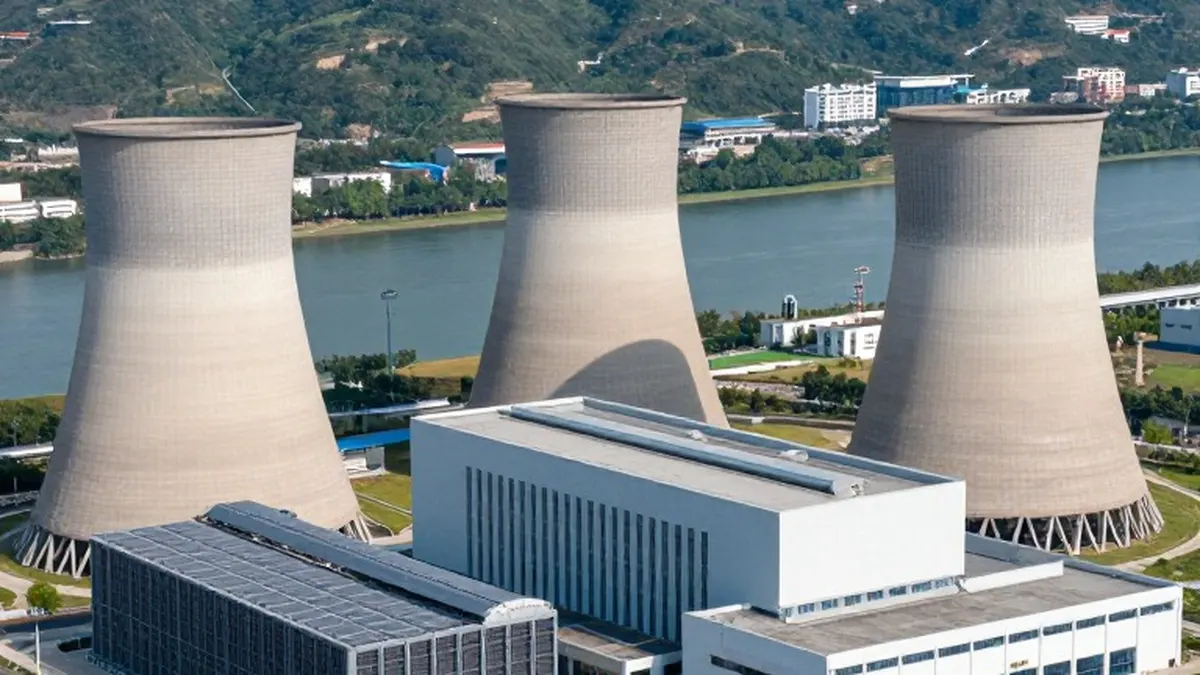
Opposition to the rapid expansion of data centers played a significant role in last week's midterm elections, helping propel Democratic candidates to victory. According to a CBS News exit poll, more than half of the voters who participated stated that artificial intelligence and data center construction were significant factors in their decision.
While this sentiment suggests a nationwide trend of pushback, the city of Quincy, Washington, presents a contrasting narrative. For two decades, Microsoft has operated its Columbia Data Center in the region, and local officials describe the presence as a major economic catalyst.
Mayor Paul Worley told CBS News that the data center has generated a kind of boom for the area. He noted that the additional tax revenue generated by the project has been instrumental in funding a new high school and a hospital. Furthermore, the income has helped improve other critical municipal services for the community.
Brad Smith, president of Microsoft, emphasized the company's pledge to prioritize the communities where it builds facilities. Smith stated that the company avoids actions that would increase electricity rates for neighbors. He also highlighted a commitment to water management, ensuring that the company replenishes more water into the local ecosystem than it actually uses.
Smith argued that data centers are becoming as essential to daily life as electricity. He explained that every interaction with a smartphone or connected device relies on these facilities to pull and process data. He believes the industry needs to better inform skeptics about these essential functions.
The choice of Quincy is largely driven by its proximity to the Columbia River, which provides hydropower. This energy source has attracted seven additional companies to build data centers in the area. However, the growth has not been without friction. To accommodate the roughly two dozen data centers that have entered the region over the past twenty years, some residents have been asked to vacate their homes.
Utility costs have also risen. According to the Grant County public utility, electricity rates per kilowatt-hour in the area have increased by roughly 55% over the last two decades. While this is a steep rise, it remains lower than the average increases seen both in Washington state and across the nation. In Washington, rates rose by 107% during the same period, while the national average increase was 66%.
Smith described managing the industry's growth and its impact on utility costs as a fundamental responsibility. He acknowledged that challenges cannot be eliminated entirely but suggested that companies can take steps to manage growth effectively. Microsoft pledges to pay for its own electricity usage to ensure it does not burden local neighbors' bills.
The economic impact is substantial in terms of employment. Microsoft reports employing approximately 700 people in the area, which accounts for nearly 9% of Quincy's population of roughly 8,000 residents. These positions provide a significant portion of the local workforce.
Kenneth Gillingham, a Yale professor of environmental and energy economics, suggested that communities should ask specific questions before approving new data center projects. These questions include inquiries about cooling technology, facility size, and electricity generation methods. Smith urged Americans to give developers a chance to prove they can prioritize community needs, noting that elected officials ultimately hold the decision-making power.