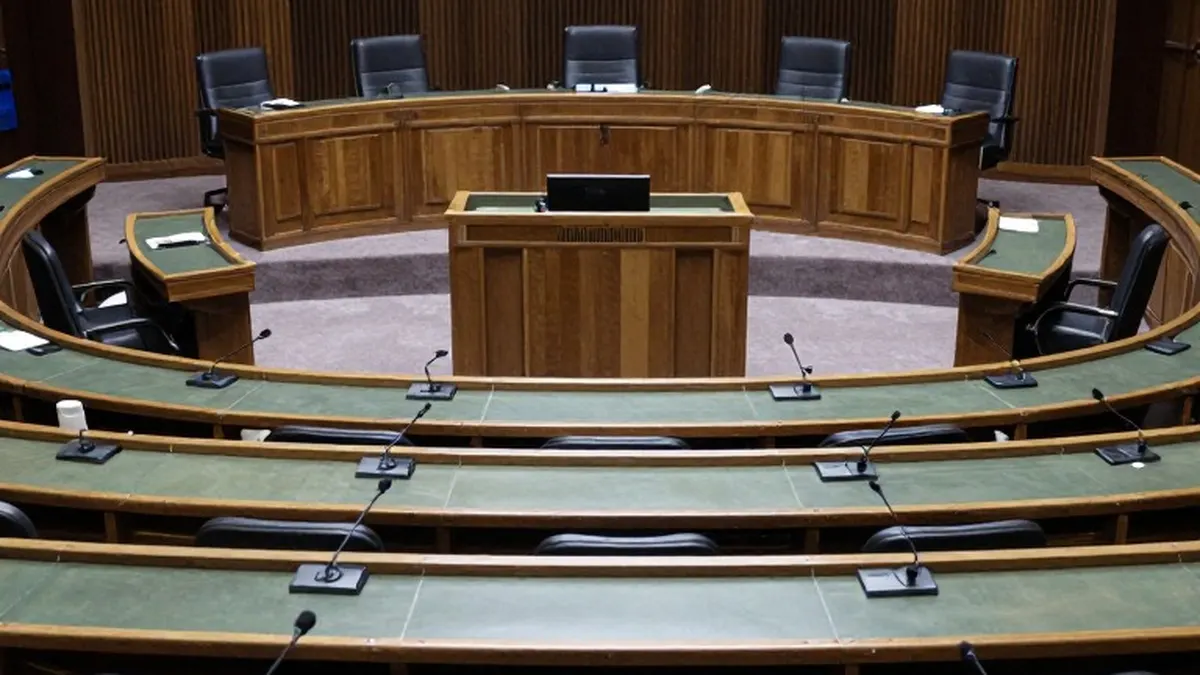
Benjamin Netanyahu’s appeal for a national unity government drew heckling and walkouts at Tuesday’s swearing-in of Israel’s new parliament, highlighting the divisions surrounding his efforts to remain prime minister. Opposition parties hold a majority of seats in the Knesset but have not yet assembled a government, leaving the outcome of coalition negotiations uncertain.
Netanyahu argued that threats facing Israel required a broad government, pointing to Iran and the increased number of elected lawmakers representing Palestinian citizens of Israel. He accused those lawmakers, without providing evidence, of seeking the country’s destruction. His appeal for unity centred on Jewish Israeli parties and rejected a government that included or relied on parties representing Palestinian citizens. Many analysts consider a minority government a likely outcome of the negotiations.
The session featured exchanges involving former Prime Minister Naftali Bennett, Netanyahu’s wife Sara and his hard-right ally Itamar Ben-Gvir. Bennett heckled Netanyahu, while many Palestinian lawmakers left in protest against the prime minister’s remarks. Afterwards, Gadi Eisenkot, who has the first opportunity to build a governing coalition, cancelled planned talks with Netanyahu and described him as “unfit for office”.
A successful coalition under Eisenkot would leave Netanyahu outside government as his corruption trial proceeds, without the protection afforded by the prime minister’s office. An inquiry into the failures of Netanyahu and his government before the Hamas-led attack on October 7, 2023, would also be likely. But analysts say his departure would not necessarily reverse the political culture he helped establish.
Roi Zur, a specialist in voting behaviour and election strategies at the University of Essex, said Netanyahu had moved Israel’s party system towards an American model and turned Likud into a populist party. According to Zur, voters increasingly describe their choices through the names of leaders such as Netanyahu, Bennett or Eisenkot, whereas they previously identified more closely with parties such as Likud or Labor.
American-Israeli pollster Dahlia Schneidlin said campaigning had become increasingly centred on individuals over recent decades, despite an electoral system in which people largely vote for party slates. Yet winning support through personal appeal does not remove the need for coalition building. Schneidlin said Eisenkot would need to show that he could negotiate and bargain with other parties to secure a government.
Personal rivalries can also overshadow similarities in policy. Netanyahu and opposition figure Avigdor Lieberman, for example, share some closely aligned right-wing positions despite their well-known mutual hostility. The emphasis on such disputes has helped sustain a populist style of politics that is readily understood by voters seeking political engagement.
Yossi Mekelberg, a senior fellow at Chatham House, said the concentration of authority within parties could allow leaders to operate with few constraints. He pointed to Netanyahu’s accusations against 19 elected Knesset members as evidence of how damaging that culture had become, arguing that the focus on personalities was worsening political divisions.