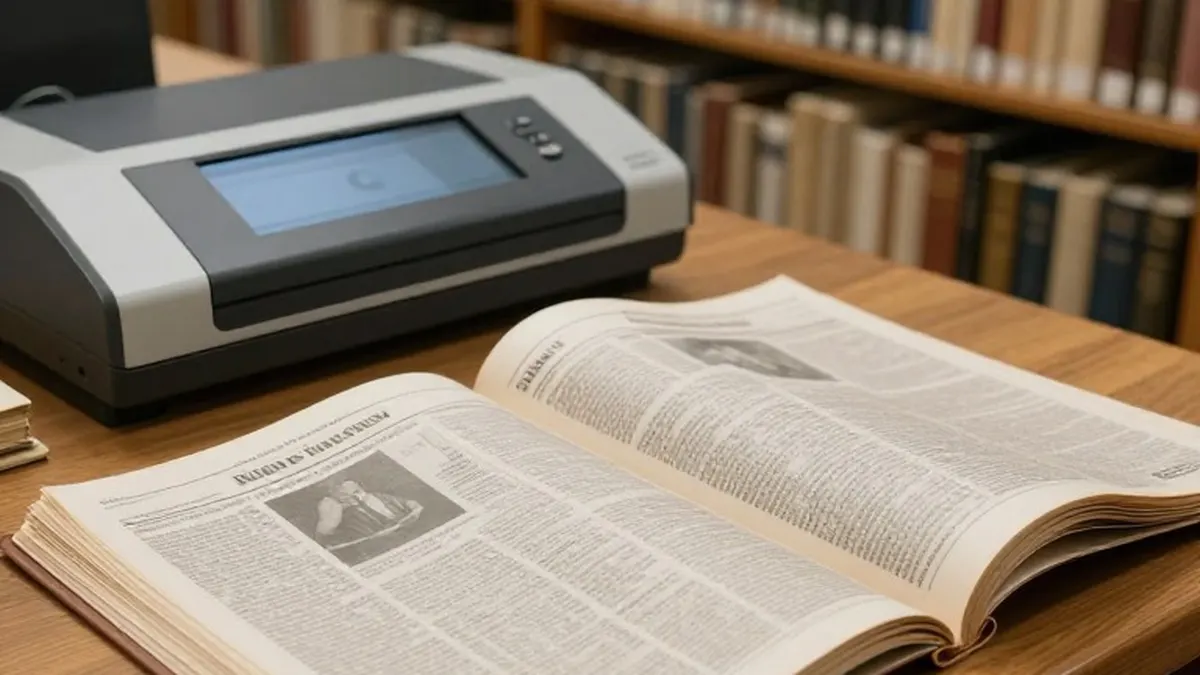
The National Library of Israel has digitized nearly five decades of The New York Jewish Week, making the newspaper’s archives freely available to the public for the first time through its Historical Jewish Press collection. The material documents major developments in Jewish life in New York alongside the everyday concerns, personalities and cultural changes that shaped the community.
The newspaper’s coverage offers accounts of unusual episodes, including a bagel famine, a record-breaking Orthodox Jewish gathering at Madison Square Garden and the discovery of Jewish treasures in the basement of a deteriorating synagogue. Such stories provide a way to examine the community’s experiences and changing identity through the events that drew attention in its own press.
Previously published as The Jewish Week, the newspaper joins a broader international preservation effort by the library. The Historical Jewish Press project began more than 20 years ago and has assembled newspapers in 30 languages, including publications dating to the late 17th century. Brandeis University historian Jonathan Sarna has described The New York Jewish Week as “the most important American Jewish newspaper of its time.”
To mark the archive’s availability, the library and the newspaper will hold a free panel discussion on Tuesday, November 17, examining what the collection reveals about New York’s Jewish history and its relevance to the present. The event, titled “The Pages of Our Past: Digitizing New York’s Jewish Stories,” is scheduled for 7:30 p.m. to 8:45 p.m. at Hebrew Union College-Jewish Institute of Religion in Manhattan.
Panelists will include Gary Rosenblatt, who was the newspaper’s editor and publisher for more than half of its half-century history, along with current New York Jewish Week journalists. Eyal Miller, manager of the library’s Historical Jewish Press project, will also participate. The venue is at 1 West 4th St., and a streaming option will be available.
The two organizations are also collaborating on an email series called “9 Moments That Made Jewish New York What It Is Today.” Its nine installments examine surprising and sometimes overlooked episodes, starting with the arrival of 23 Jewish refugees from Recife, Brazil, in New Amsterdam in 1654 and extending to a modern controversy about whether New York’s tap water was kosher.
The series uses those episodes to explore how Jewish New Yorkers responded to change, established institutions and negotiated their place in the city. Together with the archive and panel discussion, it examines the community’s past at a time when New York Jewry faces rising antisemitism and deep internal divisions.