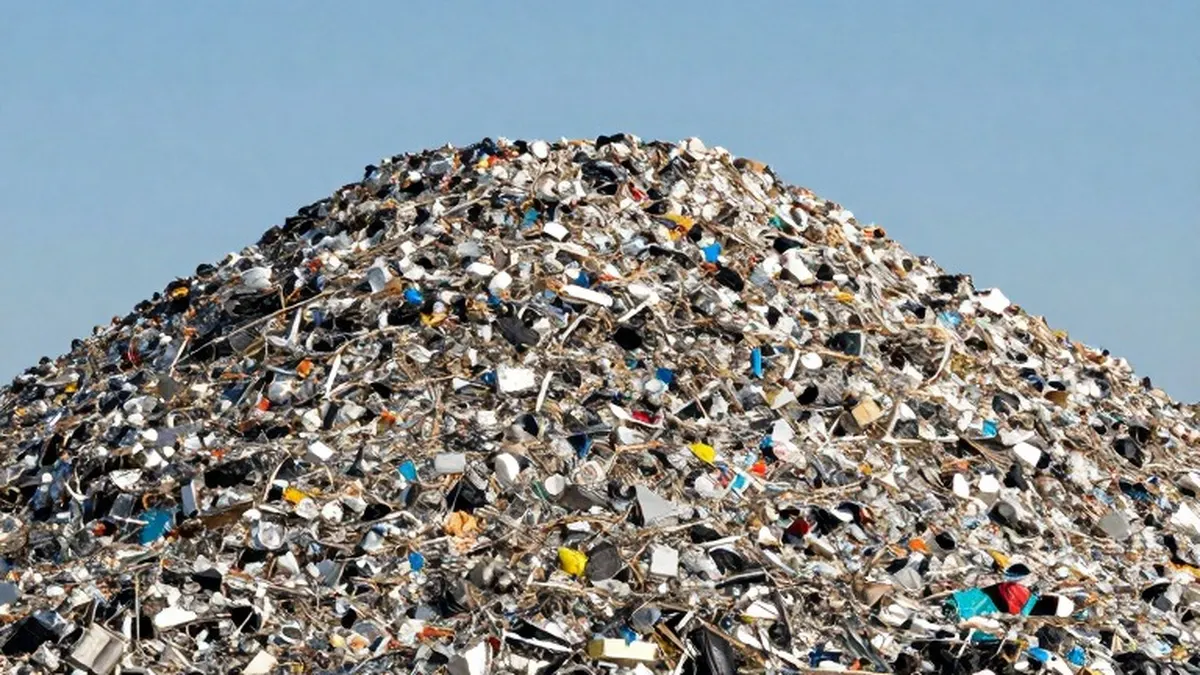
New York is facing a mounting crisis regarding waste management, illustrated starkly by the Seneca Meadows landfill in the Finger Lakes region. This site, the state's largest active landfill, has grown since the 1980s to cover 350 acres and now stands approximately 300 feet high. This vertical scale is comparable to the height of the Statue of Liberty, creating a massive mound of trash that looms over the surrounding landscape.
Local residents in Waterloo and Seneca Falls had expected the facility to close when its permit expired last year. However, the operator, Waste Connections, a Texas-based company, has proposed extending the landfill's operational life for several more decades. The plan involves adding 47 acres of newly lined disposal cells and increasing the height of the waste heap by another 70 feet. This proposal has drawn significant criticism from nearby communities concerned about environmental and health impacts.
Mark Pitifer, a marketing administrator at Waterloo Containers, a glass packaging company located adjacent to the site, described the visual impact of the facility. He noted that the area around the lakes is typically flat until one encounters the landfill, which he compared to a building in downtown New York City, except it is composed entirely of waste. His company has even had to install filtration equipment to help employees cope with the overpowering odor emanating from the site.
The landfill has become a focal point for grievances concerning pungent smells, water pollution, and greenhouse gas emissions. A study conducted last year using aircraft measurements identified Seneca Meadows as the largest source of methane in New York state. Methane is a potent greenhouse gas that contributes significantly to global warming. The operator maintains that its environmental protections are effective, citing air monitoring data and specific engineering controls.
The scale of waste flowing into the facility is immense. Seneca Meadows receives approximately 6,000 tons of trash daily from across New York. Of this total, 1,500 tons originate from New York City. The city sends its waste to landfills hundreds of miles away, many of which are rapidly filling up and are projected to reach capacity within the next 16 to 25 years.
Emily Gallagher, a Democratic member of the New York state assembly, described the situation as a precipice of crisis. After touring the site, she convened a hearing on state waste storage policies. Gallagher stated that the mountain of trash is off-gassing almost 24 hours a day, contaminating the Finger Lakes and groundwater. She argued that the expansion attempt should be halted immediately and estimated that 80 percent of the landfill's contents could have been recycled.
Gallagher highlighted that lobbying from plastics and fossil fuel interests has slowed the implementation of strict waste reduction and recycling measures. She called for a cultural shift away from a convenience-driven economy toward a more circular model where items are reused and rewashed. She emphasized that while dealing with trash is an uncomfortable task, society needs a deeper conversation about its consumption habits rather than ignoring the problem.
New York City officials point to recent efforts to reduce waste, such as composting organic matter, which accounts for about one-third of the city's trash. Despite these initiatives, residents still generate around 12,000 tons of trash daily. A spokesman for the city’s sanitation department noted that as regional capacity shrinks, the city will likely export trash to more distant locations, utilizing rail transport to facilitate this process.
Yvonne Taylor, co-founder of the Seneca Lake Guardian environmental group, expressed concern that other communities would not want to bear the burden of hosting such facilities. She cited instances where residents had to remove children from school due to the smell and where outdoor gatherings were ruined. Taylor argued that solutions exist, such as alternative packaging materials, but that political capital is needed to implement them. She insisted that the Seneca Meadows expansion must be stopped to prevent pushing the burden onto other communities.