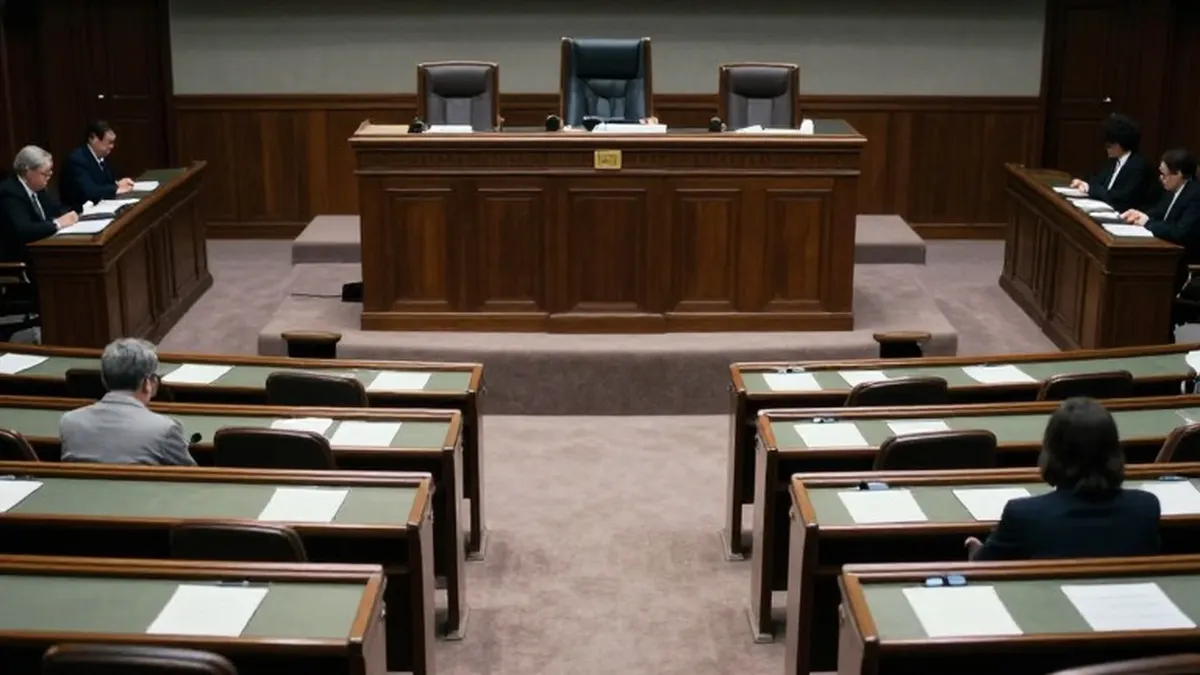
The final outcome of New Zealand’s November 7 general election has left the country without a clear path to immediate governance. As the official results were released on Friday, it became evident that the ruling centre-right coalition has fallen one seat short of securing a parliamentary majority. This outcome suggests that complex political wrangling will likely dominate the coming weeks as leaders seek to form a workable administration.
The governing alliance, led by Prime Minister Christopher Luxon’s conservative National Party, managed to win only 65 seats in total. Within this group, the National Party secured 40 seats, while its junior partners, the libertarian ACT party and the populist New Zealand First, won 13 and 12 seats respectively. This aggregate figure leaves the coalition one vote away from the 66 seats required to control the 130-member parliament.
Luxon, who has served as Prime Minister since 2023, faces a challenging task in consolidating power. The election results indicate a decline in support for his leadership, a trend that analysts attribute to a stagnant economy. As a former businessman, Luxon must now look to additional partners to secure the necessary majority. Speaking at a news conference on Friday, he emphasized that New Zealanders require a stable government that can cooperate effectively and remain in power for a full term.
The largest opposition party, Labour, won 36 seats. This result places them significantly below the threshold needed to form a government on their own. Consequently, the political landscape now highlights the centrist Opportunity Party as a potential kingmaker. The party, led by Qiulae Wong, clinched seven seats, giving them substantial leverage in negotiations.
Wong, a former consultant, has campaigned on a platform that includes a universal basic income of up to NZ$370 per week, stricter climate action, a ban on bottom-trawling fishing, and healthcare reforms. She has also pledged a kinder approach to politics and promised to do everything possible to ensure governmental stability. Her policy positions and style contrast sharply with those of the incumbent conservative and populist parties that are likely to seek her support.
Potential partners in a coalition include Winston Peters of New Zealand First, who serves as the foreign minister. Peters is a controversial figure who has previously called political opponents morons. Earlier this year, he drew shock by telling a Chinese-born lawmaker to go back to your country. His party campaigns for tighter immigration controls and a withdrawal from the Paris Climate Accord.
Another potential ally is Deputy Prime Minister David Seymour of the ACT party. Seymour campaigned against granting a greater governance role to the Indigenous Maori minority and has promised significant cuts to state spending. The differing agendas of these parties make the prospect of a smooth agreement uncertain.
If the incumbent parties fail to reach an agreement with the Opportunity Party or other groups, New Zealanders may be forced to return to the polls next year. However, political scientist Luke Oldfield from Victoria University of Wellington suggests that a deal is likely, even if it is challenging to construct. He told Reuters that it is highly probable a right bloc will be formed, avoiding the need for a second election, though the exact shape of this government remains to be seen.