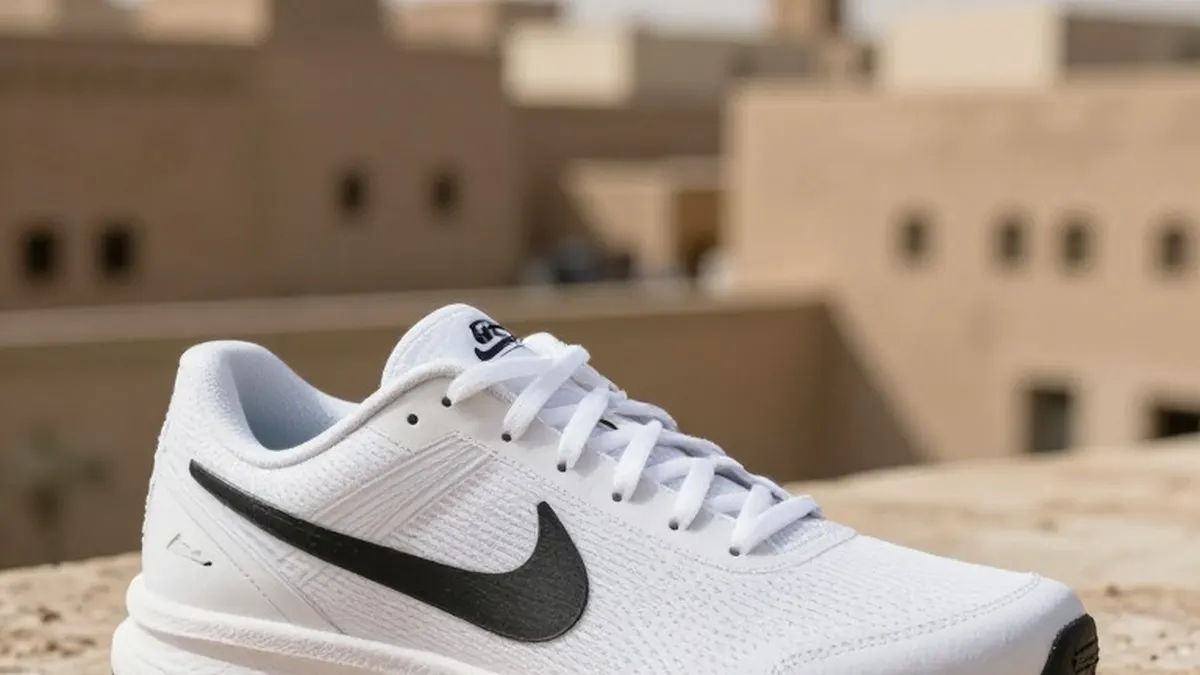
Libya's premier religious authority, the Dar al-Ifta, has issued a formal ruling prohibiting Muslims from purchasing, selling, or wearing clothing that displays the Nike logo. The decision comes from the Tripoli-based institution and centers on the etymology of the brand name. Officials stated that the American sportswear giant was named after Nike, the Greek goddess of victory. Furthermore, the ruling notes that the company's iconic swoosh logo was designed to resemble the wings of the goddess.
The religious committee argued that wearing garments with this specific logo effectively promotes symbols linked to polytheism, which is defined as the worship of more than one god. In addition to the mythological reasoning, the body accused the corporation of supporting Israel. This accusation led to a call for a boycott of companies perceived as backing the country, aligning with a previous statement from the Council for Research and Sharia Studies dated November 5, 2023. That earlier document urged Muslims to boycott Western firms during the war in Gaza.
This ruling, known as a fatwa, is a religious opinion on Islamic law matters rather than a statutory law. It received approval from Sadiq al-Gharyani, Libya's Grand Mufti. The BBC has reached out to Nike for a comment regarding the new directive. The Dar al-Ifta is a significant institution in western Libya, a country that remains politically divided with rival authorities operating in the east and west since the fall of Muammar Gaddafi in 2011.
Although these religious rulings hold considerable social influence, they are not necessarily government orders or legally enforceable mandates. This is not the first time the institution has targeted Western brands based on religious grounds. Last year, a similar ruling was issued against the French luxury jewelry house Van Cleef & Arpels. At that time, the committee argued that the brand's four-leaf clover design was associated with Christian beliefs and the pursuit of good luck, which they felt contradicted Islamic teachings.
The latest fatwa does not establish a state ban on Nike products, nor does it specify penalties for individuals who continue to buy or wear them. Reactions on social media have been mixed. Some users welcomed the decision, while others questioned its practical significance, describing it as ironic or a distraction from more urgent national issues.
The ruling arrives amid broader debates concerning the rise of religious conservatism in public life within Libya. In 2025, authorities in eastern Libya announced restrictions on rap music, theater, and dance performances. These measures were justified by concerns that certain lyrics and performances violated public morals and Islamic values. The restrictions were later extended to western Libya. While the Dar al-Ifta has previously issued rulings against music, there is no clear evidence that it was directly involved in the recent performance restrictions.
Nike does not maintain an official store in Libya, but its branded products are widely available through local sportswear retailers. Brands like Nike and Adidas are popular across North Africa. In Libya, as in other regional countries, counterfeit versions of these popular sportswear items are also commonly sold in local markets.
Libya has historical ties to ancient Greece, including the site of the ancient city of Cyrene. Archaeological remains in that area include a statue of the Greek goddess Cyrene, who shares a name with the region. The presence of such history underscores the complex cultural layers that inform the current religious debate over modern commercial symbols.