North Korean leader Kim Jong Un visited key nuclear production sites this week, calling for a significant expansion of the country's nuclear arsenal. The tour occurred days after Kim appeared to bypass a public offer from U.S. President Donald Trump to meet during the American leader's recent trip to Asia.
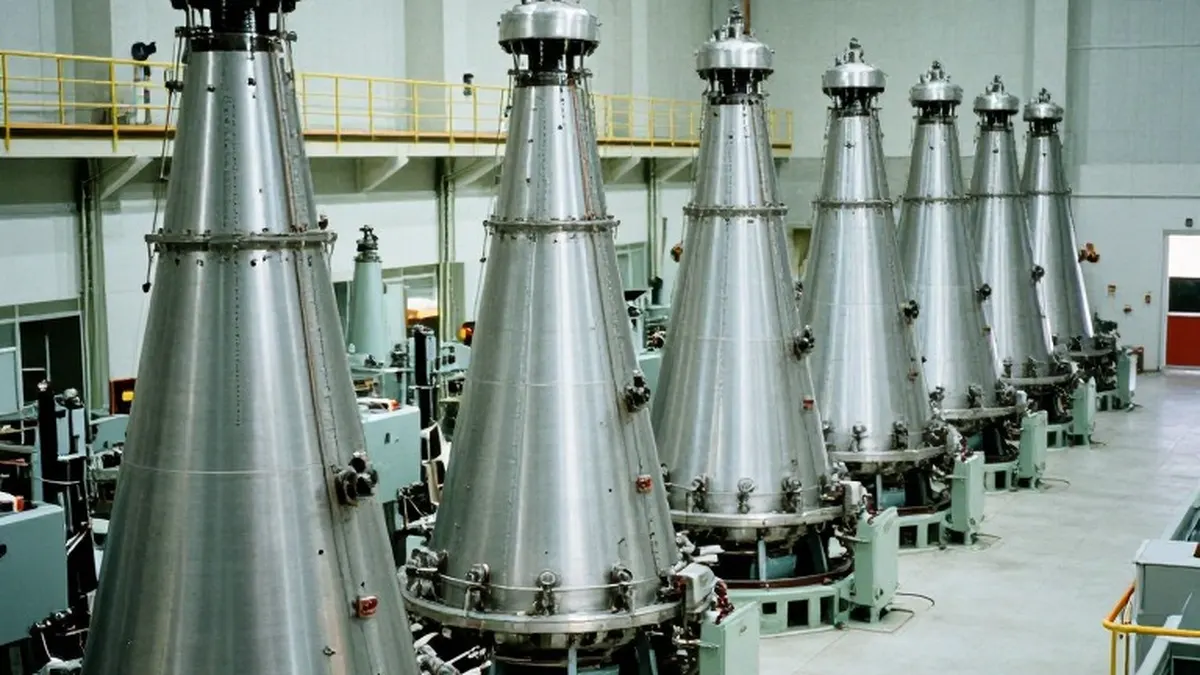
According to the Korean Central News Agency, Kim inspected two nuclear materials production factories on Thursday. One of these facilities had just been inaugurated, while the other is currently undergoing expansion. KCNA photos depicted Kim and senior military officials walking through dense rows of equipment that appeared to be centrifuges used for producing weapons-grade uranium. The images also showed tours of halls displaying what are believed to be warheads, though some pictures were blurred.
The leader also visited a nuclear-powered equipment production base and a research institute on Wednesday. While North Korea has not disclosed the specific locations of these facilities, experts note that the country has only revealed uranium enrichment sites a few times since 2010. In June, analysts assessed that a disclosed enrichment site was likely an additional facility at the main Yongbyon complex.
Kim justified the program by citing ongoing threats from the United States and South Korea. He described the current situation as facing variable nuclear threats approaching the peninsula moment by moment. According to KCNA, Kim accused the U.S. of encouraging regional allies to acquire nuclear-powered submarines and share nuclear weapons with them.
The North Korean leader stated that the possession of nuclear weapons is an irreversible reality. He emphasized the need to bolster capability in both quality and quantity. Kim also highlighted the urgency of deploying low-yield battlefield nuclear weapons across multiple domains, referring to South Korea as the most dangerous enemy state along the border.
Moon Seong Mook, an analyst at the Seoul-based Korea Research Institute for National Strategy, suggested that Kim wants to demonstrate the power of his arsenal. He believes the visit serves to reject future denuclearization talks, effectively telling the U.S. that if it wants to meet, it should not insist on dismantling the nuclear program.
Moon added that the inspection was likely a means to check on the progress of state objectives for the year and to set future goals ahead of a year-end Workers' Party conference. South Korea's Defense Ministry said it takes Kim's comments seriously and maintains firm military readiness in alliance with the U.S. The Joint Chiefs of Staff declined to share a detailed analysis of the reported facilities, citing confidentiality.
President Trump reiterated his desire to restore diplomacy with Kim during his visit to China for the Asia-Pacific Economic Cooperation summit last week. Although a meeting did not take place, Trump dismissed the idea that Kim had rebuffed the outreach. In an interview with the New York Post, Trump said it was simply not the right time due to the busy schedule of the two-day period.
Trump claimed he could revive diplomacy at any time by restarting their exchange of letters, though he acknowledged they had not corresponded recently. Kim has previously indicated he might return to talks if the U.S. drops its hostile policy and respects North Korea's status as a nuclear state. Experts say this recognition would help him demand the lifting of international sanctions.
Last week, International Atomic Energy Agency Director General Rafael Grossi expressed serious concern over the expansion of North Korea's original uranium enrichment facility at Yongbyon. Nuclear weapons can be built using highly enriched uranium or weapons-grade plutonium, and North Korea has facilities for both at Yongbyon. Last year, South Korean Unification Minister Chung Dong-young stated that the country was operating four uranium enrichment facilities that run every day.