Norwegian Prime Minister Jonas Gahr Støre has pushed back against a Financial Times report describing a recent phone call with Russian President Vladimir Putin. The newspaper had claimed that Putin devoted almost the entire conversation to historical explanations of the war. Støre says that account does not match what happened.
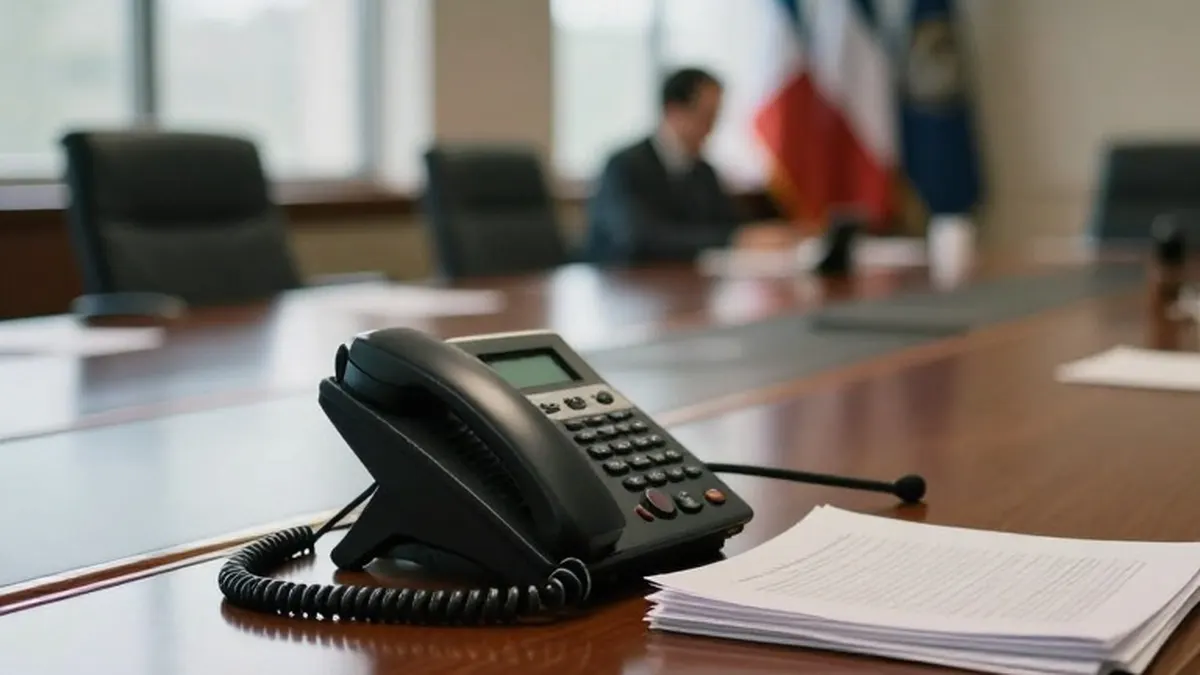
Støre and Finnish President Alexander Stubb spoke with Putin by phone on Tuesday, 27 October. By their account, the aim was to explore opportunities for de-escalation and to establish a European channel for dialogue.
The Financial Times later reported that the Kremlin leader spent nearly all of the call setting out what it called the "initial reasons for the conflict" with Ukraine. In an interview with Norwegian broadcaster TV 2, Støre rejected that description outright. "That is not true," he said, adding that his side had asked the newspaper to correct the information because it "does not correspond to reality."
The prime minister explained that Putin had asked to present his version of the current situation. In that context, Putin reviewed events from 2014 up to the present day. Støre dismissed the suggestion that this amounted to a broader historical lecture. "So the claim that he gave a lecture on Slavic history is simply not true," he said.
Støre also denied that Putin dominated the discussion. The call lasted an hour and a half, he said, and an interpreter was present, so part of that time went to translation. "Therefore, I believe the time was distributed fairly evenly," he said. He added that both sides probably used about the same amount of time, partly because the European leaders laid out their own positions and asked for a response.
The Norwegian newspaper VG contacted the Financial Times about the dispute and reported that the paper declined to make any changes. "We stand by our journalism," a spokesperson said. The Financial Times does not wish to comment further and will not clarify the sources of its information.
The call has also drawn attention in the wider diplomatic picture. On 28 October, Ukrainian President Volodymyr Zelenskyy said that, following the conversation between European leaders and Putin, there were indications Russia was serious about a meeting of negotiating teams in Abu Dhabi. He added that a planned trilateral meeting of technical teams from Ukraine, Russia and the United States in early November depends on the American side.
Separately, the European Commission's chief spokesperson, Paula Pinho, said the Commission had been informed in advance about the phone call.