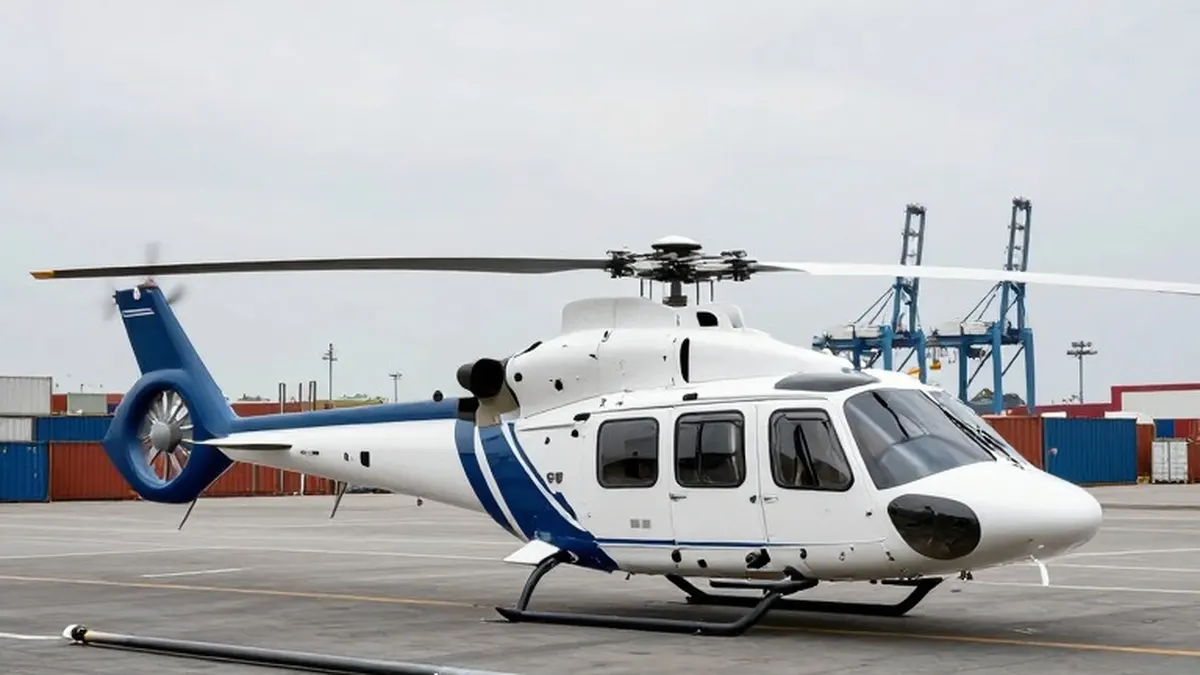
A New York City sightseeing helicopter conducted an emergency landing on Tuesday morning at a cargo facility in New Jersey after the pilot indicated potential engine trouble. The aircraft, a Bell 206L-4, touched down on a road within the Port Jersey Marine Terminal in Bayonne, which is located across the Hudson River from Manhattan.
According to the Federal Aviation Administration, the incident occurred at approximately 8:55 a.m. Two individuals were aboard the helicopter at the time of the landing. The Port Authority of New York and New Jersey confirmed that neither person was injured in the event. Messages requesting comment were left with FlyNYON, the operator of the helicopter.
Video footage from the scene revealed that a portion of the helicopter's tail was resting on the pavement roughly 30 feet away from the main body of the aircraft. FAA records indicate that the specific aircraft involved in this incident was manufactured in 1999. The helicopter was reportedly on a maintenance flight when the distress call was issued.
Air traffic control audio recordings captured the pilot declaring a mayday and stating that the aircraft needed to land outside of the airport. The helicopter came to a stop just outside the container terminal area several minutes after the initial distress signals were broadcast, according to the Port Authority.
This incident follows a significant event from last year when another Bell 206L-4 sightseeing helicopter crashed into the Hudson River, resulting in the deaths of all six people on board. The National Transportation Safety Board noted that remains of several geese were found on the wreckage, suggesting the aircraft may have collided with birds prior to the crash.
Regulatory scrutiny of the sightseeing helicopter industry has increased in recent weeks. Last week, the Office of Inspector General for the U.S. Department of Transportation announced an audit of current regulations. The announcement cited longstanding concerns about industry safety and questioned whether the existing regulatory framework provides sufficient safeguards for passengers and crew.
Marshall Jackson, the Assistant Inspector General, highlighted the statistical context for these concerns. Since 2008, there have been at least 58 helicopter crashes involving tourist helicopters in the United States. Of those incidents, 11 were fatal. The new audit aims to evaluate the effectiveness of current oversight measures in the sector.
The Tuesday landing marks the latest development in an ongoing review of safety protocols for aerial tourism operations in the New York area. While the recent incident resulted in a safe outcome, it underscores the mechanical and operational challenges that continue to draw attention to the industry's risk profile.
Officials from the Port Authority and the FAA are monitoring the situation as the helicopter is assessed. The quick response by the pilot to report the engine trouble appears to have facilitated a controlled landing in a relatively open area of the port, minimizing potential damage and ensuring the safety of those on board.
The event serves as a reminder of the importance of immediate reporting and emergency procedures in aviation. As regulators move forward with their audit, the data from incidents like this one will likely play a role in shaping future recommendations for the sightseeing helicopter sector.