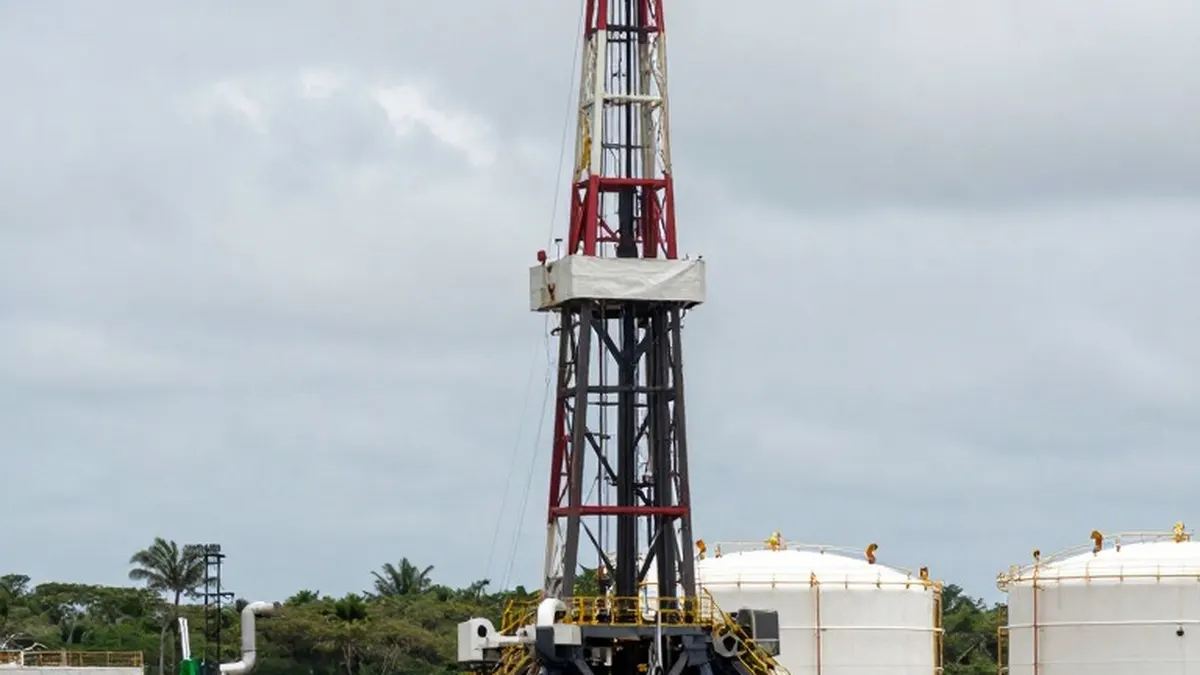
ExxonMobil is considering resuming operations in Venezuela almost two decades after its departure, signing an agreement to assess opportunities in the country's oil industry. The largest U.S. oil company announced Monday that it had reached a memorandum of understanding with the Venezuelan government and state oil company Petróleos de Venezuela, S.A., known as PDVSA.
The memorandum covers possible oil exploration and production projects, activities the industry describes as upstream operations. Such agreements are generally nonbinding. ExxonMobil called the memorandum a meaningful initial step, but said any eventual investment would depend on policy stability, clear rules, strong protections for investors and competitive financial returns.
The announcement follows significant changes in Venezuela's oil sector over the past ten months. In January, after the Trump administration captured Venezuelan President Nicolás Maduro, President Trump brought U.S. oil executives to the White House and encouraged them to invest in Venezuela. ExxonMobil Chief Executive Darren Woods described the country at that meeting as "uninvestable."
Venezuela subsequently revised its petroleum law this year in an effort to attract international oil companies. The changes gave private companies greater control over operations in partnerships and altered taxes and royalties. Venezuela has also welcomed expanded activity by U.S. companies including Chevron and Continental Resources. Despite those developments, Woods remained cautious during an analyst call last month, acknowledging work on fiscal and legal frameworks and investor protections while saying further progress was needed.
ExxonMobil's history in Venezuela stretches back through much of the 20th century. The company, which emerged from Standard Oil, developed a troubled relationship with the government. Starting in 2004, then-President Hugo Chávez imposed contract renegotiations on international oil companies and ordered ExxonMobil's assets nationalized. ExxonMobil withdrew from Venezuela in 2007.
The company has since pursued international arbitration with the Venezuelan government over the seizures. In September 2025, a U.S. court ordered Venezuela to pay ExxonMobil more than $985 million for those past expropriations.
Energy analysts told NPR that ExxonMobil could be considering fields in the Orinoco Belt, a Venezuelan region with substantial oil reserves where it previously operated. Extraction there produces considerable greenhouse gas emissions, according to Paasha Mahdavi, a UC Santa Barbara political science professor who researches the oil industry. Mahdavi said production in the region has particularly high levels of methane, a potent gas that contributes to planetary warming.
ExxonMobil also holds major oil investments in neighboring Guyana, an increasingly important participant in the international oil industry. Venezuela and Guyana have been involved for years in a territorial dispute that also concerns oil rights.