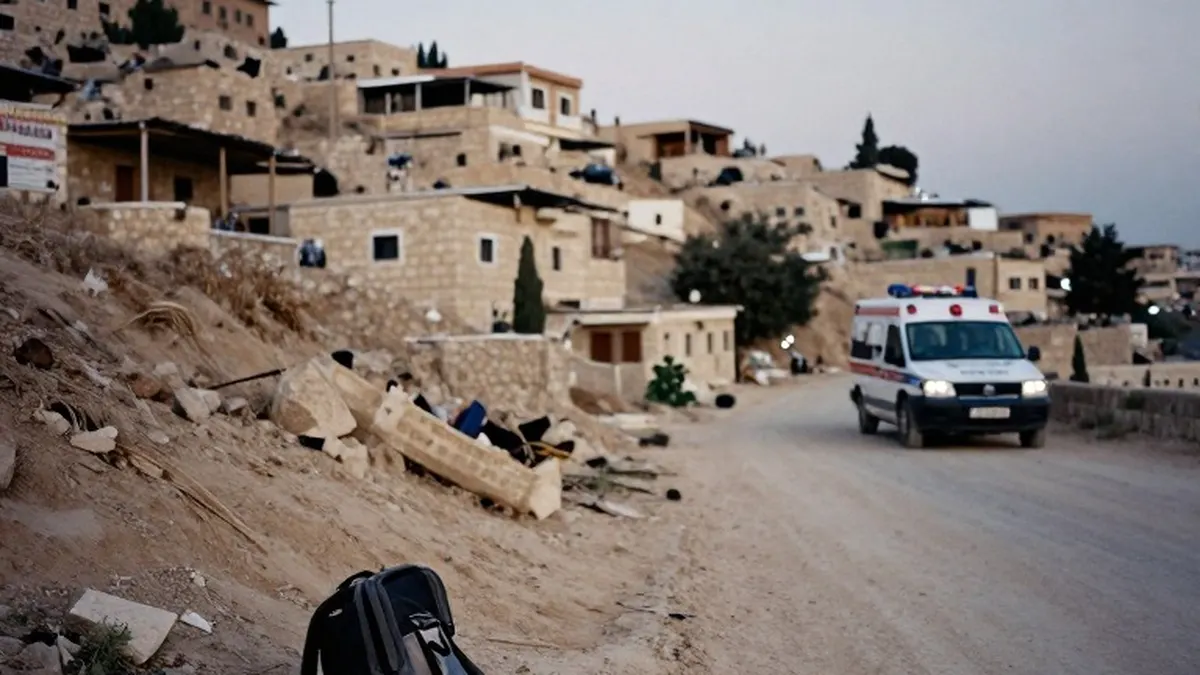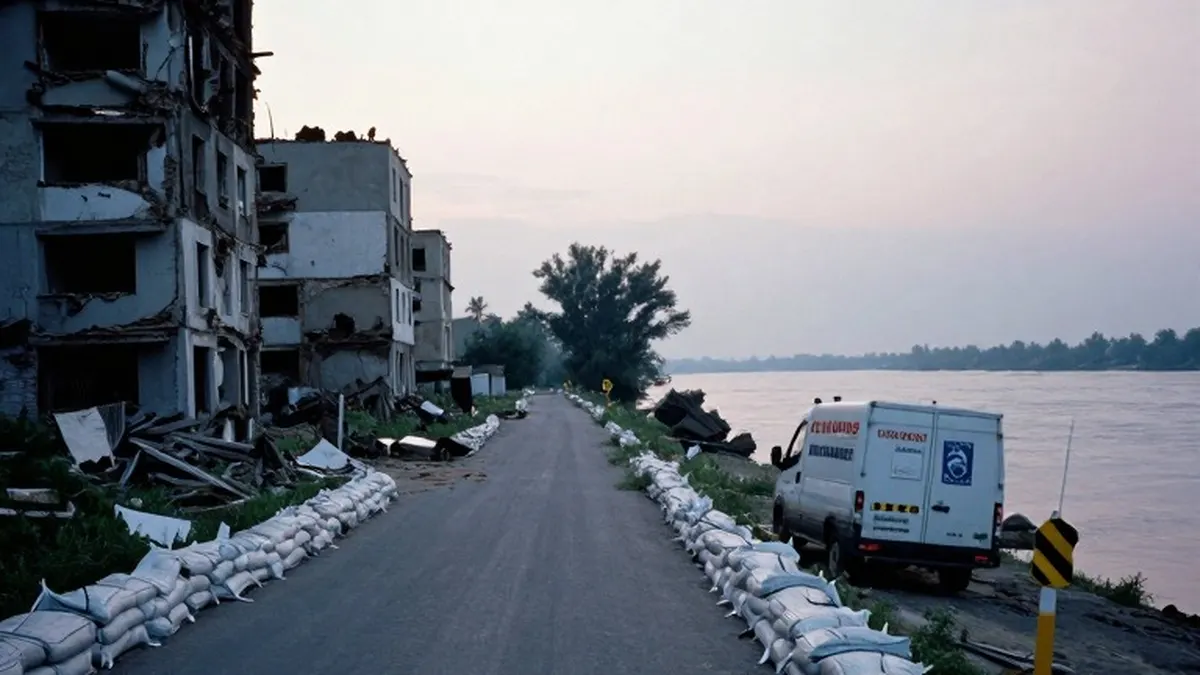
A fragile cease-fire around the Russian-occupied city of Oleshky entered its third day on October 29, raising hopes for thousands of civilians who face severe shortages and dangerous escape routes. Concerns remain that Russia could use the pause to forcibly transfer residents to Russia or occupied Crimea.
The localized truce, brokered with the involvement of US first lady Melania Trump, took effect on October 27 and is due to last until November 1. Ukrainian and US officials told RFE/RL that no violations were reported during the first two days. Ukrainian officials and humanitarian advocates say its success will depend on whether residents receive aid, can evacuate safely, and are free to choose where they go.
On October 28, the bipartisan Congressional Ukraine Caucus welcomed the truce and credited Melania Trump's efforts. It also raised alarm over reports that Russian authorities were stopping Oleshky residents from leaving for Ukrainian-controlled territory. The caucus co-chairs are Representatives Marcy Kaptur, Mike Quigley, Brian Fitzpatrick and Joe Wilson. "Forcibly transferring or deporting civilians from occupied territory is a war crime," they said.
Oleshky lies across the Dnieper River from Kherson and has been occupied since 2022. The US-based group Razom for Ukraine estimates that 1,700 to 2,000 civilians remain there, including about 50 children, many of them elderly or disabled people and their caregivers. Residents lack reliable drinking water, electricity, gas and heating, and face shortages of food and medicine. Razom says regular road deliveries of food stopped in May 2026. Ukrainian officials and advocates accuse Russian forces of obstructing departures and aid deliveries.
Ukraine's human rights ombudsman, Dmytro Lubinets, said preparations for the humanitarian mission were continuing under an agreement with Russia. He is coordinating with Russian human rights commissioner Yana Lantratova through arrangements facilitated by Melania Trump. Melania Trump said both sides had begun demining to create safe passage for aid, and that four Newsmax journalists would travel to Oleshky to document the operation.
Advocates say journalists cannot replace independent monitors. Daniel Balson, Razom's director of advocacy, said there was "no provision for credible third party monitors from the ICRC or the UN to oversee their evacuation." He warned that Russian President Vladimir Putin could use the operation to forcibly deport nearly 2,000 civilians. Razom cautioned that those moved into Russian-controlled territory could face interrogation, filtration, detention or pressure to take Russian documents, and that children could be separated from relatives.
Yuriy Boyechko, chief executive of Hope for Ukraine, alleged that Russian forces were steering civilians toward Crimea or Russia rather than Ukrainian-controlled land. He also claimed Russian troops were moving heavy armor, artillery and fresh units toward the riverbanks, which he said could signal preparations for a new offensive aimed at retaking Kherson.
The truce coincides with diplomatic activity. Moscow confirmed that Foreign Minister Sergei Lavrov will lead Russia's delegation to a G20 foreign ministers meeting in Atlanta on October 30 and 31. US Secretary of State Marco Rubio will be in the same city, though diplomatic sources said no meeting between them had been confirmed. Representative Don Bacon criticized the visit, saying Russian leaders should not be welcomed at such forums while the war continues. Meanwhile, Ukrainian President Volodymyr Zelenskyy said preparations were continuing for a planned trilateral meeting in Abu Dhabi.
In a separate dispute, Senator Richard Blumenthal urged the owner of the Malta-flagged tanker Agioi Fanendes to turn back before delivering a reported 40,000 metric tons of Russian diesel to New York, where it is expected on November 7. He argued the cargo could violate a 2022 law banning Russian oil imports and that only Congress can make such a transaction legally valid.