Omani Foreign Minister Badr al-Busaidi has called on the six Gulf countries, along with Iraq and Iran, to come together under a single "non-aggression" security pact. The six Gulf states are Saudi Arabia, Bahrain, Kuwait, Qatar, the UAE and Oman.
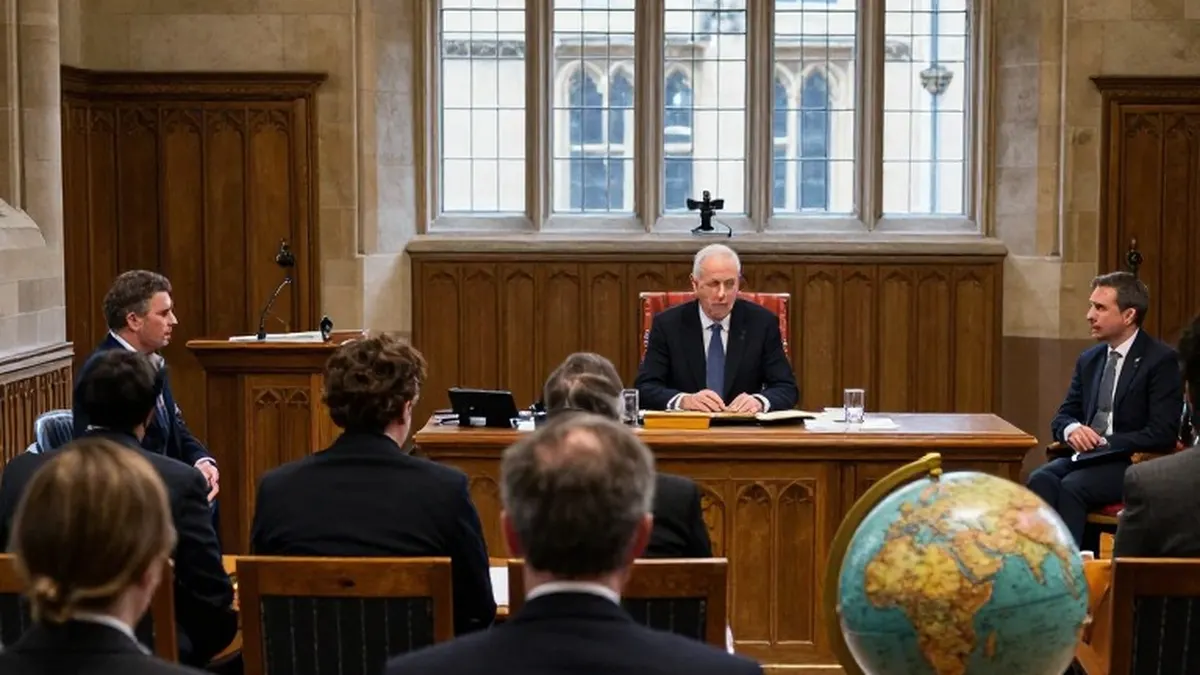
Busaidi made the appeal in a speech at the UK's Cambridge University on Monday, during a diplomatic visit. He said it was time for the Gulf "to step up and take responsibility for our own security" and to stop depending on "external powers".
In his view, the nuclear issue and the Hormuz issue remain unresolved because outside powers keep setting the terms of engagement. Regional states, he argued, have not been able to take collective responsibility for their own security arrangements or agree on them. He said the effort must be inclusive.
The speech came during a burst of diplomacy around Iran. Senior officials from the Mecca Defence Alliance met Iranian leaders in Tehran on Monday. Iran's top security official, Mohsen Rezaei, said the talks showed that US threats had little effect on regional diplomacy and marked the beginning of a "real transformation".
The alliance's members are Saudi Arabia, Turkey and Pakistan. They gathered as regional powers try to end the Israeli-US war against Iran and build a security framework independent of Washington. The conflict continues to threaten the region and the global economy, amid growing fears of renewed US-Israeli attacks.
Busaidi said that casting Iran as the main security threat has been "the most damaging of the priorities imposed on the region from the outside". It produced an unstable regional system, he said, built on the false belief that Iran and the Arab states of the Gulf are fundamentally antagonistic. "There is no such fundamental antagonism," he said, adding that Arabs and Persians have lived in peace in the Gulf for centuries despite existing problems.
He argued that any Gulf security architecture excluding Iran is "inherently unstable" and "structurally unsound", and that recent events show the heavy cost of allowing that false perception and exclusion to persist.
Since the US and Israel launched their war on Iran on 28 February, Gulf Arab countries have expressed frustration that the US did not protect them from Iranian retaliation, which targeted US military bases in the region. The war has carried large economic and security costs for the Gulf. By late March, it had wiped more than $120bn from market capitalisation on the Dubai and Abu Dhabi stock exchanges, and over 18,400 flights had been cancelled in the UAE. The continuing blockade of the Strait of Hormuz has also sent economic shockwaves worldwide.
Busaidi said the region can no longer count on cooperation from external partners. "The time has come when it no longer makes sense just to blame everyone else," he said. He called for a new regional dialogue on Gulf security before other solutions are imposed that would entrench dependency and exclusion. Over time, he added, partnerships with outside powers such as the US would involve fewer military commitments and more economic and investment ties.