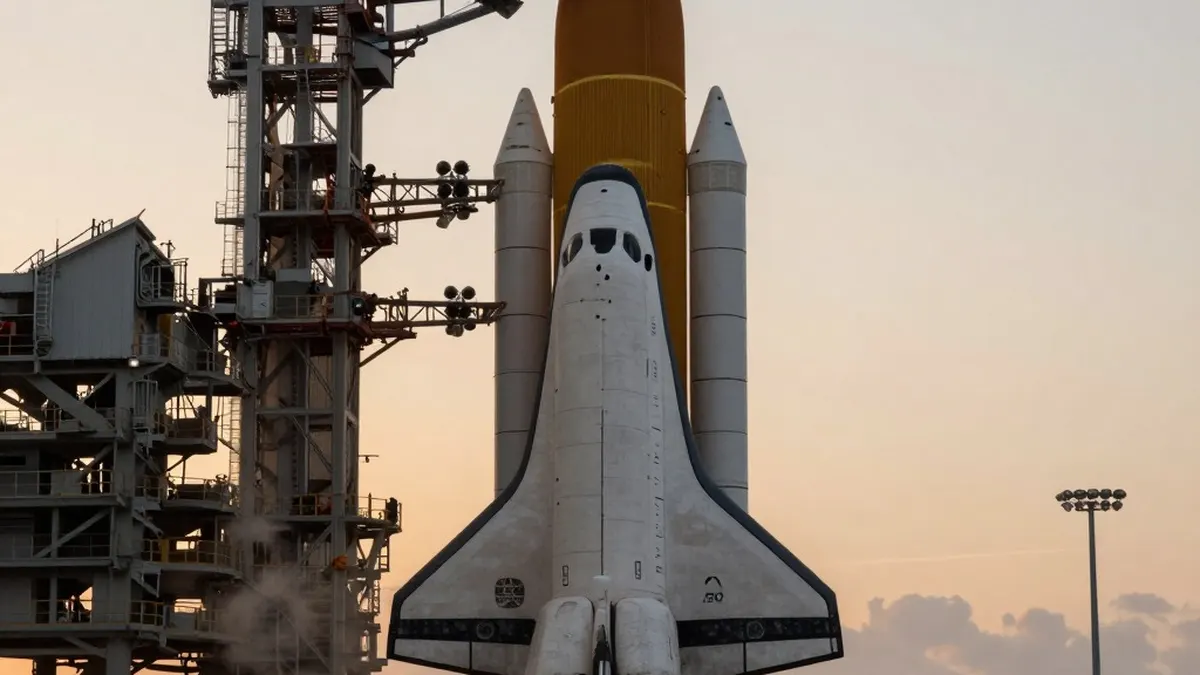
On Oct. 22, 1992, the space shuttle Columbia lifted off carrying the ashes of Gene Roddenberry, the creator of "Star Trek." The flight, designated STS-52, brought a lifelong ambition of Roddenberry's to a kind of fulfillment: he had always wanted to travel to space but never did while he was alive.
The remains made the trip through the personal effects of James Wetherbee, the NASA astronaut who commanded the mission. Roddenberry's widow, Majel Barrett, asked him to take a small container holding a portion of the ashes along. The launch came almost exactly one year after Roddenberry's death.
The arrangement stayed out of public view for some time. NASA and the Roddenberry family said nothing about it until almost two years later, in 1994.
Wetherbee said he felt "honored to be asked" by Barrett to carry the ashes. According to Newsweek, he added: "I'm just glad I was able to bring a little happiness to the family."
The flight is regarded as the world's first "space burial," though it would not be the last. In 1997, roughly five years after Columbia's mission, the space memorial company Celestis began launching a series of burial flights that sent capsules containing human cremains aloft on rockets.
More of Roddenberry's ashes were part of Celestis' "founders flight" in April 1997. That mission flew on an air-launched Pegasus rocket that took off from the Canary Islands in Spain. The ashes of Barrett and of "Star Trek" actor James Doohan have also been flown in space, along with those of others.
Celestis has since launched human cremains on numerous suborbital and orbital flights, among them some on SpaceX Falcon 9 rockets. In 1999, the company sent the ashes of the late astronomer Eugene Shoemaker to the moon on the Luna 1 flight. Another set of cremains was launched into deep space on the Enterprise mission in 2023.