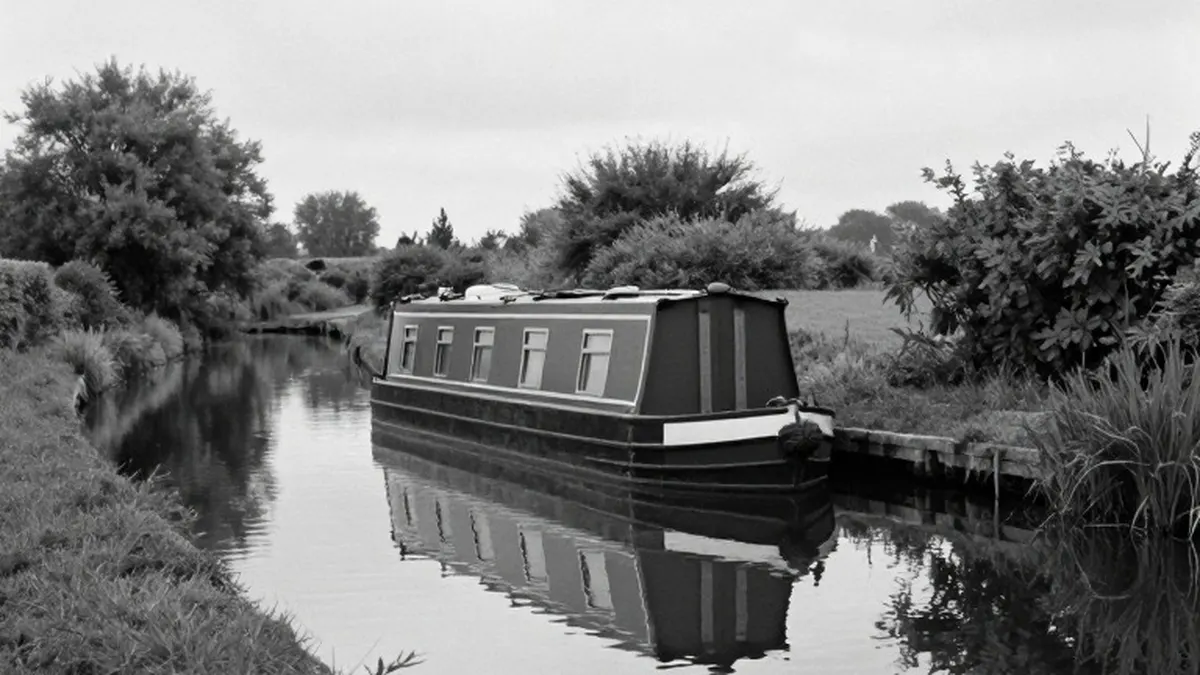
The Irish drama One Sweet Hour is set to have its world premiere on November 16 as part of the main competition program at the 30th edition of the Tallinn Black Nights Film Festival in Estonia. The film, which is primarily shot in black and white, marks the first theatrical release for Gary Lydon following his death earlier this year. It features Lydon alongside Brian F. O'Byrne in a story that blends elements of a road movie with the slow pace of life on a canal boat.
The narrative centers on Gerry, a man in his 50s who lives on a canal boat and earns a living impersonating Elvis Presley at rural venues across Ireland. His quiet existence is disrupted when his estranged brother Colum arrives unannounced after the death of their father. Colum, played by O'Byrne, has spent the last three decades in a monastery under a vow of silence. The two brothers embark on a journey through the Irish Midlands at a speed of two miles per hour, navigating their shared history and unresolved childhood trauma.
Director Declan Recks and writer Eugene O'Brien developed the concept from separate inspirations. O'Brien, who previously directed a documentary while on a boat, found the experience meditative and relaxing. The two had also discussed an Elvis impersonator character years prior. They decided to combine these ideas, placing the impersonator in a confined space with an estranged brother to explore their dynamic. O'Brien, known for writing stories about family, provided the screenplay for the Samson Films production.
The casting of O'Byrne as the silent monk followed his role in Conclave. The actor noted that while he had known Lydon for about 30 years and was a fan of O'Brien's work, he had not met director Recks before. The cast and crew spent time together refining the script and characters before filming began. O'Byrne described the set as collaborative and relaxed, with no sense of competition or envy among the older cast members. This atmosphere allowed Lydon and O'Byrne to build a genuine rapport during the shoot.
Filming took place on a boat that could accommodate only 15 people, creating an isolated environment for the two actors and the crew. The limited space and the slow movement of the vessel introduced a natural rhythm to the production. O'Byrne recalled that even when a second take was required, the boat had to be carefully maneuvered backward, which added a built-in pause to the process. The team also benefited from favorable weather conditions during the ten days they spent on the water.
Lydon's passing in late April has added an emotional layer to the film for his collaborators. Recks described the death as a terrible shock but noted that the cast felt Lydon had a positive experience while making the movie. O'Byrne shared that Lydon's family, including his sons, brothers, and partner, confirmed that it was one of the happiest experiences for the actor. The film is now viewed by the creative team as an ode to Lydon, particularly if it is considered his final work.
Despite the character's stage persona, Lydon was reportedly terrified of performing as Elvis. Recks revealed that they hired a movement coach and had to encourage the actor to push through his fears. However, Lydon threw himself into the role with such intensity that his apprehension is not visible in the final product. The title of the film references the moment on stage where Gerry escapes his trauma, donning a costume and mask to focus solely on the music.
The film contrasts the two brothers' methods of coping with pain. While Gerry uses performance to escape, Colum uses silence and anonymity to avoid dealing with his past. Both characters have never fully addressed the events that caused their estrangement. Recks and O'Byrne aimed to create a tone that was not overly heavy, inviting audiences to engage with the characters on a personal level. The story touches on broader themes of trauma in Ireland, including the influence of the church and the state.
O'Byrne highlighted the social message of the film, suggesting that people cannot overcome their issues without talking about them. He noted that isolation often leads to self-deception, and the narrative ultimately shows Gerry forming a meaningful connection. The film invites viewers to join the brothers on their journey through central Ireland to discover the outcome of their reunion.