OpenAI has officially acknowledged that its flagship chatbot, ChatGPT, is rapidly gaining ground in the competitive search engine landscape. According to a new announcement made at a press event, the volume of search queries processed by ChatGPT now stands at 20 percent of the total volume managed by Google. This metric marks a substantial milestone for the artificial intelligence company, which has increasingly positioned its platform as a primary destination for internet research rather than just a conversational tool.
Adam Fry, the consumer product lead for ChatGPT at OpenAI, presented these figures on Monday. He clarified the company's methodology for tracking this data, defining a search as any user input that triggers a web lookup. This distinction separates actual search queries from other interactions, such as asking for definitions or simple explanatory steps. Fry did not specify the exact source used to determine the baseline number for Google's search volume, leaving the precise comparison slightly open to interpretation regarding the data's origin.
While achieving one-fifth of Google's search volume is a notable achievement, it still indicates a significant gap between the two platforms. For context, Microsoft CEO Satya Nadella testified during Google's 2023 antitrust trial that Bing held approximately 3 percent of the search engine market share after more than a decade of competition. During that same legal proceeding, Google argued that artificial intelligence, specifically ChatGPT, posed a serious disruption to its dominance. OpenAI's recent claims suggest the company now agrees with that assessment, viewing its growth as a direct challenge to the search giant.
The technical infrastructure behind this growth remains complex. It is widely believed that OpenAI relies heavily on Microsoft Bing for a significant portion of its search capabilities, supplemented by its own in-house search index. However, speculation persists that some queries may also be routed through Google's systems, further blurring the lines between the two competitors in the backend infrastructure of the web.
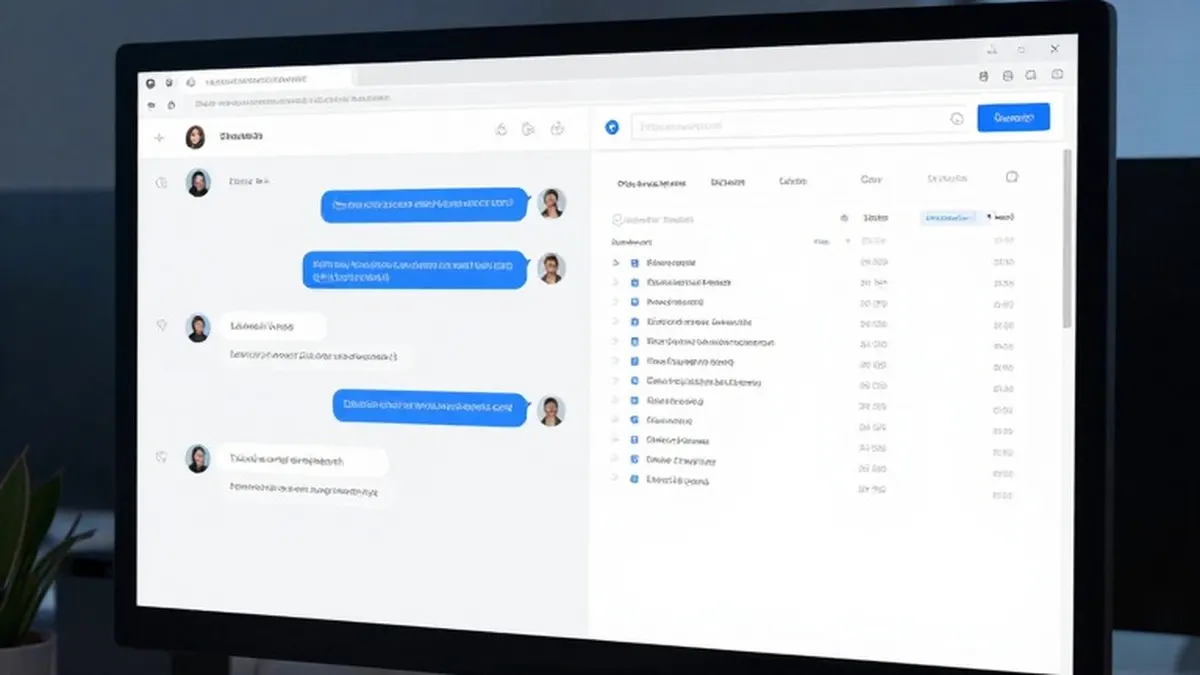
This development occurs against the backdrop of a broader transformation in the search industry. Google continues to adjust its strategy by reducing conventional referrals to third-party websites and investing heavily in its own AI tools. These include the AI Overview feature and new generative capabilities that offer personalized results with visualizations and charts. In response, other companies are developing similar AI-focused experiences, often under different branding. OpenAI refers to its approach as the Intelligent UI, a concept that involves creating visual and interactive interfaces directly within chatbot responses.
Fry described this shift as the future direction of the technology, stating that users are essentially talking to a canvas rather than just receiving text. This evolution aims to make the interaction more dynamic and engaging, moving beyond simple question and answer formats to provide a richer user experience.
The company also addressed the monetization of this new search traffic, highlighting a potential path to profitability through advertising. As OpenAI approaches a potential initial public offering slated for early next year, the integration of ads has become a strategic priority. Fry assured reporters that the introduction of advertisements has not caused a lasting negative reaction among users, emphasizing that the product's usage and quality have not been hindered by commercial content.
In a related update from last month, OpenAI revealed that it would begin displaying images of sponsored products and services within ChatGPT. This change moves beyond the previous model, which typically included only a company name, logo, and a link. Fry suggested that the performance of these ads has been a learning experience, stating that they have shown the company it could potentially expand its advertising efforts further without compromising the user experience.